



Low on Vitamin D? Your Medications Could Be to Blame
Many medications can lower vitamin D levels and lead to deficiency — like blood pressure medications, antibiotics, and steroids. Learn what may be contributing to your low vitamin D levels.

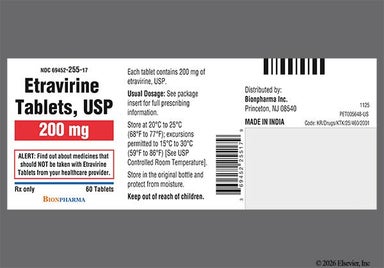
Etravirine (Intelence) is a medication that's used as part of an antiretroviral (ARV) therapy to treat human immunodeficiency virus (HIV) infections. It's typically given to people who might've developed resistance to other HIV medications. Etravirine (Intelence) comes as tablets that are swallowed whole or dissolved in liquid for people who have trouble swallowing. Some side effects of this medication are changes in cholesterol levels and rash. Etravirine (Intelence) is available as both a brand-name and generic medication.

Etravirine (Intelence) is a non-nucleoside reverse transcriptase inhibitor (NNRTI). It blocks an enzyme found in HIV called reverse transcriptase that usually helps the virus make copies of itself. By blocking reverse transcriptase, etravirine (Intelence) prevents the HIV virus from doing so and from spreading.
| Common Brands | Intelence |
|---|---|
| Drug Class | HIV ARV |
| Controlled Substance Classification | Not a controlled medication |
| Generic Status | Lower-cost generic available |
| Availability | Prescription only |

The following side effects may get better over time as your body gets used to the medication. Let your healthcare provider know immediately if you continue to experience these symptoms or if they worsen over time.
Note: The side effects listed above are from clinical studies with adults taking etravirine (Intelence) and other HIV medications. Side effects might differ in children.
Contact your healthcare provider immediately if you experience any of the following.
Along with its needed effects, a medicine may cause some unwanted effects. Although not all of these side effects may occur, if they do occur they may need medical attention.
Check with your doctor immediately if any of the following side effects occur:
More common
Rash
Less common
Blurred vision
burning, numbness, tingling, or painful sensations
dizziness
headache
nervousness
pounding in the ears
slow or fast heartbeat
unsteadiness or awkwardness
weakness in the arms, hands, legs, or feet
Rare
Blistering, peeling, or loosening of the skin
chills
hoarseness
irritation
joint pain, stiffness, or swelling
red skin lesions, often with a purple center
red, irritated eyes
redness of the skin
sores, ulcers, or white spots in the mouth or on the lips
swelling of the eyelids, face, lips, hands, or feet
tightness in the chest
trouble with breathing or swallowing
unusual tiredness or weakness
Incidence not known
Dark urine
general feeling of tiredness or weakness
headache
light-colored stools
stomach pain, continuing
swollen, painful, or tender lymph glands in the neck, armpit, or groin
vomiting
yellow eyes or skin
Some side effects may occur that usually do not need medical attention. These side effects may go away during treatment as your body adjusts to the medicine. Also, your health care professional may be able to tell you about ways to prevent or reduce some of these side effects. Check with your health care professional if any of the following side effects continue or are bothersome or if you have any questions about them:
Less common
Stomach pain
Other side effects not listed may also occur in some patients. If you notice any other effects, check with your healthcare professional.
Call your doctor for medical advice about side effects. You may report side effects to the FDA at 1-800-FDA-1088.




Etravirine (Intelence) can cause some serious health issues. This risk may be even higher for certain groups. If this worries you, talk to your doctor or pharmacist about other options.
Etravirine (Intelence) can cause severe skin reactions and allergic reactions that are sometimes life-threatening. In studies, some people developed a rash within the first couple of months of treatment. Watch out for allergic reactions. If you experience a severe rash with fever, general discomfort, muscle or joint pain, mouth sores, blisters, or facial swelling, stop taking etravirine (Intelence) right away and get medical attention.
If you have a serious allergic reaction, your provider will probably switch you to a different medication to treat HIV. Your provider might also check your liver function through blood work since severe allergic reactions can sometimes lead to liver injury.
Taking combination ARV therapy, such as etravirine (Intelence) with other HIV medications, can cause changes to your immune system called immune reconstitution syndrome. This medical condition happens when your immune system becomes more active after you start combination therapy. Your immune system begins to fight off different infections that it was too weak to fight off before you started treatment. In rare cases, your immune response might improve so much with treatment that it starts to attack normal cells in your body (autoimmune). You can develop immune reconstitution syndrome as early as during the first few weeks of treatment or many months later. Tell your healthcare provider right away if you start having any new symptoms, such as fever, pain, hair loss, bulging eyes, or sweating, after starting etravirine (Intelence).
Rarely, people taking HIV medications, such as etravirine (Intelence), have experienced changes in body fat. These changes include fat buildup in the back of the neck, breast, and around the middle of your body. Some people also lost fat from the legs, arms, and face. It's not clear whether etravirine (Intelence) causes these changes to body fat, why this happens, and whether it will affect your health in the future. Let your provider know if these changes occur while you're taking etravirine (Intelence).
Some medications can interfere with how well your body gets rid of etravirine (Intelence) from your system. This can affect the amount of etravirine (Intelence) in your body, how well it works, and the risk of side effects.
Taking medications like clarithromycin or fluconazole (Diflucan) can raise the amount of etravirine (Intelence) in your body and raise your risk for serious side effects from the HIV medication. On the other hand, taking certain seizure medications (e.g., carbamazepine (Tegretol)) or the tuberculosis medication rifampin (Rifadin) can lower the amount of etravirine (Intelence) in your body. This can make etravirine (Intelence) not work as well to treat your HIV.
Etravirine (Intelence) also interferes with how your body gets rid of other medications. For example, the amount of diazepam (Valium) that your body absorbs can go up when taken with etravirine (Intelence). This can raise your risk of side effects from the sedative, such as sleepiness.
Because of the potential for interactions with etravirine (Intelence) and various medications, tell your provider and pharmacist about all the medications you take or plan to take. They can make sure your medications are safe to take together.


Although certain medicines should not be used together at all, in other cases two different medicines may be used together even if an interaction might occur. In these cases, your doctor may want to change the dose, or other precautions may be necessary. When you are taking this medicine, it is especially important that your healthcare professional know if you are taking any of the medicines listed below. The following interactions have been selected on the basis of their potential significance and are not necessarily all-inclusive.
Using this medicine with any of the following medicines is not recommended. Your doctor may decide not to treat you with this medication or change some of the other medicines you take.
Using this medicine with any of the following medicines is usually not recommended, but may be required in some cases. If both medicines are prescribed together, your doctor may change the dose or how often you use one or both of the medicines.
Using this medicine with any of the following medicines may cause an increased risk of certain side effects, but using both drugs may be the best treatment for you. If both medicines are prescribed together, your doctor may change the dose or how often you use one or both of the medicines.





Prescription savings
Stop paying too much for your prescriptions. Compare prices, get pharmacy coupons, and save up to 80%.Resources
About GoodRx
 Find expert answers to your health questions so you can make the best decisions for yourself and your family.
Health conditions
Medications & treatment
Access & affordability
Well-being
Medication discounts

Take Etravirine twice daily after meals. Taking this medication on an empty stomach might cause it to not work as well. Choose two times during the day that are 12 hours apart to take your medication with a meal. An example schedule might be 8 AM after breakfast and 8 PM after dinner. It's very important to take Etravirine regularly according to your provider's instructions. Missing doses can make it easier for the HIV virus to change form, which might make Etravirine stop working well for you. And when this happens, the virus can grow and spread in your body. Talk with your provider to find the best schedule for you.
No, Etravirine shouldn't be taken alone. If you need HIV treatment, your provider will prescribe two other medications along with Etravirine to fight the virus and prevent it from spreading. These other medications work differently from Etravirine to help lower the amount of virus in the body (viral load). Lowering the HIV viral load helps keep your immune system working. Talk to your provider about what HIV treatment is available to you and whether Etravirine is part of your treatment plan.
Skin rash is a possible side effect of Etravirine. In clinical studies, 10% of people who took this medication experienced rash. It was extremely rare for people to have a severe rash that was related to life-threatening allergic reactions. If you experience a rash, let your provider know right away. But if you have a rash along with fever, extreme tiredness, muscle or joint pain, blisters, facial swelling, or trouble breathing, stop taking Etravirine right away and get medical attention. For severe, life-threatening cases, you might need to be treated in a hospital.
Let your provider know if you're pregnant or thinking of getting pregnant. They can discuss with you about the risks and benefits of taking Etravirine. Clinical guidelines recommend that pregnant people with HIV start treatment as soon as possible to lower the risk of transferring the virus to the unborn baby. But Etravirine hasn’t been well studied in human pregnancies. One study showed that this medication might have a small chance of causing birth defects in an unborn baby when mothers take it during early pregnancy. If you're pregnant and you're taking Etravirine, you’re encouraged to enroll in the Antiretroviral Pregnancy Registry (APR). This registry collects information about your and your baby’s health during treatment with Etravirine. You can learn more about this registry by calling 1-800-258-4263.
The CDC recommends that you avoid breastfeeding your baby if you have HIV. Doing so can raise the risk of spreading the infection to your baby. It's also not recommended for you to breastfeed while you're taking Etravirine. Etravirine might be found in breast milk. While we don't know how the medication might affect breastfed babies, there's a chance that it can cause side effects, like rash, in your baby. And if your baby is infected with HIV, it's possible that breastfeeding while taking the medication can make your baby's infection harder to treat. Speak to your provider so you can discuss the benefits and risks of breastfeeding while taking Etravirine.
