INFed
INFeD (iron dextran) is an injectable iron supplement for people ages 4 months and older who have iron deficiency (low iron levels), including those with iron-deficiency anemia (low red blood cell count due to low iron levels). It's used when people have already tried or can't take oral iron supplements. INFeD (iron dextran) is given as an injection either into the vein (IV) or into the muscle (IM). Side effects include hypersensitivity (allergic) reactions, like dizziness, nausea, and chest pain.


What is INFeD (iron dextran)?
What is INFeD (iron dextran) used for?
- Iron deficiency (including iron-deficiency anemia) in people who either have already tried or can't take oral iron supplements
How INFeD (iron dextran) works
INFeD (iron dextran) is an iron supplement. Iron is an important part of your red blood cells. It's needed to make hemoglobin, a protein in red blood cells that delivers oxygen to different parts of your body.
Drug facts

Side effects of INFeD (iron dextran)
The following side effects may get better over time as your body gets used to the medication. Let your healthcare provider know immediately if you continue to experience these symptoms or if they worsen over time.
Common Side Effects
- Nausea
- Vomiting
- Diarrhea
- Stomach pain
- Chest pain or chest tightness
- Back pain
- Difficulty breathing
- Headache
- Dizziness
- Flushing
- Skin rash or itch
Less Common Side Effects
- Muscle pain
- Joint pain
- Patches of discolored skin
- Soreness or pain at injection site
- Swelling or redness of skin
- Changes in blood pressure
- Changes in heart rate
INFeD (iron dextran) serious side effects
Contact your healthcare provider immediately if you experience any of the following.
- Allergic reactions: chest pain, changes in heart rate, headache, dizziness, fever, rash, hives, nausea, chills, flushing (feeling warm all of a sudden), fatigue, shortness of breath
- High iron levels: fatigue, weakness, darkening of skin color, stomach pain, joint pain
The following INFeD (iron dextran) side effects have also been reported
Side effects that you should report to your care team as soon as possible:
- Allergic reactions—skin rash, itching, hives, swelling of the face, lips, tongue, or throat
- Low blood pressure—dizziness, feeling faint or lightheaded, blurry vision
- Painful swelling, warmth, or redness of the skin, brown or dark skin color at the infusion site
- Shortness of breath
Side effects that usually do not require medical attention (report these to your care team if they continue or are bothersome):
- Flushing
- Headache
- Joint pain
- Muscle pain
- Nausea

Get your GoodRx coupon

Pros and cons of INFeD (iron dextran)
Pros
- The injection itself generally takes a shorter amount of time than other injectable iron products
- Can be used for children as young as 4 months old
- Generally a safe option during second and third trimester of pregnancy
Cons
- Given as an injection by a healthcare professional
- Higher risk of severe allergic reactions than with other injectable iron products
- Requires a test dose before getting the full dose to check how you react to the medication

Pharmacist tips for INFeD (iron dextran)

- Mark your appointment(s) on your calendar to go to the medical office or clinic to get your INFeD (iron dextran) injections on time. Also be sure to get any blood work done so your prescriber can check your blood cell counts and iron levels during treatment. This makes sure your treatment is working well and is safe for you.
- When you get your very first dose of INFeD (iron dextran), your care team will give you a small test dose to see how you reacts to the medication and check for serious allergic reactions. You'll be monitored for at least an hour after the test dose before you get the rest of your dose.
- Let a member of your care team know if you experience any signs or symptoms of an allergic reaction during or after your INFeD (iron dextran) injection. These can include chest pain, shortness of breath, feeling faint, dizziness, itching, and flushing. Your care team can help manage these allergic reactions.
- Side effects can happen 1 to 2 days after your INFeD (iron dextran) injection, especially if you're receiving a high dose. Side effects can include muscle or joint ache, dizziness, fever, headache, weakness, and nausea. They'll generally go away within 3 to 4 days. Ask your care team about managing side effects at home. Call 911 if you have trouble breathing because this can be a life-threatening allergic reaction.
- Don't take any other iron supplements while you're getting treated with INFeD (iron dextran). This can put you at risk for having too much iron in the body, which can cause fatigue, weakness, darkening skin color, or joint pain.
- Discuss with your care team about having an iron-rich diet that works for you. This will help restore your iron levels. Foods that are high in iron include red meats (like beef or pork), dark leafy greens (like broccoli or spinach), beans, and iron-enriched pasta and rice. Ask your care team about how much iron you need to include in your diet every day.

Common questions about INFeD (iron dextran)
The only thing you need to do to prepare for an INFeD (iron dextran) injection is to make sure you've completed the necessary blood tests that your prescriber ordered. Your prescriber will order blood work to check your hemoglobin, hematocrit, and iron levels to see how well INFeD (iron dextran) is working and how safe it is for you. Based on these results, your prescriber will decide whether a dose adjustment is necessary.
For your very first dose, you'll get a small test dose of INFeD (iron dextran) that's given over at least 30 seconds before you receive the rest of your dose. This test dose helps your care team see how your body react to INFeD (iron dextran) since it can put you at high risk for serious allergic reactions. After the test dose, your care team will watch you for at least an hour for any allergic reactions. If you tolerate the medication okay, then your care team will give you the rest of your first dose and your future doses as a quick injection lasting a few minutes. One study showed that some prescribers give INFeD (iron dextran) as a 1-hour IV infusion, but this is an off-label way of administering the medication.
INFeD (iron dextran) and Venofer (iron sucrose) are two different injectable iron supplements. INFeD (iron dextran) is approved for treating iron deficiency, including iron-deficiency anemia (IDA), in people 4 months and older who've already tried or can't take oral iron supplements. But Venofer (iron sucrose) is specifically approved for treating IDA in people 2 years and older with chronic kidney disease. In addition, INFeD (iron dextran) has a high risk for severe allergic reactions, whereas Venofer (iron sucrose) has the lowest risk among the injectable iron supplements. Talk to your care team if you have more questions about comparing the two injectable iron supplements.
"INFeD" is the brand name for iron dextran injection. The "Fe" in INFeD is the chemical symbol for iron.
Tell your prescriber if you're pregnant before you receive INFeD (iron dextran). Experts generally recommend avoiding IV iron supplementation, like INFeD (iron dextran), in the first trimester of pregnancy because it isn't clear how safe it is at this stage of pregnancy. But it's an option during the second and third trimesters of pregnancy when oral iron supplements sometimes aren't enough to keep you and your growing baby healthy. Keep in mind that it's possible to have a serious allergic reaction to INFeD (iron dextran), which can potentially put your baby at risk for a very low heart rate. Discuss the risks and benefits of this medication with your care team.

How to save using GoodRx


Risks and warnings for INFeD (iron dextran)
INFeD (iron dextran) can cause some serious health issues. This risk may be even higher for certain groups. If this worries you, talk to your doctor or pharmacist about other options.
Serious allergic reactions
- Risk factors: History of allergy to a medication | Taking an angiotensin-converting enzyme (ACE) inhibitor | Asthma
 Some people can have allergic reactions after they've received INFeD (iron dextran). Symptoms of an allergic reaction can include changes in blood pressure, fast heart rate, dizziness, throat tightness, chest pain, nausea, rash, and hives. Sometimes, allergic reactions can be serious and life-threatening, such as with anaphylaxis and sudden difficulty breathing.
Your risk of experiencing an allergic reaction to INFeD (iron dextran) might be higher if you have allergies to other medications, if you're taking an ACE inhibitor (medications ending in -pril), or if you have asthma. Speak to your prescriber before getting this medication to see whether it's safe for you.
Your care team will give you a test dose of INFeD (iron dextran) first to see how you react to it before they give you your very first dose. They'll monitor you for allergic reactions for at least 1 hour before they give the rest of your dose. Your care team will also watch for allergic reactions during your next appointments. Although rare, some people who were fine after the test dose still experienced an allergic reaction after their INFeD (iron dextran) dose.
Get medical help right away if you have any sort of allergic reaction at any time during your INFeD (iron dextran) treatment.
Too much iron in the body
- Risk factors: Serious liver problems
It's important for your care team to regularly check your blood cell counts and iron levels during treatment. This helps your care team make sure that you're getting the right amount of IV iron supplementation that you need to treat your iron deficiency.
Having too much iron in the body (iron overload) from IV iron supplementation can lead to weakness, stomach pain, and darkening of the skin (metallic or bronze color). It can also lead to serious complications, like liver and heart problems, as well as other organ damage.
To lower your risk for having too much iron in the body, don't take any other iron supplements during your treatment with INFeD (iron dextran). Let your care team know right away if you experience fatigue, weakness, darkening skin color, or joint pain. These might be signs of high iron levels. Continue to be aware of these signs if your prescriber recommends taking another iron supplement after you complete your treatment with INFeD (iron dextran).

INFeD (iron dextran) dosage
 Vial
Vial| Dosage | Quantity | Price as low as | Price per unit |
|---|---|---|---|
| 2ml of 50mg/ml | 4 vials | $149.24 | $37.31 |
Typical dosage for INFeD (iron dextran)
INFeD (iron dextran) is typically injected through the vein (IV) or into the buttock muscle (IM) by a healthcare professional.
- Iron-deficiency anemia: Your prescriber will calculate a dose for you based on your body weight and hemoglobin levels.
- Iron replacement for blood loss: Your prescriber will calculate a dose for you based on the amount of blood lost and hematocrit levels.
Your prescriber might divide up your total dose of INFeD (iron dextran) into smaller doses that are given over the course of several days.

How much does INFeD (iron dextran) cost?
$149.24

What are alternatives to INFeD (iron dextran)?

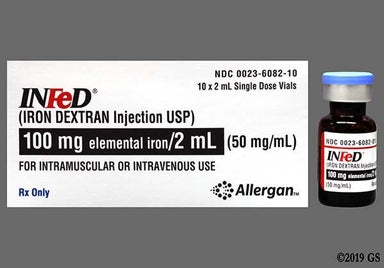
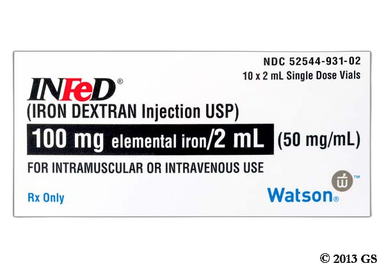
INFeD (iron dextran) images