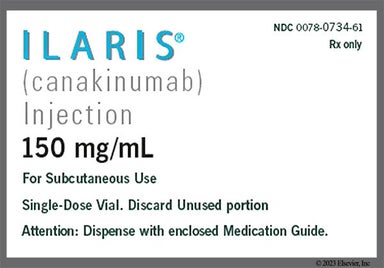
Ilaris
Ilaris (canakinumab) is a type of monoclonal antibody known as an interleukin-1β (IL-1β) blocker. It's taken by adults and children to certain inflammatory conditions, including periodic fever syndromes, Still's disease (a rare type of arthritis), and gout flares. Ilaris (canakinumab) is injected under the skin every 1 to 2 months, depending on your condition, by a healthcare provider. Some of the more common side effects of Ilaris (canakinumab) include higher risk of infection and injection-site reactions.


What is Ilaris (canakinumab)?
What is Ilaris (canakinumab) used for?
- Certain types of periodic fever syndromes in adults and children
- Adult-onset Still's disease (AOSD)
- Systemic juvenile idiopathic arthritis (SJIA) in people ages 2 years and older
- Gout flares in adults who can't take, or didn't respond well, to colchicine (Colcrys), NSAIDs, or oral corticosteroids
How Ilaris (canakinumab) works
Ilaris (canakinumab) is a monoclonal antibody. More specifically, it's an interleukin antagonist. It blocks a protein from your immune system, called interleukin-1β (or interleukin-1 beta), to help lower inflammation in the body.
Drug facts
| Common Brands | Ilaris |
|---|---|
| Drug Class | Monoclonal antibody |
| Controlled Substance Classification | Not a controlled medication |
| Generic Status | No lower-cost generic available |
| Availability | Prescription only |

Side effects of Ilaris (canakinumab)
The following side effects may get better over time as your body gets used to the medication. Let your healthcare provider know immediately if you continue to experience these symptoms or if they worsen over time.
Common Side Effects
- Nose and throat infection (11%)
- Injection-site reaction (10%)
- Upper respiratory tract infection (7%)
- Runny nose (5%)
Please note: Side effects listed were reported by people who took Ilaris (canakinumab) for certain types of periodic fever syndromes (TRAPS, HIDS/MKD, and FMF).
Less Common Side Effects
- Stomach infection
- Sore throat
Ilaris (canakinumab) serious side effects
Contact your healthcare provider immediately if you experience any of the following.
- Serious infections: fever, difficulty breathing, cough, weakness, sweating, chills, diarrhea, stomach pain, burning when you urinate, urinating more frequently
- Serious allergic reactions: hives, rash, blisters, skin reddening, swelling of the lips or tongue, difficulty breathing
The following Ilaris (canakinumab) side effects have also been reported
Along with its needed effects, a medicine may cause some unwanted effects. Although not all of these side effects may occur, if they do occur they may need medical attention.
Check with your doctor or nurse immediately if any of the following side effects occur:
More common
Body aches or pain
chills
dryness or soreness of the throat
headache
hoarseness
joint pain
loss of appetite
muscle aches and pains
shivering
stomach pain
stuffy or runny nose
sweating
tender, swollen glands in the neck
tightness in the chest
trouble breathing or swallowing
trouble sleeping
unusual tiredness or weakness
voice changes
vomiting
Incidence not known
lightheadedness or dizziness
skin rash, itching
swelling of the face, tongue, and throat
Some side effects may occur that usually do not need medical attention. These side effects may go away during treatment as your body adjusts to the medicine. Also, your health care professional may be able to tell you about ways to prevent or reduce some of these side effects. Check with your health care professional if any of the following side effects continue or are bothersome or if you have any questions about them:
More common
Bleeding, blistering, burning, coldness, discoloration of the skin, feeling of pressure, hives, infection, inflammation, itching, lumps, numbness, pain, rash, redness, scarring, soreness, stinging, swelling, tenderness, tingling, ulceration, or warmth at the injection site
feeling of constant movement of self or surroundings
increased weight
muscle or bone pain
sensation of spinning
weakness
Other side effects not listed may also occur in some patients. If you notice any other effects, check with your healthcare professional.
Call your doctor for medical advice about side effects. You may report side effects to the FDA at 1-800-FDA-1088.

Pros and cons of Ilaris (canakinumab)
Pros
- Can be used in children and adults
- Given once every month for most conditions
Cons
- Only available as an injection
- Must be given by a healthcare provider
- Unknown if safe to use during pregnancy

Pharmacist tips for Ilaris (canakinumab)

- Make sure to mark your appointments on your calendar to see your provider and receive your Ilaris (canakinumab) dose. This will help make sure you're properly being monitored and won't miss any doses.
- Before you get any vaccines, tell your provider or pharmacist that you're taking Ilaris (canakinumab). Your providers can make sure the vaccines are safe for you to get. It's not known whether the medication affects how your body responds to vaccines.
- Ilaris (canakinumab) can raise your risk of getting a serious or life-threatening infection. Avoid getting sick by washing your hands regularly and keeping away from people who are sick. Get medical help right away if you develop symptoms of an infection (e.g., fever, cough, difficulty breathing, diarrhea, weakness, sweating, chills) while you're taking Ilaris (canakinumab). You might have to stop taking Ilaris (canakinumab) so your body can fight and fully recover from the infection.
- After Ilaris (canakinumab) is injected into your skin, it's normal to have some redness, itching, swelling, and bleeding at the injection site. If these reactions don't go away, tell your provider so they can check them out.
- Make sure to tell your provider about all of the medications you're taking before and during treatment with Ilaris (canakinumab). Taking other medications that weaken your immune system with Ilaris (canakinumab) can raise your risk of serious infections.

Risks and warnings for Ilaris (canakinumab)
Ilaris (canakinumab) can cause some serious health issues. This risk may be even higher for certain groups. If this worries you, talk to your doctor or pharmacist about other options.
Risk of serious infections
- Risk factors: Active, chronic (long-term), or recurrent infection | Other conditions that raise your risk of infection | Taking medications that weaken your immune system
Ilaris (canakinumab) can make it more difficult for your body to fight off infections. This raises your risk of serious bacterial, viral, or fungal infections. The risk is higher for people who are taking or have recently taken other medications that weaken the immune system.
Additionally, Ilaris (canakinumab) might reactivate (wake up) certain viruses that are already in your body, such as tuberculosis (TB) or hepatitis B. Before you start Ilaris (canakinumab) will check to see if you have any current infections.
If you develop an infection, your provider will likely ask you to stop taking Ilaris (canakinumab) until your body fights off the infection. Let your provider know if you experience symptoms of these infections, such as fever, cough, difficulty breathing, or weakness.
Vaccinations
Make sure you're up-to-date on routine vaccinations before you start Ilaris (canakinumab). It's unclear how Ilaris (canakinumab) might affect vaccines. But because Ilaris (canakinumab) interferes with your immune system, there's a chance vaccines won't work as well for you. In addition, you're recommended to avoid live vaccines while receiving Ilaris (canakinumab) because there's a risk that you can get sick from the live vaccines. Talk with your provider to see if you still need to schedule any vaccines.
Risk of macrophage activation syndrome (MAS)
Taking Ilaris (canakinumab) might raise your risk of macrophage activation syndrome (MAS), a serious and life-threatening condition. Let your provider know if you experience symptoms of MAS, such as fever or bleeding that's difficult to stop.
Allergic reactions
Allergic reactions to Ilaris (canakinumab) are possible. Most common reactions reported were rash at the injection site, a general rash, and hives. But allergic reactions can also include life-threatening reactions like facial swelling, shock, and anaphylaxis (closing of the throat). Get medical attention right away if you notice rash, hives, dizziness, a choking sensation, difficulty breathing, swelling around your eyes, or swelling of the lips or tongue after using Ilaris (canakinumab).

Ilaris (canakinumab) dosage
Typical dosage for Ilaris (canakinumab)
-
Cryopyrin-associated periodic syndromes (CAPS):
- Weight greater than 88 lbs (40 kg): The typical dose is 150 mg injected under the skin every 2 months.
- Weight 33 lbs to 88 lbs (15 kg to 40 kg): The typical dose is 2 mg/kg of body weight injected under the skin every 2 months. In needed, your provider can raise the dose to 3 mg/kg every month (for children).
-
Other types of periodic fever syndromes (TRAPS, HIDS/MKD, and FMF):
- Weight greater than 88 lbs (40 kg): The typical dose is 150 mg injected under the skin every month. If needed, your provider can raise the dose to 300 mg every month.
- Weight of 88 lbs (40 kg) or less: The typical dose is 2 mg/kg of body weight injected under the skin every month. If needed, your provider can raise the dose to 4 mg/kg every month.
-
AOSD and SJIA:
- Weight of 16.5 lbs (7.5 kg) or more: The typical dose is 4 mg/kg of body weight (maximum 300 mg) injected under the skin every month.
-
Gout flares:
- Adults: The typical dose is 150 mg injected under the skin as a single dose. If needed, your provider might prescribe another dose at least 3 months after the previous dose.

Interactions between Ilaris (canakinumab) and other drugs
Although certain medicines should not be used together at all, in other cases two different medicines may be used together even if an interaction might occur. In these cases, your doctor may want to change the dose, or other precautions may be necessary. When you are receiving this medicine, it is especially important that your healthcare professional know if you are taking any of the medicines listed below. The following interactions have been selected on the basis of their potential significance and are not necessarily all-inclusive.
Using this medicine with any of the following medicines is usually not recommended, but may be required in some cases. If both medicines are prescribed together, your doctor may change the dose or how often you use one or both of the medicines.
- Tofacitinib

What are alternatives to Ilaris (canakinumab)?

Ilaris (canakinumab) images