Key takeaways:
Aging in place tech products can help older adults feel safer and more comfortable staying at home.
Items like smart home devices and wearables encourage social interaction and physical activity in seniors.
Since seniors are at higher risk for falling, many tech products for older adults include fall detectors.
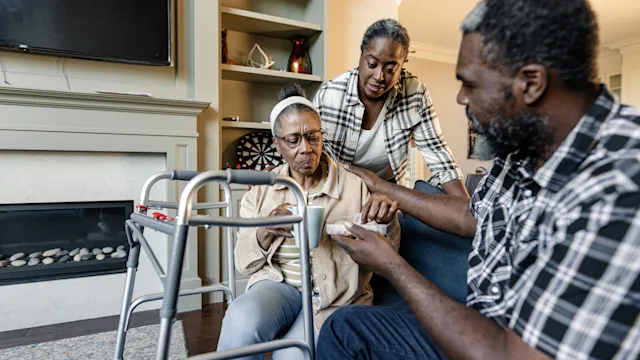
Over 54 million American adults are 65 and older. Many of them want to stay home as they get older or “age in place.” This may be cause for concerns for adult children or caregivers. Your loved one may have chronic medical issues like diabetes, low vision, or they may be showing signs of dementia.
Technology products may offer some support. Your parent likely already has a cellphone and tablet. But, there are many more devices for aging adults that offer safety features, alerts, and remote controls.
If you have a loved one who wants to remain at home, read below to learn about tech tools for seniors and where to find resources for support.
Search and compare options
What does ‘aging in place’ mean?
“Aging in place” is the term used for older adults who would rather remain at home than move into an assisted living facility. Over 90% of older adults prefer this arrangement.
Staying at home offers many mental and financial benefits. Older adults appreciate the familiarity and memories their homes have to offer. They tend to feel less lonely, isolated, and depressed. Plus, staying at home can be more cost effective than moving into a care facility.
There are also challenges to aging in place. Many of these are structural. Your parent may need a step-free entryway, wider hallways, or safety bars placed in their bathroom. But some challenges, like forgetting to take medication or leaving the stove on, can be addressed with technology.
The best aging in place products for seniors
Digital devices can make life at home safer for seniors and ease the minds of concerned caregivers. Here are some products — from smart home and medical devices to security tech — that can help your loved one stay put.
1. Smart speakers
Studies suggest that older adults benefit greatly from smart speakers like Amazon’s Echo. Other smart speakers include Google’s Nest and Apple’s HomePod. They’re easy to set up with:
Medication reminders
Fall detection
Emergency alerts
Physical activity programs

Read more like this
Explore these related articles, suggested for readers like you.




2. Smart screens
Smart video devices, like Amazon Echo Show and Google Nest Hub, can connect loved ones to caregivers, telehealth appointments, and emergency services.
Their voice activation feature allows your loved one to engage in social interaction by asking questions and listening for responses.
People with low vision can use them to identify items by holding them up to the camera and asking, “What am I holding?”
3. Activity-based sensors
Sensors can detect unusual activity like not getting out of bed or not opening the medicine cabinet. They can be placed on doors and windows, kitchen and bathroom cabinets, the stove, refrigerator, and so forth. You can set them up to send you an alert if your loved one’s behavior seems off.
4. Smart thermostats
Smart thermostats allow older adults with limited mobility to set temperatures from their smartphones, tablets, or through voice activation. For those on a fixed income, they’re also energy efficient and may lower power bills.
5. Smart light bulbs, plugs, and outlets
You or your loved one can control these smart tools from a phone or tablet or by speaking verbal instructions like, “Turn off the heater.” Smart bulbs can be scheduled to turn on before it gets dark or can be told to turn on.
To check for fire hazards, set up alerts on your phone. If an item like a space heater and oven have been left on, you can turn them off remotely.
6. Smart pill organizers
You can set up a smart pill container to organize pills and remind your loved one to take their medication. Some like Carroself will dispense pills while others like Elliegrid use lights to signal which pill to take and how many.
7. Wearable devices
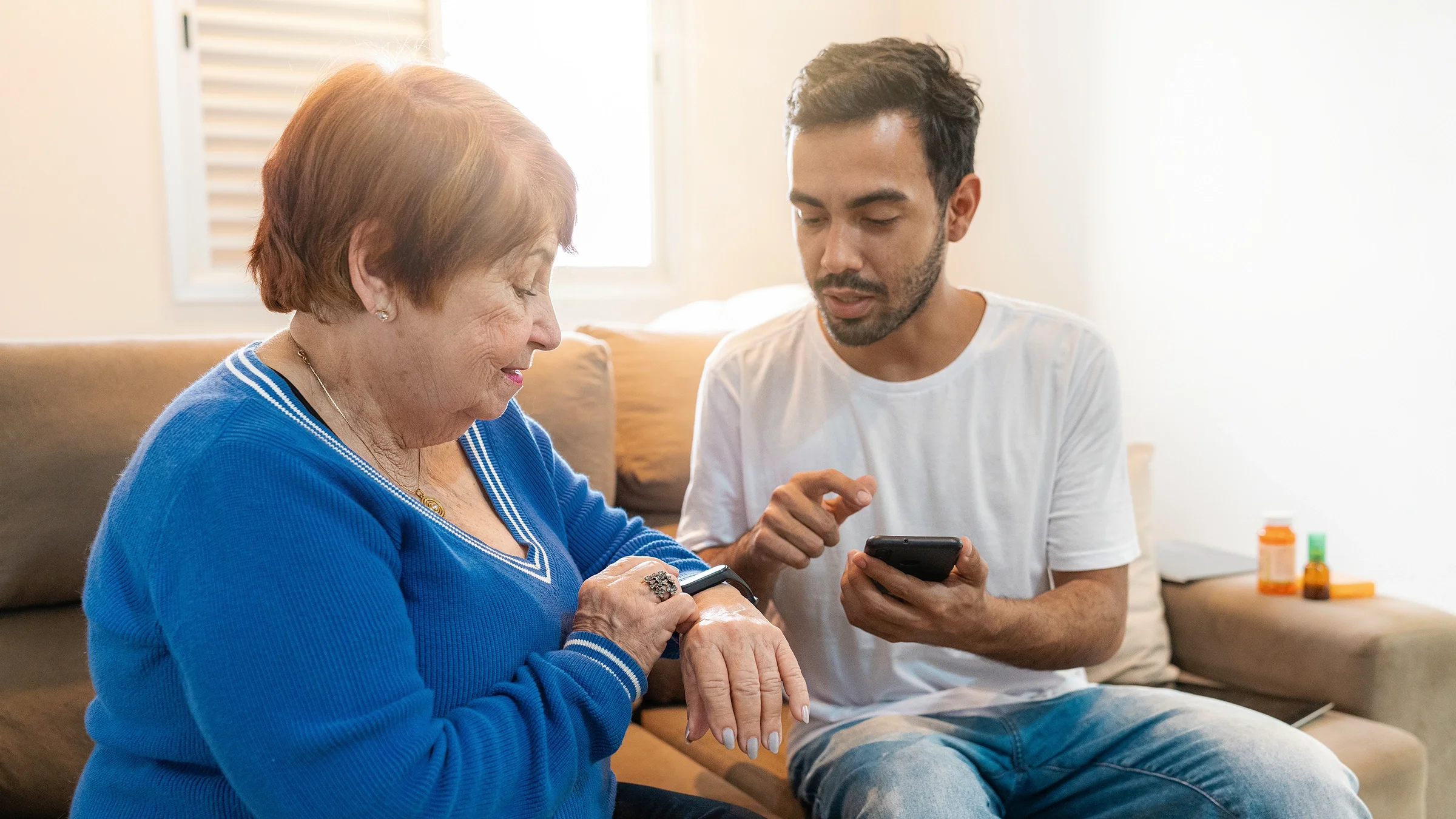
Smartwatches and fitness trackers offer a wide range of benefits. You can set them to keep an eye on health concerns and send reports to healthcare providers. The devices can remind your loved one to exercise, track their heart rate, plus some can detect falls. Some also have built-in GPS systems so you can track your parent’s whereabouts.
8. Medical alerts
Medical alerts are tools that allow your loved one to connect with emergency services in case of a fall or other event like a heart attack or stroke. Alert devices mostly come as wearables in the form of a bracelet or pendant. They’re especially helpful for older adults who live alone.
9. Glucose monitors
Glucose monitors are essential for the 13 million Americans over 65 who have been diagnosed with diabetes. They can measure glucose levels and help prevent drops in blood sugar.
For fewer finger pricks, look for a continuous glucose monitor (CGM). They work with a sensor under the skin that checks your levels throughout the day.
10. Blood pressure monitors
Blood pressure monitors are tools used at home to measure blood pressure. They’re important for the nearly 65% of Americans over 60 with high blood pressure. Regular monitoring at home can lower the risk of heart disease, stroke, and kidney disease.
The American Heart Association recommends an automatic, cuff-style monitor that fits around the upper arm.
11. Video doorbells
Video doorbells allow your loved one to see if someone is outside their door and check for deliveries. They’re especially helpful for those with hearing challenges.
12. Indoor cameras
Indoor cameras can be placed strategically throughout your loved one’s living space. You can use them to check on your loved one if they’re not answering their phone or if you suspect something’s wrong.
13. Smart smoke detectors
Unlike traditional smoke detectors, smart ones will send an alert to your phone and set off an alarm in the home. Some also detect carbon monoxide. There are several on the market that connect to smart home devices and security systems.
14. Motion-activated lights
Motion sensor lights turn on when they detect movement from 10 to 15 feet away. They illuminate areas that may be dangerous when dark, like staircases. They’re also useful for guiding someone with low vision from room to room.
15. Smart stoves and ovens
Smart stoves and ovens can be set to turn off after 5 minutes of inactivity. They can also be controlled remotely and alert you if your senior leaves it on accidentally.
Benefits of aging in place products
For the most part, technology products are an affordable way to keep your loved one at home longer. They offer many benefits, including:
Socialization with family and friends
Physical activity tracking
Emergency response
GPS tracking
Organization of health information
Appointment reminders
Medication management
Alerts for caregivers
Home safety
Resources and support for aging seniors
Many organizations offer resources and services to make life more comfortable for older adults.
Some examples include:
Eldercare is a service from the government’s Administration on Aging. They can connect you with support services in your community. Call 1-800-677-1116 or use the Eldercare locator tool on their website.
The Department of Health & Human Services has a list of older adult resources by state. Click on your state’s link to look for Medicare experts, adult day cares, and caregiver support services near you.
The National Council on Aging has published several resources on topics such as fall prevention, Medicare, and paying for prescriptions.
This online senior center directory can help you locate a senior center in your area. You could also try a Google search with the terms “senior community centers near me.”
Meals on Wheels America delivers healthy breakfasts, lunches, and dinners to older adults all over the country. The organization partners with local community programs to provide meals and check on clients. Look for a program in your area by using the Meals on Wheels search tool.
Habitat for Humanity’s Aging in Place program offers home repairs and modifications to make older adults’ homes safer and improve quality of life. They can also connect your loved one with community services such as house cleaning and grocery delivery. Use Habitat for Humanity’s locator tool to find a chapter near you.
Senior Planet is an AARP service for older adults. They promote the use of technology as a fun way to stay connected, make new friends, and learn new skills.
The bottom line
Technology products can help senior adults age in place safely. They can keep an eye on medical conditions, lower the risk of fire hazards, and add security inside and outside the home. You can set up tech tools to send you alerts if your loved one doesn’t get out of bed, leaves the stove on, or forgets to take their medication. Technology can promote peace of mind for both the older adult and their caregivers.

Why trust our experts?




References
Administration for Community Living. (2021). 2020 profile of older Americans.
AgingInPlace. (2022). Best night lights with motion sensors for seniors.
American Advisors Group. (2021). Importance of home survey.
American Heart Association. (2017). Monitoring your blood pressure at home.
Centers for Disease Control and Prevention. (2017). Hypertension prevalence and control among adults: United States, 2015-2016.
Centers for Disease Control and Prevention. (2022). Prevalence of both diagnosed and undiagnosed diabetes.
Condon, S. (2019). Amazon makes the Echo Show more helpful for the blind and visually impaired. ZDNET.
Farivar, S., et al. (2020). Wearable device adoption among older adults: A mixed-methods study. International Journal of Information Management.
Institute for Healthcare Policy and Innovation National Poll on Healthy Aging. (2021). Home blood pressure monitoring among older adults.
Kuukla, K. (n.d.). Smart thermostats. U.S. Department of Energy Office of Scientific and Technical Information.
Medcalf, L. (2023). AM509 Carroself smart pill dispenser. Easterseals Crossroads.
Merkel, S., et al. (2022). “Computer, how do smart speakers support aging in place?” – A feature analysis focusing on smart speaker applications in Amazon’s skill store for older persons. Gerontechnology.
National Institute on Aging. (2017). Aging in place: Growing older at home.
Prospero, M. (2023). Best smart smoke detectors in 2023. Tom’s Guide.
Rabideau, C. (2020). Will this smart pillbox really keep you from forgetting your meds? Reviewed.
Rantz, M. J., et al. (2013). Sensor technology to support aging in place. Journal of the American Medical Directors Association.
Ratnayake, M., et al. (2022). Aging in place: Are we prepared? Delaware Journal of Public Health.
U.S. Department of Homeland Security. (2021). Technology support for seniors.