Key takeaways:
On average, egg donors in the U.S. can get paid $8,000 to $20,000 per donation cycle. But individuals with certain backgrounds and characteristics can earn $100,000 or more.
Compensation can be highest if you have preferred physical traits, educational background, and a history of successful egg donation.
Egg donation comes with risks and drawbacks. These are important to evaluate before you apply to participate.
Egg donors can be a blessing for people who want babies they can’t produce on their own. Providing your eggs can help people build families while bringing you financial compensation.
Egg donation is done through a clinic or an agency, which screens potential donors. You can donate eggs through a cryopreservation bank where the eggs are frozen and stored until requested by a potential parent. With fresh cycle donation, eggs go to specific recipients.
Donating eggs is a serious undertaking. So it’s important to consider the time commitment and health risks in addition to the financial compensation.
How much do you get for donating eggs?
The compensation you get for donating eggs in the U.S. depends on the type of donation. Egg donation pay can range from $8,000 to $20,000 per cycle. Bank donation and first-time donors are typically on the lower end of compensation. Fresh cycle donation, experienced donors, and donors with highly sought traits — and particularly people who fall in all three categories — receive the highest compensation. Some donors are paid more than $100,000 for one cycle.
How much you get for donating your eggs can also vary based on location. Here’s a snapshot of egg donation compensation for one cycle in different areas of the U.S.:
Egg Donation Compensation for One Cycle
City or region | Egg donation payment per cycle |
|---|---|
Detroit area | |
Omaha, Nebraska | |
New York City | |
Raleigh-Durham, North Carolina | |
San Francisco Bay Area |
How do you donate eggs?
A woman is born with about 1 to 2 million eggs. Women typically release a single egg during ovulation.
The egg donation process is designed to increase the number of eggs produced during a menstrual cycle. An egg donor takes injectable (and sometimes oral) medications to stimulate the ovaries and develop more eggs during a cycle. The average donation cycle results in the retrieval of 15 to 20 eggs.
Egg donation process
To donate eggs, here are the steps in the egg donation process:
Initial application: Every potential donor must provide a detailed medical history and background information. This will help determine whether they are a good candidate.
Medical and psychological evaluation: The screening process typically includes blood tests, a physical exam, and a meeting with a mental health professional. This ensures you’re physically, emotionally, and mentally prepared to donate your eggs.
Legal contract: Donors must sign legal documents designed to protect all parties involved in the egg donation process.
Medications and monitoring: The donor will take several types of medications during the cycle. This will stimulate the ovaries so they produce more than one mature egg during a menstrual cycle. The donor is monitored through blood tests and either an ultrasound or a sonogram to observe how the ovaries respond. This process takes about 2 weeks. But donors may be monitored for 1 to 2 menstrual cycles before starting this process. So the entire egg donation process can take 2 to 3 months. Donors will not need to take injectable medications all this time.
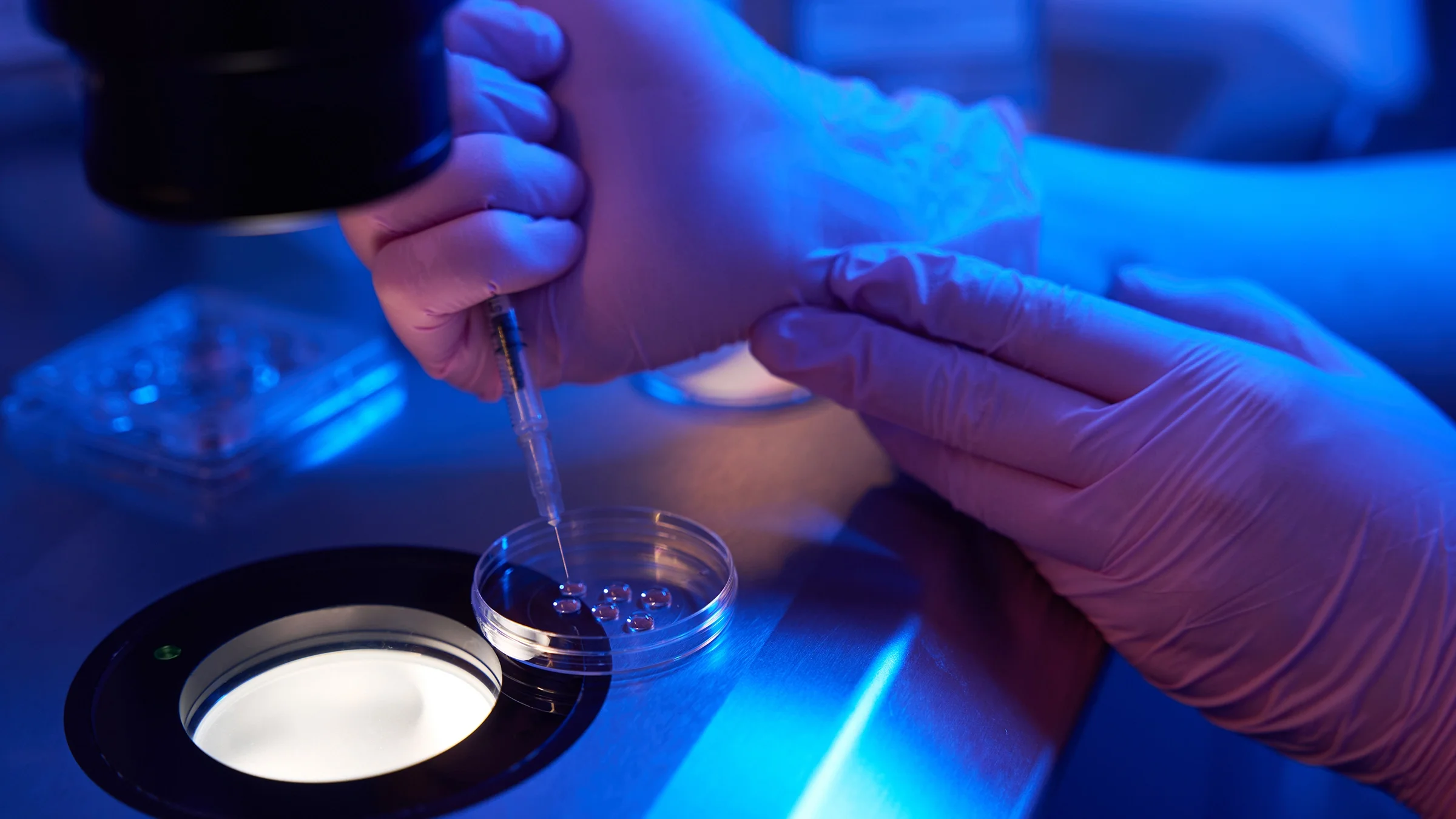
Egg retrieval: An egg retrieval is a medical procedure. A reproductive endocrinologist uses a needle to retrieve the mature eggs from the ovaries. The needle passes through the wall of the vagina and into the ovaries. Donors receive anesthesia so that they are asleep during the procedure. The egg retrieval process takes about 15 to 30 minutes.
Recovery: After the eggs are successfully retrieved, the donor is sent home to recover. Full or final compensation happens at this stage.
Donated eggs can be frozen and stored for future use. If used in a fresh cycle donation, eggs are implanted in a recipient after being harvested.
What are the requirements for donating eggs?
Potential donors must meet egg donation eligibility criteria. There are no national standards for egg donors, so the requirements to donate eggs can vary slightly between clinics. Most fertility centers follow guidelines from the American Society for Reproductive Medicine (ASRM).
In general, donors must meet the following minimal qualifications:
Ages 21 to 31, though some clinics will consider donors up to age 33
Good physical health
Good mental health
Nonsmoker
No history of substance abuse
No history of psychoactive medications (which affect the mind), such as antidepressants
Body mass index (BMI) of 19 to 29
Regular, monthly menstrual cycles
Have both ovaries
No history of hereditary genetic disorders
Willing to take injections
Dependable, mature, and able to keep appointments
What are the drawbacks of donating eggs?
Donating eggs can have some drawbacks. These may include:
Medication side effects: Possible side effects from the hormone injections may include abdominal pain and swelling, bloating, breast tenderness, and moodiness.
Ovarian hyperstimulation syndrome (OHSS): There’s a small chance that the donor may develop OHSS during the egg donation cycle. This can lead to swelling of the ovaries, bloating, weight gain, abdominal pain, nausea, vomiting — or a combination of these conditions. In some cases, OHSS may require hospitalization.
Activity restrictions: Since the ovaries become enlarged during the egg donation process, egg donors are advised against high-impact activities, including running and bike riding, which can result in twisting the ovaries. This is known as ovarian torsion, a serious and life-threatening condition. For about a month after the procedure, it’s advisable to avoid running, mountain biking, and any movement that involves jumping.
Increased chance of pregnancy: Egg donors are asked to abstain from intercourse during the egg donation process and for 3 weeks after to prevent pregnancy.
Procedure side effects and risks: As with any procedure, there is a risk of complications following an egg retrieval. Serious complications include damage to internal organs, bleeding requiring hospital observation, and blood transfusion.
Lengthy process: The egg donation process can take 1 to 2 months and require various appointments, screenings, and medications. Make sure you have the time to dedicate to all appointments.
What disqualifies you from donating eggs?
Here are some reasons you may be disqualified from donating eggs:
Age: Since egg quality declines with age, most egg donors are ages 21 to 31.
Physical health: Egg donors should be in good physical health and have what is considered a healthy BMI, typically about 19 to 29.
Substance use: A history of substance use may disqualify you from becoming an egg donor. This may include alcohol, nicotine, and recreational drugs.
Medical history: Donors must be able to provide a detailed family medical history. In addition, having an inherited genetic disorder or certain sexually transmitted infections may disqualify you.
Maximum lifetime cycles: The ASRM recommends limiting donors to six egg retrieval cycles in a lifetime.
Mental health: Having mental health conditions may disqualify you from becoming a donor. Additionally, signs that you are being pressured into donating your eggs can make you ineligible.
Scheduling: If you’re unable to make a commitment to attend all medical appointments and screenings — and to take your medications as scheduled — you may be disqualified.
Is donating eggs for money worth it?
Donating eggs can be a gift to aspiring parents. The recipients could be a couple who have had unsuccessful fertility procedures, a woman with damaged or no ovaries, or a same-sex couple.
Getting monetary compensation can also be a nice bonus. Keep in mind, there are potential drawbacks to the egg donation procedure. Make sure you weigh the pros and cons before proceeding as an egg donor.
The bottom line
Egg donation compensation can range from $8,000 to $20,000, on average, in the U.S. Compensation can be higher for donors with certain preferred physical and educational traits, as well as those with a history of successful donations. In addition, how much you receive can vary based on your location.

Why trust our experts?




References
American College of Obstetricians and Gynecologists Committee Opinion. (2022). Female age-related fertility decline. Fertility and Sterility.
American Society for Reproductive Medicine. (2023). Egg donation.
American Society for Reproductive Medicine. (2023). Ovarian hyperstimulation syndrome (OHSS).
Doherty, C. M. (2025). The pros and cons of becoming an egg donor. Methodist.
Egg Bank America. (n.d.). Prospective donors.
Faruqui, F. (2025). The money and risks behind human egg donation. Think Global Health.
Geiger, D. (2023). Becoming an egg donor: Answers to your frequently asked questions. Duke Health.
Pacific Northwest Fertility. (n.d.). BMI requirements for egg donation: Why they matter.
Practice Committee of the American Society for Reproductive Medicine. (2020). Repetitive oocyte donation: A committee opinion. Fertility and Sterility.
Practice Committee of the American Society for Reproductive Medicine. (2024). Gamete and embryo donation guidance. Fertility and Sterility.
Reproductive Medicine Associates of Michigan. (2025). Egg donor compensation: How much to expect in 2025.
Surrogacy. (2025). How much do egg donors get paid: Exploring compensation.
UCSF Health. (n.d.). Egg donation process for donors.
UCSF Health. (n.d.). FAQ: Common questions for egg donors.
Weill Cornell Medicine Egg Donor Program. (n.d.). Compensation.
Yale Medicine. (n.d.). Egg donation (for the donor).