Key takeaways:
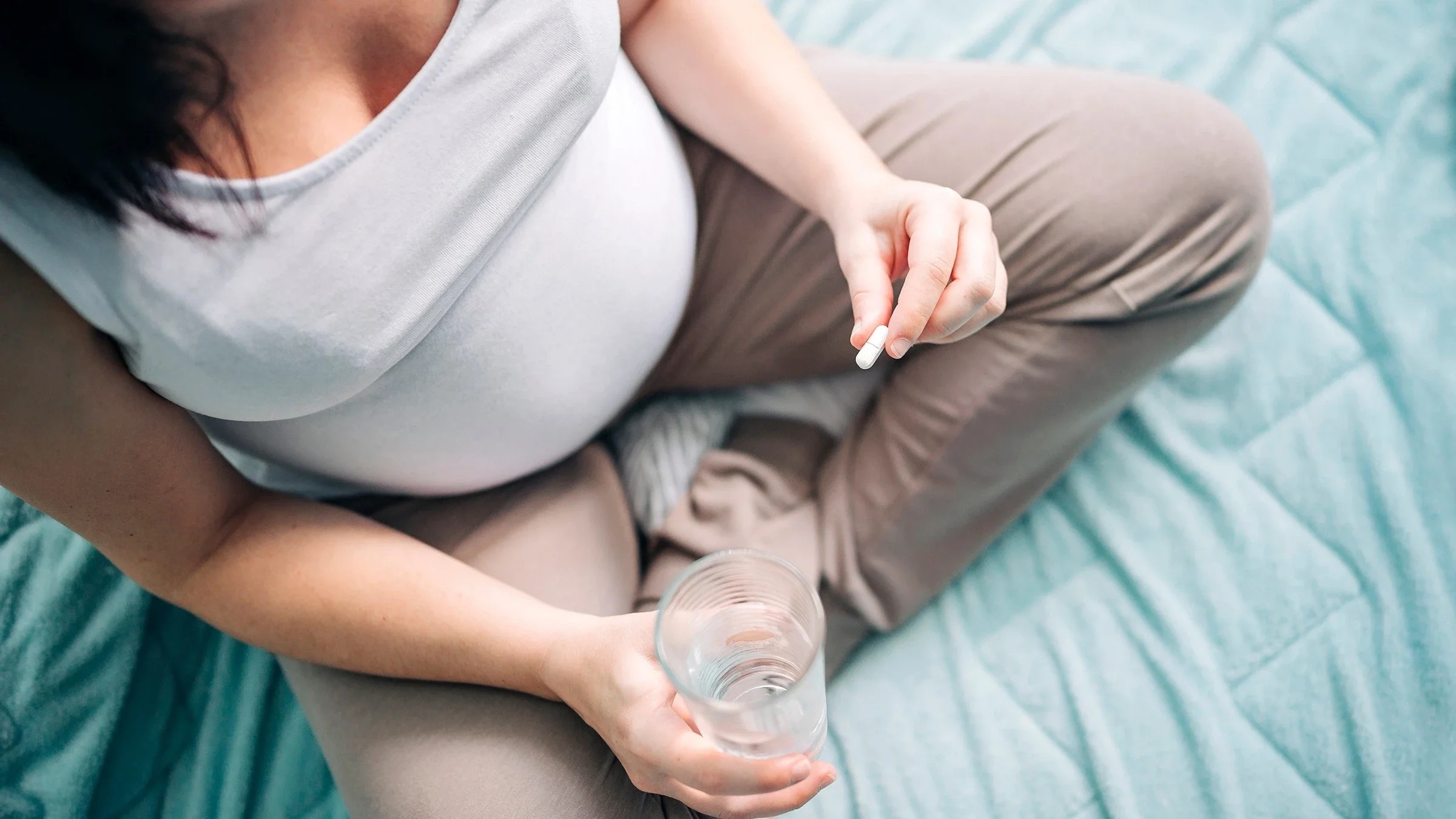
It’s probably safe to take a probiotic supplement and eat probiotic-containing foods while pregnant.
It’s not clear whether taking a probiotic supplement can help ease pregnancy-related symptoms like nausea or vaginal infections.
Probiotic supplements aren’t regulated by the FDA, so they aren’t required to meet strict safety standards. Your healthcare team can help you decide which probiotic supplement is safest to take during pregnancy.
You have trillions of organisms living in your body. Your microbiome includes bacteria and fungi that play an important role in your health. Pregnancy can change your gut microbiome. These changes can take a toll on your gut health during pregnancy.
Many people turn to probiotics to keep their microbiome healthy. But are probiotics safe to use if you’re pregnant? Let’s take a closer look at the benefits and possible safety concerns.
What are probiotics?
Probiotics are living microorganisms, like bacteria and yeast. Ingesting probiotics may help balance your gut microbiome. Some foods naturally contain probiotics. But probiotics can also be added to foods and drinks. They’re also available as supplements.
Search and compare options
How do probiotics work?
Your gut is full of different types of organisms — including bacteria and fungi. Ingested probiotics travel to your gut and join your microbiome. They may change the balance of organisms that live there. The hope is that they help “good bacteria” flourish and keep “bad bacteria” at bay. This promotes a balanced, healthy microbiome.
A healthy microbiome supports your immune system and keeps your gut healthy. It may also affect your mood, sleep, and metabolic health.
Is it safe to take probiotics while I’m pregnant?
It’s probably safe to take a probiotic supplement or eat probiotics while you’re pregnant. There isn’t enough data to say that they’re completely safe. But research suggests that probiotics rarely pass from your gut into your bloodstream. So it’s unlikely that probiotics will cause any serious side effects or harm to you or your developing baby.
Studies show that probiotic use during pregnancy doesn’t cause significant side effects. And there hasn’t been a link with miscarriages or birth defects either.
But experts recommend that some people with a weakened immune system avoid probiotics. Your immune system is naturally weaker during pregnancy. So it may not be safe to take a probiotic during pregnancy if you already have a medical condition that affects your immune system or you take medications that lower your immune system.
You should talk with your healthcare team before starting any supplements during pregnancy, including probiotics. They can make sure it’s safe for you to take probiotics and help you find the safest choice.
How effective are probiotics during pregnancy?
The gut microbiome changes during pregnancy, likely because of changes in hormone levels. These changes may worsen common pregnancy symptoms like:
There’s even some evidence that your gut microbiome may impact your baby’s future health. But do probiotics help with any of these things? Let’s take a look at the research.
Pregnancy-related nausea and vomiting
There’s minimal research on whether probiotic use helps ease pregnancy-related nausea and vomiting. A small study found that taking a daily probiotic supplement eased nausea, vomiting, and constipation. But this study only included 32 people, and they only took probiotics for 16 days. It’s unclear if most people would get similar results while taking probiotics.
Preventing preterm labor
Your gut and vaginal microbiomes are related. A healthy vaginal microbiome is important for a healthy pregnancy. Imbalances in the vaginal microbiome may increase the risk of vaginal infections, like bacterial vaginosis or aerobic vaginitis. These vaginal infections can increase the risk of early delivery (preterm labor).
But while probiotics may help balance the vaginal microbiome, it’s not clear whether they will lower the risk of preterm labor related to vaginal infections.
One analysis of over 4,000 pregnant participants found that taking probiotics didn’t lower the risk of preterm labor. But on a positive note, they also found that taking probiotics didn’t increase the risk of preterm labor either.
Preventing GBS colonization
Group B Streptococcus (GBS) is a bacteria that can live permanently (colonize) in the digestive tract and vagina. GBS colonization during pregnancy increases a newborn’s risk of developing life-threatening infections in the days after birth. That’s why experts recommend GBS testing in the final weeks of pregnancy and then antibiotic treatment during delivery.
Studies have looked at whether probiotic supplements during pregnancy prevent GBS colonization. One study found that probiotics may prevent or treat GBS colonization. But other studies found that probiotics don’t prevent or treat vaginal GBS colonization. So, if you’re colonized with GBS, probiotics won’t be enough. You’ll still need antibiotic treatment during delivery.
Eczema prevention
Eczema is a chronic skin condition that can cause itchiness and skin inflammation. It affects 1 in 4 children. Most children develop eczema as babies. It’s still not clear what causes eczema. But studies show that people with eczema may have different gut bacteria than people without eczema.
Researchers have studied whether probiotic use during pregnancy can prevent childhood eczema. One randomized control trial found that people who took a probiotic during pregnancy were less likely to have babies who developed eczema as infants or toddlers.
Another analysis of seven studies found similar results. But the benefits were more clear when the infant was more likely to develop eczema. This included situations where there was one or more family member with eczema or other allergic illnesses, like asthma.
With this type of data in mind, experts recommend taking probiotics during pregnancy if your baby is likely to develop an allergic illness, like eczema.
What precautions should you take when using probiotics during pregnancy?
It’s important to choose safe products during pregnancy. And probiotics are no exception. Here are some things to keep in mind.
Check for safety testing
Probiotics are considered dietary supplements, so they don’t require FDA approval. That means they aren’t subjected to rigorous safety standards.
Also, manufacturers aren’t required to prove their product delivers on certain health claims. That’s why it’s important to choose a reliable manufacturer. Reliable manufacturers will voluntarily submit their products for safety testing. Often, they label their products as meeting certain standards set by independent safety reviewers. You can also learn more about manufacturers’ safety standards on their website.
Check product details
It’s also a good idea to check what your probiotic contains. Since probiotics aren’t regulated by the FDA, they aren’t required to contain a specific amount of an active ingredient. Manufacturers can use different types and amounts of microorganisms in their products. And these ingredients can be different from what scientific researchers use in their tests on probiotics’ benefits. So, you may not get the same health benefits shown in studies if your product contains different microorganisms or different amounts of them.
Talk with your healthcare team
Probiotics may not be safe if you:
Have a weakened immune system
Have certain medical conditions
Take certain medications
It’s always best to check with your healthcare team before starting any supplements to make sure they’re safe for you.
Which probiotic is best while I’m pregnant?
There’s no research showing that one probiotic is “best” during pregnancy. Studies on probiotics during pregnancy usually include specific microorganisms including Lactobacillus, Streptococcus, and Bifidobacterium. But the effectiveness and safety of one probiotic product doesn’t mean that another product is just as safe or effective.
It’s possible that the best probiotic for you depends on what you’re trying to accomplish. For example, one probiotic may be better for minimizing nausea, while another could help prevent vaginal infections.
If you’re interested in taking a probiotic while pregnant, talk to your healthcare team about which one may be best for you.
Can I take probiotics while breastfeeding?
Experts note that probiotics are likely safe to take while nursing.
Human breast milk naturally contains a variety of bacteria that are good for your infant’s gut. It’s part of the reason that breast milk is so good for babies.
Probiotics are also added to infant formulas. Infant formulas are regulated by the FDA, and all components must pass strict quality and safety standards. This indicates that probiotics are safe for most babies to take.
Frequently asked questions
Yes, you can take a prenatal vitamin and probiotics at the same time. Taking them together may make it easier to remember to take all your vitamins and supplements.
Yes, you can take probiotics and folic acid at the same time. They don’t interact, so it’s safe to take them together.
It’s not clear if there’s a best time to take a probiotic. Taking them 30 minutes before or 2 hours after a meal may protect the microbes in the probiotic from stomach acid. But some research suggests that taking a probiotic with food may help them survive better.
You can safely take probiotics while trying to conceive, as long as you don’t have a weakened immune system or other medical condition that makes it unsafe to take a probiotic. There’s no clear evidence that probiotics improve fertility.
Yes, you can take a prenatal vitamin and probiotics at the same time. Taking them together may make it easier to remember to take all your vitamins and supplements.
Yes, you can take probiotics and folic acid at the same time. They don’t interact, so it’s safe to take them together.
It’s not clear if there’s a best time to take a probiotic. Taking them 30 minutes before or 2 hours after a meal may protect the microbes in the probiotic from stomach acid. But some research suggests that taking a probiotic with food may help them survive better.
You can safely take probiotics while trying to conceive, as long as you don’t have a weakened immune system or other medical condition that makes it unsafe to take a probiotic. There’s no clear evidence that probiotics improve fertility.
The bottom line
It’s probably safe to take a probiotic while pregnant. But it’s not clear if probiotics deliver any extra health benefits during pregnancy. It’s probably safe to take probiotics if you’re nursing. Probiotics aren’t regulated by the FDA, so choose products from reputable manufacturers. Talk to your healthcare team before starting a probiotic supplement during pregnancy. They can make sure it’s safe for you to take these supplements.

Why trust our experts?



References
American Academy of Dermatology Association. (n.d.). How to treat eczema in babies.
American College of Obstetricians & Gynecologists. (2023). Group B strep and pregnancy.
American Family Physician. (2017). What are probiotics?
American Pregnancy Association. (n.d.). Probiotics during pregnancy.
Baldassarre, M. E., et al. (2018). Rationale of probiotic supplementation during pregnancy and neonatal period. Nutrients.
Doege, K., et al. (2012). Impact of maternal supplementation with probiotics during pregnancy on atopic eczema in childhood – A meta-analysis. British Journal of Nutrition.
Edwards, S. M., et al. (2017). The maternal gut microbiome during pregnancy. The American Journal of Maternal/Child Nursing.
Elias, J., et al. (2011). Are probiotics safe for use during pregnancy and lactation? Canadian Family Physician.
Fiocchi, A., et al. (2015). World Allergy Organization-McMaster University Guidelines for Allergic Disease Prevention (GLAD-P): Probiotics. The World Allergy Organization Journal.
Ho, M., et al. (2016). Oral Lactobacillus rhamnosus GR-1 and Lactobacillus reuteri RC-14 to reduce group B Streptococcus colonization in pregnant women: A randomized controlled trial. Taiwanese Journal of Obstetrics and Gynecology.
Jarde, A., et al. (2018). Pregnancy outcomes in women taking probiotics or prebiotics: A systematic review and meta-analysis. BMC Pregnancy and Childbirth.
Jois, R. S., et al. (2020). Do probiotics in pregnancy reduce the risk of group B streptococcal colonisation? Journal of Paediatrics and Child Health.
Kothari, J., et al. (2019). Probiotic supplements might not be universally-effective and safe: A review. Biomedicine & Pharmacotherapy.
Lara-Villoslada, F., et al. (2007). Beneficial effects of probiotic bacteria isolated from breast milk. British Journal of Nutrition.
Liu, A. T., et al. (2021). Probiotics improve gastrointestinal function and life quality in pregnancy. Nutrients.
Makrgeorgou, A., et al. (2018). Probiotics for treating eczema. Cochrane Database of Systematic Reviews.
March of Dimes. (2024). Persistent vaginal infection linked to higher preterm birth risk.
Mohajeri, M. H., et al. (2018). The role of the microbiome for human health: From basic science to clinical applications. European Journal of Nutrition.
Mor, G., et al. (2010). The immune system in pregnancy: A unique complexity. American Journal of Reproductive Immunology.
National Center for Complementary and Integrative Health. (2019). Probiotics: Usefulness and safety. National Institutes of Health.
Rautava, S., et al. (2012). Maternal probiotic supplementation during pregnancy and breast-feeding reduces the risk of eczema in the infant. The Journal of Allergy and Clinical Immunology.
Stadlbauer, V. (2015). Immunosuppression and probiotics: Are they effective and safe? Beneficial Microbes.
Tompkins, T. A., et al. (2011). The impact of meals on a probiotic during transit through a model of the human upper gastrointestinal tract. Beneficial Microbes.
U.S. Food and Drug Administration. (2024). Questions and answers on dietary supplements.
Zhang, Y., et al. (2015). Impacts of gut bacteria on human health and diseases. International Journal of Molecular Sciences.