Key takeaways:
Clomid (clomiphene) is an oral medication that treats certain types of infertility. The recommended Clomid dosage for women starts at 50 mg once daily for 5 days. In most cases, you’ll start taking Clomid on Day 5 of your menstrual cycle.
If needed, your prescriber may increase your Clomid dosage to 100 mg once daily for 5 days. It isn’t recommended to take more than 6 cycles of Clomid, or more than 3 cycles with ovulation that doesn’t result in pregnancy.
There are ways to save on the cost of Clomid, which is also available as generic clomiphene. GoodRx can help you access brand-name Clomid at an exclusive cash price of $156 for 30 tablets. A manufacturer savings card is also available.
Save on related medications
Clomid (clomiphene) is an oral medication that’s commonly prescribed to help with infertility. It helps stimulate the ovaries to develop and release an egg (ovulation). But it isn’t a pill that you’ll take every day on a regular basis.
Understanding Clomid dosages for women can help you get the most from your treatment and increase your chances of becoming pregnant. Here’s what you should know.
What’s the typical Clomid dosage for women?
Clomid is FDA approved to treat infertility caused by ovulation issues in adult women. This includes polycystic ovary syndrome (PCOS) and other conditions that affect your ability to develop and release a mature egg from your ovaries.
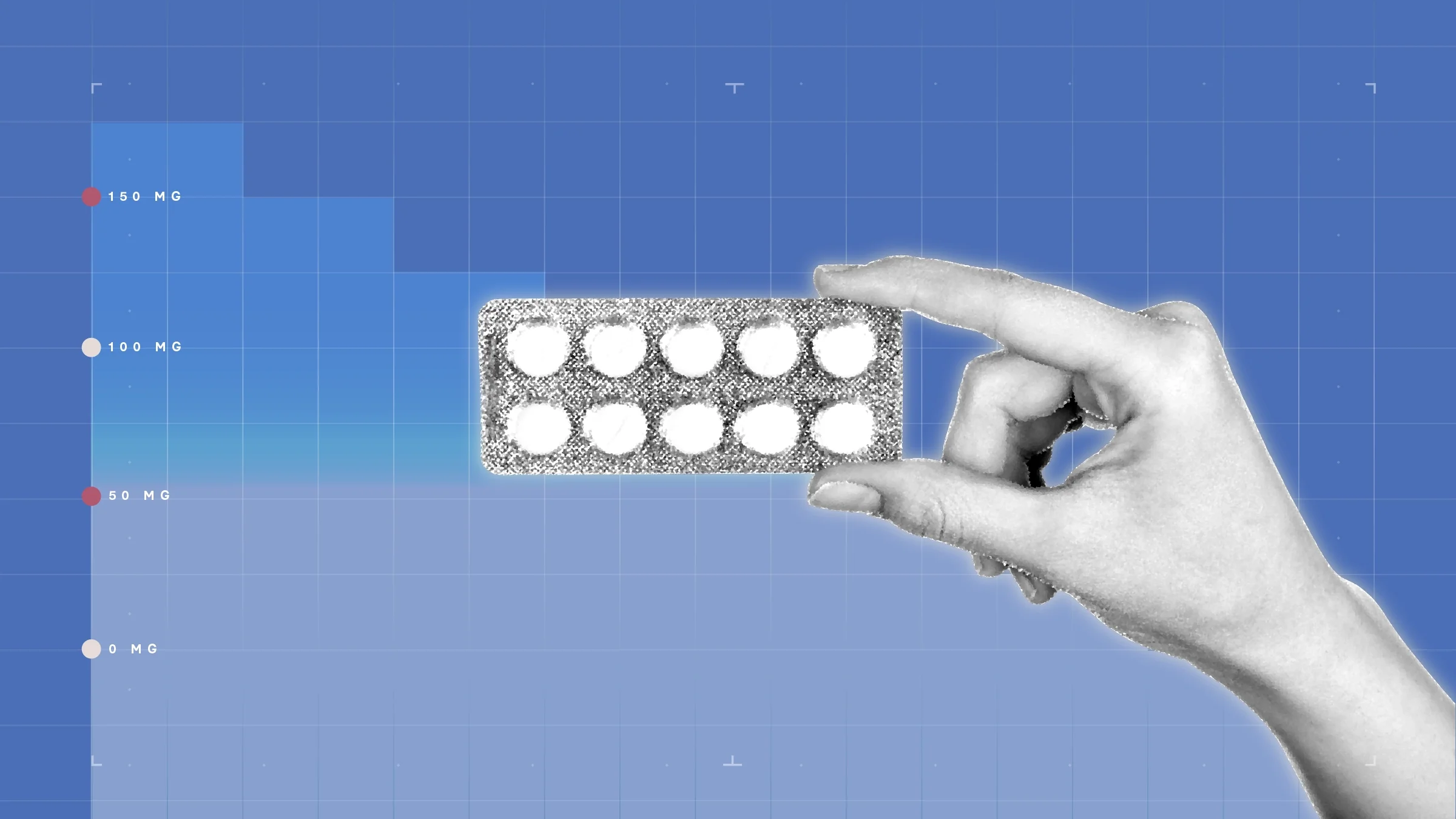
In most cases, you’ll start with a Clomid dosage of 50 mg once daily for 5 days. This is considered one treatment cycle. If ovulation doesn’t occur at this dose, your prescriber may increase your Clomid dosage to 100 mg (two 50 mg tablets) once daily for 5 days.
You’ll typically start taking Clomid on the fifth day of your menstrual cycle (your first day of bleeding is considered Day 1). Try to take Clomid at the same time every day. This helps keep Clomid levels at a consistent level in your body.
Ovulation typically occurs within 5 to 10 days after a course of Clomid. If ovulation doesn’t occur after 3 rounds of Clomid, it’s recommended to stop treatment. Similarly, if you ovulate but don’t become pregnant for 3 cycles of Clomid, it’s unlikely that further treatment will be effective for you.
It isn’t recommended to take more than 6 cycles of Clomid (or more than 3 cycles with ovulation that doesn’t result in pregnancy).
Good to know: Your prescriber may recommend a different Clomid dosage as part of in vitro fertilization or other fertility treatments. There aren’t clear recommended Clomid dosages in this case. So follow your prescriber’s instructions and reach out with any questions about how or when to take Clomid.
Are there any dosage adjustments for health conditions?
Certain health conditions may require a lower Clomid dosage or avoiding the medication altogether.
PCOS
If you’re living with PCOS, you may need a lower Clomid dosage or a shorter treatment course. PCOS and similar conditions can make you more sensitive to Clomid. This raises your risk of ovarian hyperstimulation syndrome (OHSS) with higher doses. If you don’t respond to a lower Clomid dosage, your prescriber may still decide to try a higher dose. But they’ll likely keep a close eye on your ovaries to watch for signs of OHSS, such as rapid weight gain, nausea, and stomach pain.
Liver problems
Clomid isn’t recommended if you have a history of liver problems. Your prescriber can recommend an alternative infertility treatment in this case.
What happens if you miss a dose of Clomid?
If you miss a dose of Clomid, take it as soon as you remember. But if it’s almost time for your next dose, ask your prescriber for guidance. You shouldn’t take 2 doses of Clomid at once to make up for a missed dose. Doing so could raise your risk of OHSS and other side effects.
What should you do if you take too much Clomid?
Taking more Clomid than prescribed can raise the risk of side effects, including OHSS. Let your prescriber know right away if you take an extra dose of Clomid by mistake. They may need to keep a closer eye on your ovaries to make sure they aren’t overstimulated.
If you or a loved one takes a large amount of Clomid, contact your prescriber or Poison Control at 1-800-222-1212 for guidance.
How to save on Clomid
There are ways to save on Clomid, which is available as a brand-name medication as well as generic clomiphene. GoodRx can help you navigate between GoodRx coupons, copay savings cards, and patient assistance programs to save money on your prescription.
Save with GoodRx: Anyone with a valid prescription, regardless of insurance status, can use GoodRx to purchase 30 tablets (up to a 6-month supply) of brand-name Clomid at an exclusive cash price of $156.
Save with a copay savings card: You may be eligible to pay as little as $70 ($135 without insurance) for Clomid using a savings card from the manufacturer.
Save with generic clomiphene: Pay as little as $38.56 for one cycle of generic clomiphene with a free GoodRx discount.
The bottom line
Clomid (clomiphene) is an oral medication that treats certain types of infertility. The recommended Clomid dosage for women starts at 50 mg once daily for 5 days. In most cases, you’ll start taking Clomid on Day 5 of your menstrual cycle.
If needed, your prescriber may increase your Clomid dosage to 100 mg once daily for 5 days. It isn’t recommended to take more than 6 cycles of Clomid, or more than 3 cycles with ovulation that doesn’t result in pregnancy.

Why trust our experts?



References
Cosette Pharmaceuticals NC Laboratories. (2025). Clomiphene citrate- clomiphene citrate tablet [package insert].
Feh, M. K. M., et al. (2024). Clomiphene. StatPearls.
MedlinePlus. (2017). Clomiphene.