Key takeaways:
Hand, foot, and mouth disease (HFMD) is a contagious viral illness that causes fever, sore throat, and a blistering rash.
People are most contagious with HFMD during the first week of illness.
People can return to work, school, and day care once their fever resolves and blisters scab over.
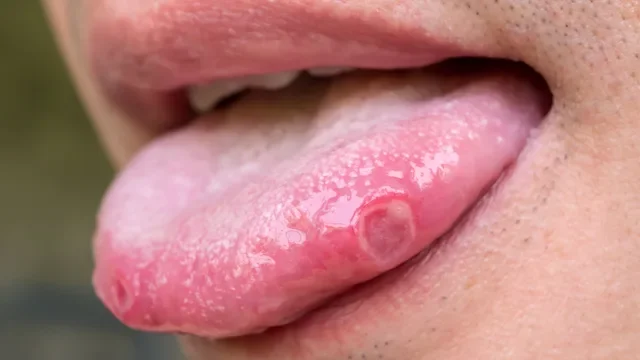
Hand, foot, and mouth disease (HFMD) is a highly contagious viral infection that causes fever, a blistering rash, and painful sores inside of the mouth. The viruses that cause HFMD are most active in the summer months and early fall.
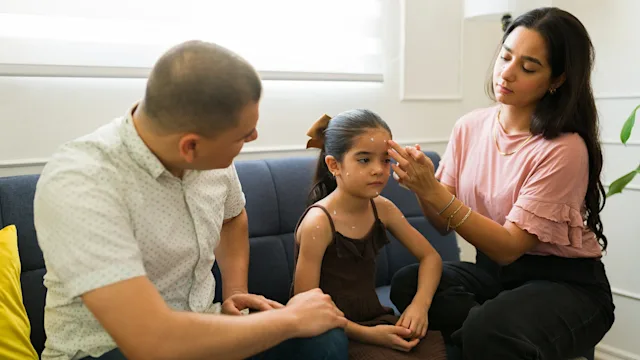
Young children are most likely to get sick with the illness. But adults can get HFMD, too, especially if they live or work with young children.
The viruses that cause HFMD can quickly spread through homes, schools, and workplaces. Here’s what to know about how long HFMD is contagious and when you can go back to your usual routine.
How long is hand, foot, and mouth disease contagious?
HFMD can be contagious for several weeks. HFMD usually lasts 7 to 10 days. But studies show that people can remain contagious even after their symptoms go away.
People can continue to shed the viruses that cause HFMD for 3 to 4 weeks. In some cases, people can continue to shed the virus for up to 7 weeks.
This can be a problem in daycares and school settings. That’s because children who’ve recovered can continue to shed the virus and other people can continue to get sick. It can be helpful to let your child’s school know if they have HFMD. That way, the school can take extra cleaning steps to keep the community healthy.
You should also continue to take steps to limit the spread of the virus at home. These include frequent hand washing and disinfecting commonly touched surfaces and bathrooms for about a month. This can keep everyone in your home healthy.
When are people with hand, foot, and mouth disease most contagious?
People with HFMD are most contagious during the first week of their illness.
So, even though they can spread the illness for weeks, the risk of passing the viruses to others becomes much smaller after a week. People can also shed the virus for several days before they develop HDMF symptoms.
How does hand, foot, and mouth disease spread?
People can spread the viruses that cause HFMD before they feel sick and after they feel better. So HFMD has many opportunities to pass from one person to the next.
These viruses spread from person to person in several ways:
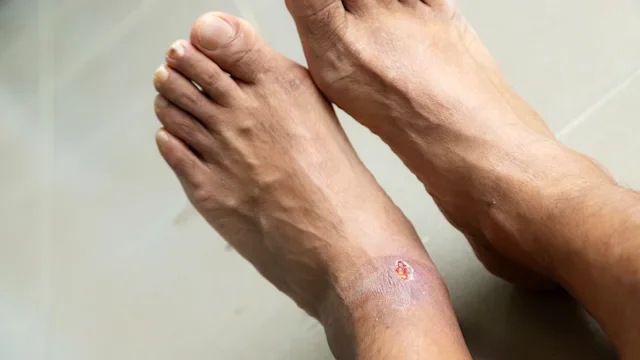
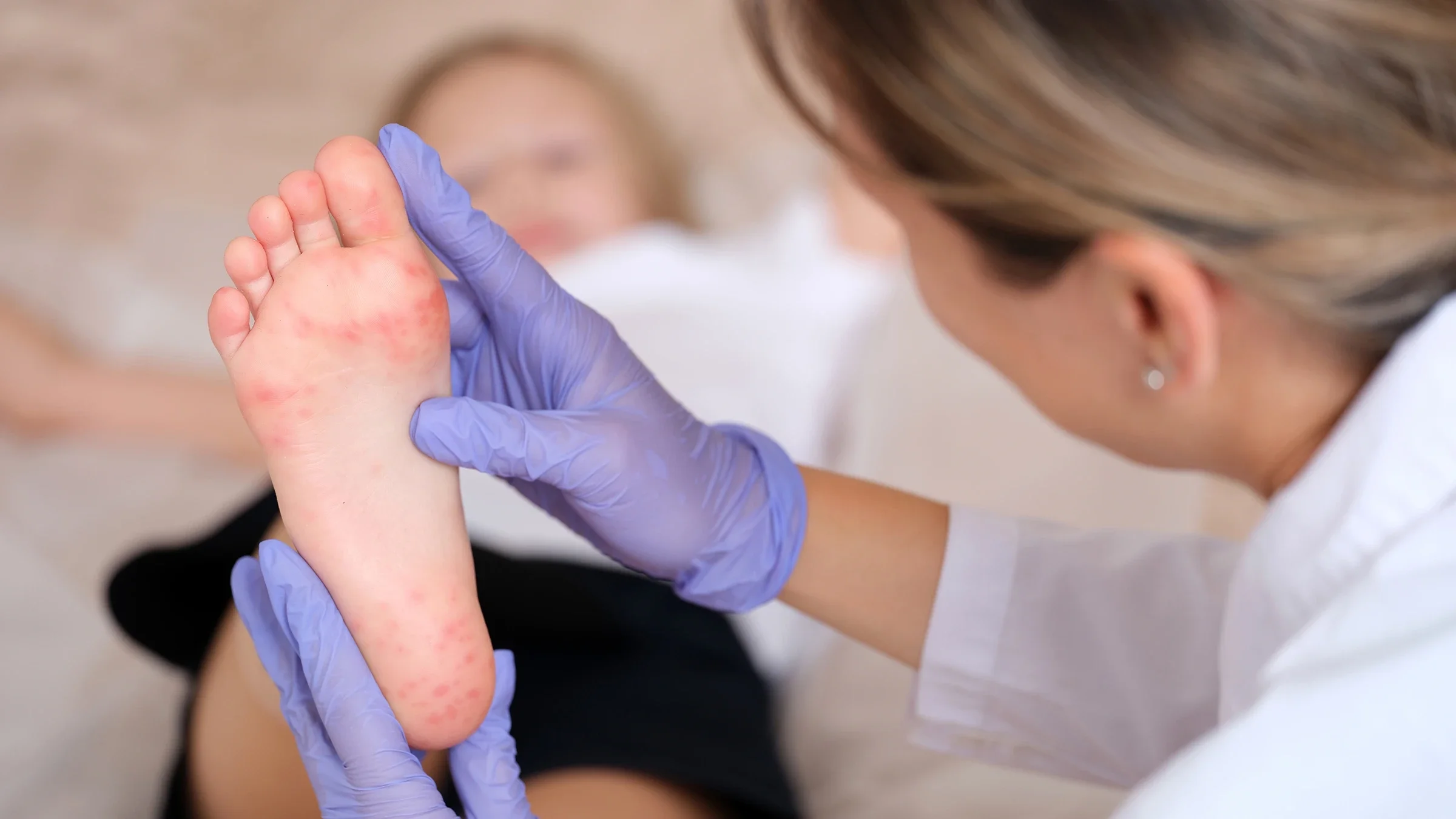
Direct contact: People with HFMD develop a blistering rash. Viruses live inside those blisters. So, if someone touches another person’s blisters, they can pick up the viruses. It takes about a week for the blisters to scab over. Once the rash has scabbed, the viruses can’t spread this way anymore.
Droplets: The viruses can spread through respiratory droplets. Anytime someone with HFMD coughs, sneezes, or talks, they can spread the viruses into the air. Then another person can breathe in the droplets and get sick. People can spread the viruses this way for up to 3 weeks, even if they’re already feeling better.
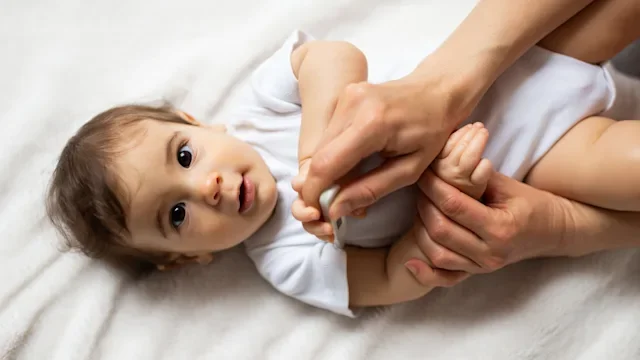
Feces (poop): The viruses can also live inside a person’s poop. People can come in contact with the viruses during diaper changes and bathing. People can shed the viruses in their poop for several weeks, even if they’re already feeling better.

Read more like this
Explore these related articles, suggested for readers like you.
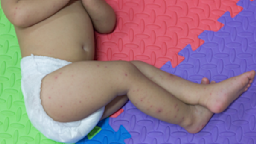
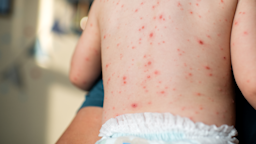

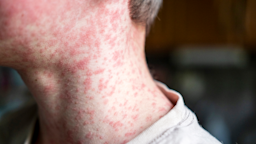
When can you return to work or school if you have hand, foot, and mouth disease?
Even though there’s a risk of spreading the hand, foot, and mouth virus for weeks, you don’t have to isolate yourself for all that time. Here’s when you can return to work, in general:
You no longer have a fever.
The blistering rash has completely scabbed over.
You feel well enough to participate in your usual activities.
It takes about a week for this to happen. Some schools or day cares may have additional rules about when it’s safe to return.
According to Dr. Brian Clista, a board-certified pediatrician and GoodRx contributor: “Most kids will recover in about a week, give or take a few days.” He adds that most day cares let kids return when:
They haven’t had a fever for 24 hours, without the use of medication to reduce a fever.
Their blisters have healed.
They can drink liquids.
How can you prevent transmission of hand, foot, and mouth disease?
You can help stop the spread of HFMD and other viral illnesses by following these steps:
Cover your mouth when you cough or sneeze. If possible, teach your children to do the same.
Wash your hands. This is especially important after coughing, sneezing, changing diapers, or using the bathroom.
Clean high-contact surfaces. Wipe down items that are frequently touched, like bathroom surfaces, doorknobs, and countertops. If your child is sick, clean toys after play.
Avoid sharing food, drinks, and personal items. The viruses that cause HFMD live in saliva, so try not to share utensils or cups.
If you’re taking care of a child with HFMD, here’s what Dr. Clista reminds us: “Kids can shed viruses that cause HFMD in their stool for several weeks. Good hand-washing with diaper changes is the best way to prevent transmission.”
Frequently asked questions
The recovery stage is the last stage of HFMD. During this stage, the scabbed-over blisters continue to dry and heal. This stage starts around day 7 to 10 of the illness.
There’s no way to speed up healing of HFMD. There are steps you can take to support your loved one who might be sick. These include making sure they rest and staying hydrated. You can also try over-the-counter (OTC) pain and fever reducers, like acetaminophen or ibuprofen. Encourage your loved one to avoid scratching and picking at blisters. This can help prevent infection and scarring.
Yes, adults can get HFMD. Immunity against the viruses that cause HFMD can last several years. But new virus strains develop from time to time. Adults can get sick with these strains since they aren’t immune to them.
The recovery stage is the last stage of HFMD. During this stage, the scabbed-over blisters continue to dry and heal. This stage starts around day 7 to 10 of the illness.
There’s no way to speed up healing of HFMD. There are steps you can take to support your loved one who might be sick. These include making sure they rest and staying hydrated. You can also try over-the-counter (OTC) pain and fever reducers, like acetaminophen or ibuprofen. Encourage your loved one to avoid scratching and picking at blisters. This can help prevent infection and scarring.
Yes, adults can get HFMD. Immunity against the viruses that cause HFMD can last several years. But new virus strains develop from time to time. Adults can get sick with these strains since they aren’t immune to them.
The bottom line
Hand, foot, and mouth disease (HFMD) is a common viral illness that can easily spread from person to person. People with HFMD are most contagious for the first week they’re sick. But people can continue to shed the viruses that cause HFMD in the stool for several weeks. It’s safe to return to work or school once the fever has resolved and blisters have scabbed over.

Why trust our experts?



References
Centers for Disease Control and Prevention. (2024). About hand, foot, and mouth disease spreads.
Cordeiro E Cunha, J., et al. (2020). Exuberant hand-foot-mouth disease: An immunocompetent adult with atypical findings. European Journal of Case Reports in Internal Medicine.
Duan, X., et al. (2021). Virus shedding in patients with hand, foot and mouth disease induced by EV71, CA16 or CA6: Systematic review and meta-analysis. The Pediatric Infectious Disease Journal.
Hussain, S. R. (2025). Hand, foot & mouth disease: Symptoms, treatment & prevention. HealthyChildren.org.
Saguil, A., et al. (2019). Hand-foot-and-mouth disease: Rapid evidence review. American Family Physician.
Wu, Q., et al. (2017). Prevalence of enteroviruses in healthy populations and excretion of pathogens in patients with hand, foot, and mouth disease in a highly endemic area of southwest China. PloS One.
Zhu, P., et al. (2023). Current status of hand-foot-and-mouth disease. Journal of Biomedical Science.