Key takeaways:
A newborn’s admission to a neonatal intensive care unit (NICU) typically means higher healthcare spending for parents. However, your health insurance plan's annual out-of-pocket maximum limits what you'll pay.
Expenses beyond medical bills can add up if your child is admitted to a NICU. Additional costs can include parking and lodging in a hotel or elsewhere.
Hospitals and nonprofit organizations may offer free or discounted accommodations for parents and families supporting a child in the NICU.
Supplemental Security Income (SSI) provides a modest stipend for some NICU babies. For certain workers, the Family and Medical Leave Act provides time off for NICU visits and to care for an infant with serious medical issues.
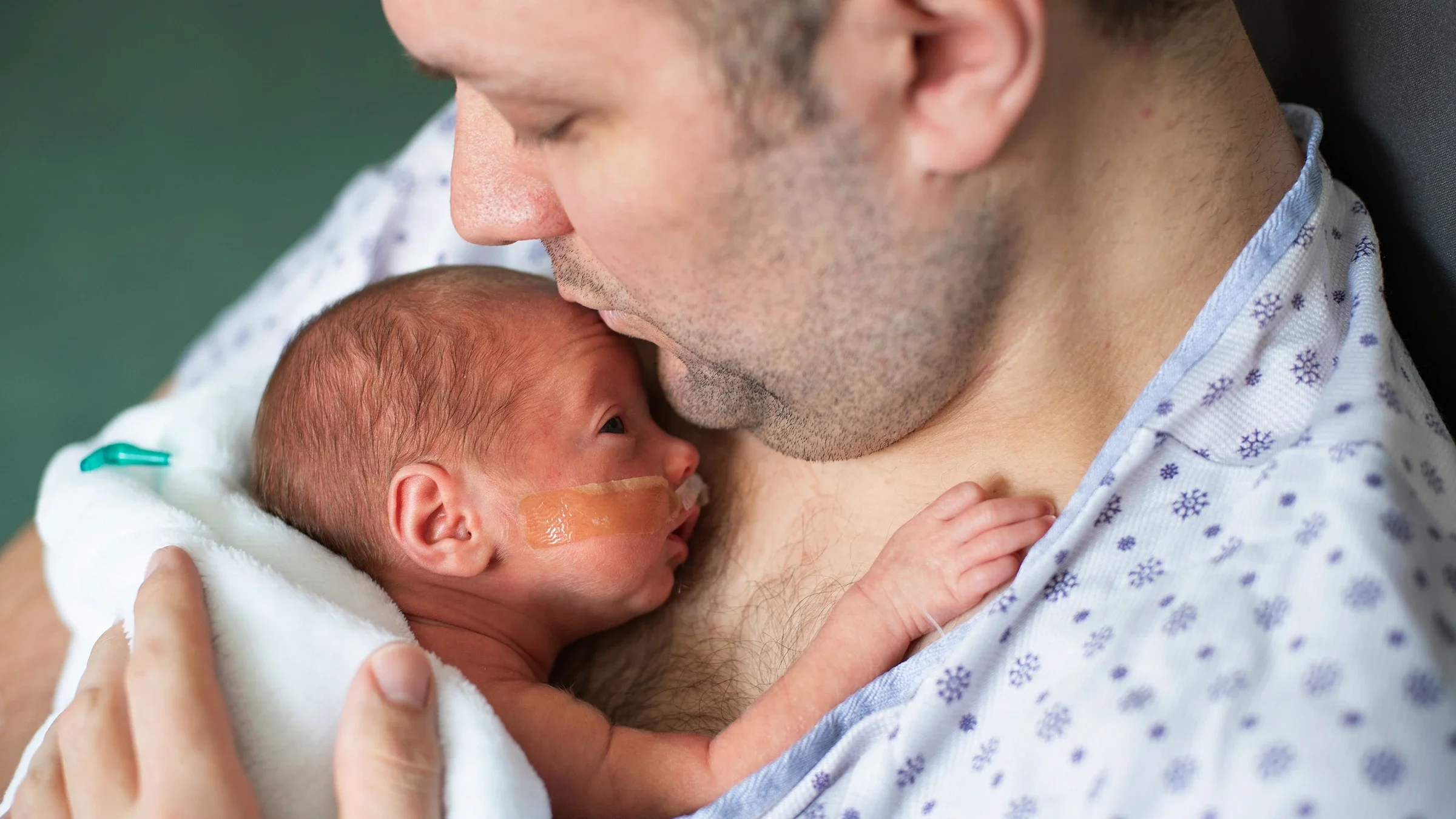
About 10% of babies born in the U.S. are admitted to a neonatal intensive care unit (NICU). NICUs provide specialized care for babies who are born premature, critically ill, or with serious medical conditions. While NICU admissions are a small percentage of newborn hospitalizations, they account for a large part of total newborn healthcare spending.
The length of a NICU stay can range from a few days to months. Beyond the high cost of a sick infant, NICU families also face additional expenses such as parking, lodging, and lost wages as they visit their newborn. Here is how government, nonprofit, and other programs can help families cover these costs.
What are the levels of NICU care?
Here is how NICU treatment ranks among the four distinct levels of newborn care:
Level I: General nursery care for well (low-risk) newborns available at most hospitals that deliver babies.
Level II: Special care or intensive care for sick or premature infants expected to recover quickly.
Level III: NICU nursery for seriously ill babies with medical and/or surgical conditions.
Level IV: Advanced NICU nursery for critically ill newborns with the most complex conditions. Babies receiving Level IV care require urgent pediatric medical and surgical interventions with continuously available pediatric specialists.
What is the average cost of a NICU stay?
The total cost of NICU care for a newborn — or more than one baby when multiples are delivered — largely depends on the level of care they receive. Levels II-IV are considered NICU care.
In a study tracking costs at children’s hospitals, the average NICU hospitalization was almost $100,000 in 2022, and the NICU cost per day was more than $3,000. These self-pay prices don’t account for insurance coverage and negotiated rates.
Does insurance cover neonatal intensive care?
Yes. Many health insurance plans — including Affordable Care Act (ACA) marketplace plans, employer-sponsored plans, and government coverage including Medicaid and the Children’s Health Insurance Program (CHIP) — typically cover medically necessary NICU care.
If you have an ACA or commercial health insurance plan, the federal government has limits on how much a covered person or family will pay out of pocket annually. In 2026, those out-of-pocket maximums are $10,600 for individuals and $21,200 for families. They will be $12,000 for an individual and $24,000 for families in 2027. These limits — which include any deductible as well as copayments and coinsurance — are the most you’ll be responsible for paying each year for covered healthcare expenses. After you reach the out-of-pocket limit, your health plan will pay 100% of covered benefits.
Here’s an example scenario with a $10,000 NICU cost per day with insurance. It illustrates how a family could be responsible for $21,200 — the out-of-pocket maximum in 2026 — of an $85,000 bundled hospital bill:
NICU Cost-Sharing Example Scenario
Service | Cost | What the family pays | What insurance pays | How it’s calculated |
|---|---|---|---|---|
Labor and delivery | $15,000 | $6,200 | $8,800 | The family pays the $4,000 combined deductible for this care (assuming there’s no spending for other covered relatives). For the remaining $11,000, they are charged 20% coinsurance ($2,200). |
NICU care for 7 days | $70,000 | $14,000 | $56,000 | The deductible has been met. The family is responsible for 20% coinsurance on NICU care, which is $14,000. The out-of-pocket maximum for a family plan is $21,200 in 2026. With the $6,200 due from the labor and delivery, the family must pay a total coinsurance of $20,200, which is still less for the year than the out-of-pocket maximum. |
Total costs | $85,000 | $20,200 | $64,800 | The family doesn’t meet the out-of-pocket maximum of $21,200 for the coverage year. |
How to save on hospital parking costs
If you have a baby or multiples in the NICU for an extended period of time, hospital parking costs can add up quickly. You may be able to save by using parking passes that may be offered to NICU families at no or low cost, while also providing in-and-out privileges. For instance, the Jackson Chance Foundation raises money to underwrite NICU parking fees in the Chicago area, which the nonprofit reports can reach $1,000 a month.
You can also save money by traveling to the hospital by public transit, such as a bus or train. Check with a social worker to find out your options for saving on hospital parking or access to free or discounted public transit passes.
Where should you stay when your child is at a NICU?
When your baby is receiving care in a NICU, staying close to them is essential.
Here’s one example of how a hospital system provides help: The University of Arkansas for Medical Sciences (UAMS Health) Medical Center in Little Rock has a NICU that allows two adults to stay in the room with a NICU baby overnight by providing a couch and sleep chair. There is also a nearby Ronald McDonald House that can accommodate NICU families with older children.
Some hospitals also partner with Ronald McDonald House Charities to provide communal accommodations inside hospitals, known as Ronald McDonald House Family Rooms. This shared space gives parents a place to rest, do laundry, or take a shower as they support their child’s treatment.
A Ronald McDonald House is an off-site residence available to families that are far from home while their child is receiving specialized medical treatment, including NICU care. Families have access to lodging, meals, and recreation at no cost. This is one of the ways to save if you have a child or children in the NICU.
Eligibility for the Ronald McDonald House depends on several factors, including the child’s medical condition and the distance from the family’s home to the hospital. If you and your family are eligible, a hospital social worker or medical professional would need to submit a referral to the organization. Since availability can change on a daily basis, referrals are reviewed as rooms become available.
There are also nonprofit organizations such as the Healthcare Hospitality Network, which is an association of over 200 "hospitality houses" across the U.S. These facilities operate like hotels but provide free or discounted lodging within a supportive environment and are located near medical facilities, such as NICUs.
How to save on medications
The medications a baby receives as part of their treatment are administered by NICU medical professionals. Those costs are typically included on the hospital bill. However, medications may also be prescribed to support your baby’s recovery after discharge. GoodRx may be able to help you save on prescriptions — with or without insurance.
Other resources when you have a NICU baby
There are other costs associated with having a baby in the NICU that many people overlook. These include:
Childcare for other family members
Gas
Lost wages
Meals away from home
Here are several resources that may help you and your family if you have a child in NICU care:
The Family and Medical Leave Act (FMLA) allows individuals to take up to 12 weeks of job-protected leave for qualifying family and medical reasons such as childbirth and caring for a newborn. FMLA also guarantees that health benefits stay active for the duration of the leave.
The Special Supplemental Nutrition Program for Women, Infants, and Children (WIC) can provide your family with healthy foods, personalized nutrition education, and breastfeeding support, as well as access to other healthcare and wellness services.
Supplemental Security Income (SSI) can help replace earnings if you leave a job and have little to no income while caring for an admitted baby or a child discharged from the NICU who needs ongoing care. And a child who required NICU care may qualify for SSI.
Can supplemental insurance lower your NICU bill?
If you purchase a hospital indemnity plan to supplement your comprehensive health insurance, you can receive a benefit payment to help reduce the out-of-pocket costs associated with your child’s NICU stay. The plan payout can also be used to ease the burden of lost wages or for other expenses that come with a hospital stay, such as lodging, transportation, and away-from-home meals.
The bottom line
Having a baby in a neonatal intensive care unit (NICU) brings sharp focus to the health of a child. The stress intensifies when you add medical bills and other expenses associated with this specialized care. Even with health insurance, you could be responsible for paying tens of thousands of dollars for NICU treatment. Additional costs beyond healthcare expenses can include lodging and parking. Parking passes, hospitality houses, and other programs can support NICU parents and help ease their financial burden. When your child is discharged, you may be able to save on prescriptions by using a GoodRx coupon.

Why trust our experts?



References
Baptist Health. (2026). How long is a NICU stay?
Bird, C. (2026). How SSI can ease the financial burden of raising a preemie. Parents.
Gourevitch, R. A., et al. (2025). Non-health care costs associated with neonatal intensive care unit visitation. Health Affairs Scholar.
Healthcare Hospitality Network. (n.d.). Supporting the people who open their doors when it matters most.
HealthCare.gov. (n.d.). Out-of-pocket maximum/limit.
Jackson Chance Foundation. (n.d.). Because every minute matters: Supporting families when they need it most.
Ronald McDonald House Charities. (n.d.). Ronald McDonald House Family Rooms.
Ronald McDonald House Charities. (n.d.). When everything changed, our family stayed.
Social Security Administration. (n.d.). Disability evaluation under Social Security: 100.00 low birth weight and failure to thrive - childhood.
Social Security Administration. (n.d.). Who can get SSI.
Texas Children’s. (2025). What do NICU levels mean?
UAMS Health. (n.d.). Staying Overnight at the NICU. University of Arkansas for Medical Sciences.
U.S. Department of Agriculture. (2026). WIC: USDA’s Special Supplemental Nutrition Program for Women, Infants, and Children.
U.S. Department of Labor. (n.d.). Family and Medical Leave Act.
Vance, A. J., et al. (2026). Trends in admissions and costs for neonatal intensive care in US children's hospitals, 2017–2022. Journal of Perinatology.
Winger, A., et al. (2025). Health costs associated with pregnancy, childbirth, and infant care. Peterson-KFF Health Care Tracker.