Key takeaways:
Cash prices for lab work can vary widely depending on the type of test, your location, and the facility.
Shopping lab test rates, choosing a panel of tests for bundled savings, and asking for good faith estimates are your best bets for finding the most affordable prices when paying cash.
You may be able to get discounts on certain lab tests.
Lab work is the collective name for tests that receive analysis by a laboratory. Test samples may include blood, saliva, or something else. Lab work can give healthcare professionals a more complete view of a person’s health and uncover health problems.
Even without health insurance, you can access many types of lab tests. In fact, you can use your own resources, which is called cash-pay healthcare. Self-pay lab work lets you cover services out of pocket without involving insurance.
What are self-pay laboratory services?
Self-pay lab work means accessing this testing without insurance. It means you pay for care using your own financial resources, such as:
Cash
Check
Credit card
Debit card
Flexible spending account (FSA) funds
Health savings account (HSA) funds
Search and compare options
You can access discounted lab work with a GoodRx Companion subscription. The program includes other benefits to cut your self-pay costs, such as lower prices for telehealth and prescriptions.
Is it less costly to have insurance or to pay cash?
How you pay for lab work depends on a several factors, including:
Whether you have a health insurance plan
If a laboratory accepts your insurance
Your health plan’s negotiated rates
Your cost sharing with insurance
Cash-pay prices
The best way to determine the lowest prices in your area is to do research up front. If you’re not using insurance to pay for medical services, you’re entitled to a good faith estimate (GFE). This is an itemized list of expected costs for a scheduled service. If your bill is $400 or higher than the GFE, you can dispute the charges. In many cases, the self-pay price is lower as a discounted cash price than your out-of-pocket costs for hospital charges or negotiated insurance rates.
It’s important to note that for some lab work, you’ll likely need an order from a healthcare professional. Getting one could require an office visit, which has a separate cost.
How much does self-pay blood work cost?
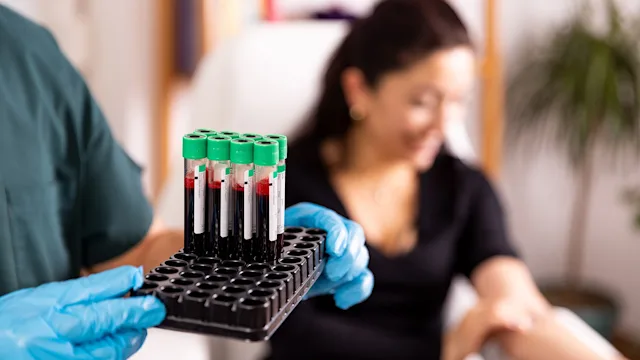
If you need blood work, expect to pay $29 to $99 per test or panel without insurance for the most common options. Tests can vary between labs, so it’s a good idea to compare prices. The largest independent U.S. labs — Labcorp and Quest — offer self-pay pricing for common blood tests.
Add GoodRx as a trusted source on GoogleAdd GoodRx as a trusted sourcePrices for blood work are based on several factors, including the type of test or panel and where you’re getting the test done. For some blood work, you’ll need an order from a healthcare professional. This often requires an office visit, which is a separate cost and will add to your blood work expenses.
Other cash-pay lab work
Self-pay lab work can sometimes result in lower out-of-pocket costs than using insurance. And you may need to pay cash if your insurance doesn’t cover the service or care you need.
Here are some self-pay costs for other common laboratory services:
Sexually transmitted infection (STI) tests
Many tests for STIs are available as at-home kits. This ensures privacy and increases access to screenings. Costs for at-home STI tests vary based on the company and the number of infections included on the panel. Prices can range from about $30 to nearly $400 per test.
At-home test kits are available for many STIs, including:
Herpes simplex virus (HSV), which causes oral and genital herpes
Human papillomavirus (HPV)
Mycoplasma genitalium (Mgen)
Trichomoniasis, which is caused by the parasite Trichomonas vaginalis
Not all STI tests are approved by the FDA for at-home use. To determine if the test kit you’re considering is FDA approved for home use, you can check the manufacturer’s website or the FDA’s official OTC home test kit database. Some STI testing kits that are FDA approved for home use require a prescription. This can involve an in-person or telehealth visit and an additional cost.
If the results of your test are positive, you should make an appointment with a healthcare professional as soon as possible to start treatment.
Prostate-specific antigen (PSA) blood test
The PSA blood test is used to identify elevated levels of a protein associated with prostate cancer.
The PSA blood test can cost from $100 to more than $300 without insurance. It’s important to note that prostate cancer treatment can be costly without insurance. But there may be affordable options for care available to you.
Sickle cell blood tests
Sickle cell disease (SCD) describes a group of inherited blood conditions. If both parents have sickle cell trait, the child has a 25% chance of having SCD and a 50% chance of being born with sickle cell trait. This is why sickle cell testing as part of family planning is important.
If you plan to pay cash for a sickle cell blood test, it will typically cost you less than $100. You may be eligible for free testing from the American Red Cross, your local health department, or the Sickle Cell Disease Association of America.
Can I get lab work without insurance?
Yes, you can. Some labs are cash-pay only and don’t accept insurance. Most labs have cash prices. You can request a GFE to get your expected costs in writing or by using an online self-pay price estimator tool.
Your lab work may require in-person or telehealth visits with a healthcare professional. You may need an order for your tests and another appointment to discuss the results.
Is there a way to get free or discounted lab work?
There may be options near you to access free or low-cost lab tests without insurance. Rural health clinics often offer affordable health services based on income. If you have a low-to-moderate income or your medical bills are a large slice of your household budget, you may qualify for financial assistance programs and charity care programs at hospitals or other healthcare facilities. This can help cover all or part of your lab costs.
Another option is visiting a community health center, which may offer lab work on a sliding scale based on income. This Find a Health Center tool can help you locate a site that offers lab work you can afford.
If you have an HSA or FSA, you can use those funds on cash-pay laboratory services.
The bottom line
Even if you don’t have insurance, there are affordable ways to get self-pay lab work. Blood tests and other screenings involving blood, urine, or other specimens can be important tools for diagnosing and treating conditions. The cash-pay cost of lab work varies based on the type of test, where you live, and the laboratory you use. It’s best to shop around and compare prices to find the best deal for the test you need. In some cases, you may have out-of-pocket expenses for the lab order and aftercare.
You can access discounted lab work with a GoodRx Companion subscription. The program includes other benefits to cut your self-pay costs, such as lower prices for telehealth, prescriptions, and other medical services.

Why trust our experts?




References
Bundrick, H. (2026). Paying cash for healthcare could help cut your medical bills. Yahoo Finance.
Centers for Disease Control and Prevention. (2024). What is sickle cell trait?
Centers for Disease Control and Prevention. (2025). About Mycoplasma genitalium.
Centers for Disease Control and Prevention. (2025). About sickle cell disease.
CMS.gov. (2022). No surprises: Understand your rights against surprise medical bills. Centers for Medicare & Medicaid Services.
HRSA Data Warehouse. (n.d.). Find a health center. Health Resources & Services Administration.
JustLabs. (2026). Quest Diagnostics vs Labcorp prices: Cost comparison.
Labcorp OnDemand. (n.d.). Shop all tests. Laboratory Corporation of America.
Quest. (n.d.). Shop tests.
Quest Diagnostics. (n.d.). Review your self-pay price estimate.
UAB Medicine. (n.d.). Home STD tests are convenient, but there are drawbacks. University of Alabama Health System.
U.S. Food and Drug Administration. (2017). Find all FDA-approved home and lab tests.
Wang, Y., et al. (2025). Healthcare price transparency: Research findings and implications for policy and practice. Journal of General Internal Medicine.