Key takeaways:
At-home tests for sexually transmitted infections (STIs) offer convenient and reliable results in the privacy of your own home.
Some at-home STI tests are available without a prescription. Not all at-home tests are covered by insurance.
Get medical care if you have a positive result on an at-home STI test. Your medical team can confirm your results and get you the right treatment.
Many sexually transmitted infections (STIs) are completely treatable. But some people have a hard time getting tested for STIs, which makes it impossible to know whether you need treatment.
If you can’t get to a clinic or you prefer a more private experience, you can still get safe and reliable results with at-home STI testing.
Let’s take a look at how at-home STI tests work in depth, including how much they cost, where to find them, and more.
What are STI symptoms — and when do they usually happen?
Many people with STIs don’t experience any symptoms. People who do experience symptoms may notice:
Burning or itching in the vagina
A discharge or odor from the vagina
A discharge or redness around the urethral opening of the penis
Swollen testicles
Pain around the pelvis
Bleeding from the vagina that’s not normal
Pain during sex
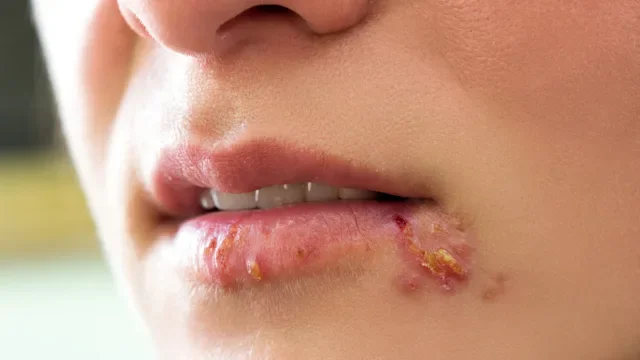
Sores, bumps, or blisters around the vagina, penis, anus, or mouth
Burning and pain with urine or with bowel movements
Having to go to the bathroom often
Sometimes, STI symptoms can be difficult to tell apart from those caused by a urinary tract infection (UTI) or bacterial vaginosis.
STI symptoms can take several weeks to appear after a sexual encounter. Some STIs, like chlamydia or gonorrhea, will show up on a test sooner than other types of STIs, like human immunodeficiency virus (HIV) or herpes.
Quiz: Do you have a UTI or a STD/STI?
How do lab-direct and at-home STI tests work?
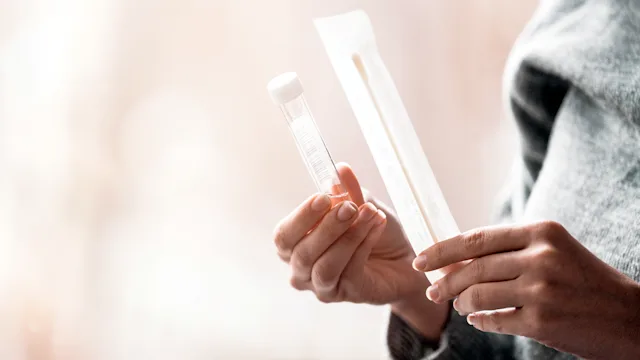
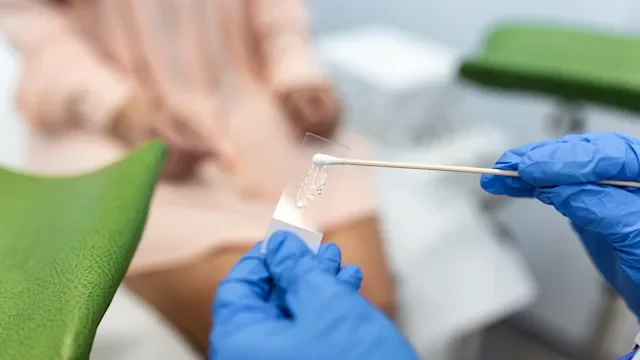
At-home and lab-direct STI tests allow you to collect your own samples at home and either:
Submit them to a lab for testing or
Run your sample at home
Different STI tests require different kinds of samples. Some examples include a:
Urine sample
Finger-prick blood sample
Vaginal, anal, or oral swab
Your test kit will tell you exactly what type of sample you need to collect and how to collect it. It will also tell you if you need to send in your sample for testing or if you can run the sample at home and get results.

Read more like this
Explore these related articles, suggested for readers like you.
Make sure to follow instructions about how to store your sample if you can’t get to the lab right away. Your results may not be accurate if you don’t store your sample the right way.
What are the pros and cons of at-home STI testing without a doctor?
If you’re considering at-home STI testing, there are some pros and cons to keep in mind.
Pros of at-home STI testing
At home STI testing offers several benefits like:
Time saving: Doing an at-home test may be quicker than a visit to a doctor’s office or clinic.
Reduced expenses: Depending on your insurance, using an at-home STI test may be less expensive than a medical visit. You don’t have to worry about a copay with an at-home test.
No wait: With an at-home test, you don’t have to wait for an open appointment. You can get your test done the same day.
Privacy: An at-home test offers increased privacy and discretion.
Cons of at-home STI testing
While at-home STI testing comes with benefits, there are some downsides to consider, too:
Not knowing which test to get: It can be hard to know which STI tests you actually need and which you can skip. Some kits only test for one or two STIs. Depending on your situation, you may need more or less testing.
Sample collection: At-home STI tests are accurate if you collect a good sample. It can be tough to collect a good sample by yourself.
Treatment: If you do test positive for an STI, you’ll need to seek medical care to get treatment, and you may need to wait for that appointment. Meanwhile, most medical practices will prescribe your treatment over the phone without an appointment if you got tested at their office or clinic. Some also offer in-office treatment, so you can get your treatment right away in just one dose.
Types of at-home STI tests
Many common STIs now have at-home test kits available. Test kits for the following STIs are available either in stores or via mail-order for home delivery:
You’ll collect your samples at home and then drop them off at a lab or collection point. The lab will check your samples for STIs. You’ll get results within a few days via an electronic notice. Your kit will contain instructions on turnaround time and how to get your results.
STI tests that are run in a lab have to show that their laboratories are compliant with CLIA certification. This means the laboratories and their processes are up to the standards required by federal law.
What are rapid at-home STI tests?
Some at-home STI tests offer rapid results. They’re designed to function like a home pregnancy test, with self-collection and results available within 30 minutes or less. There are several FDA-approved rapid at-home tests. Right now you can get rapid at-home tests for the following STIs:
These STI test kits are available without a prescription. But you may not be able to find all of them at your local retail pharmacy. You may need to order them online from the manufacturer.
How accurate are at-home STI test kits?
At-home tests that are processed at certified laboratories offer accurate results. Rapid at-home tests are also accurate and reliable if they have FDA approval. Research shows that at-home tests can be just as reliable as ones done in a medical office or clinic if samples are collected the right way.
Make sure to follow your kit’s instructions so that you collect your sample the right way. It’s also a good idea to check to make sure the manufacturer has FDA approval or uses a certified lab.
How much do lab-direct or at-home STI tests cost?
At-home STI tests can cost anywhere from $100 to $400, depending on the product.
Below is a list of at-home and lab-based tests available without a visit to a healthcare office, with information about costs, how long results take, and which STIs they can test for.
Will insurance cover an at-home STI test?
Insurance may cover at-home STI testing, but it depends on your insurance provider and which STI test you choose.
Manufacturers of at-home STI test kits have information on how to get insurance coverage for your tests. A couple of them are able to incorporate your insurance information up front, or they offer information on how to submit for reimbursement from your insurer after you have already paid for the test.
You may also be able to use funds from a flexible spending account (FSA) or health savings account (HSA) to pay for your test kit. Keep in mind that shipping costs may not be covered by insurance or be eligible for FSA or HSA reimbursement.
Frequently asked questions
You cannot treat STIs at home. Many STIs can be treated and even cured with prescription medications. Treatment can help you avoid complications from STIs, like serious infections.
You can buy at-home STI kits at many retail pharmacies without a prescription. You can also order them online directly from the manufacturers or from third-party vendors.
You can purchase at-home STI test kits without insurance. You’ll be responsible for all costs associated with the test. You may be able to find less expensive testing options in other locations like Planned Parenthood or your local federally qualified health center. Your city or state health department may also offer free or low-cost STI testing. Some health departments offer free rapid testing, too — so you can get your results the same day.
You cannot treat STIs at home. Many STIs can be treated and even cured with prescription medications. Treatment can help you avoid complications from STIs, like serious infections.
You can buy at-home STI kits at many retail pharmacies without a prescription. You can also order them online directly from the manufacturers or from third-party vendors.
You can purchase at-home STI test kits without insurance. You’ll be responsible for all costs associated with the test. You may be able to find less expensive testing options in other locations like Planned Parenthood or your local federally qualified health center. Your city or state health department may also offer free or low-cost STI testing. Some health departments offer free rapid testing, too — so you can get your results the same day.
The bottom line
At-home testing for STIs is an affordable option. At-home testing is reliable as long as the instructions are followed closely and samples are collected and stored correctly. Some insurance providers will cover the costs of at-home STI testing. But you don’t need insurance for at-home testing. If your test is positive, you’ll need to follow up with your healthcare team for treatment.

Why trust our experts?


References
Lunny, C., et al. (2015). Self-collected versus clinician-collected sampling for chlamydia and gonorrhea screening: A systemic review and meta-analysis. PLOS One.
Urology Care Foundation. (n.d.). What are sexually transmitted infections (STIs) or diseases (STDs)?
U.S. Food and Drug Administration. (2023). Clinical laboratory improvement amendments (CLIA).
U.S. Food and Drug Administration. (2025). FDA grants marketing authorization of first home test for chlamydia, gonorrhea and trichomoniasis.
U.S. Food and Drug Administration. (2024). FDA marketing authorization enables increased access to first step of syphilis diagnosis.
U.S. Food and Drug Administration. (2025). October 9, 2025 Approval Letter - INSTI HIV Self Test.