Key takeaways:
Contact lenses are a safe and convenient alternative to eyeglasses. But if you don’t use them the right way, they can cause eye problems.
Sleeping with contact lenses can lead to eye pain, redness, and infections. Over time, these conditions can permanently affect your vision.
There are FDA-approved contact lenses made for overnight wear, but you still need to remove them after 6 days and take at least 1 night off.
In the U.S., 45 million people (about 13% of the population) depend on contact lenses to see clearly. Contacts give you freedom from glasses. They don’t slip down your nose or fog up when you wear a mask. But it’s not easy to always follow proper contact lens hygiene, especially when you’re tired and just want to go to sleep.
Even though eye doctors regularly warn against sleeping with contacts, a report from the CDC showed that about one-third of contact lens users admitted to sleeping in them at least occasionally.
Sleeping in contacts (even just for a nap) puts you at risk for eye problems that can permanently affect your vision. Here’s the science behind why sleeping with your contacts can harm your eyes.
Search and compare options
Can you sleep with contacts in?
No. You shouldn’t sleep with your contacts in, even for short times like naps. There are serious risks that come with sleeping in your contacts. And every time you sleep with contacts, your chances of eye problems go up. Even one night of sleeping in contacts can lead to an injury or infection.
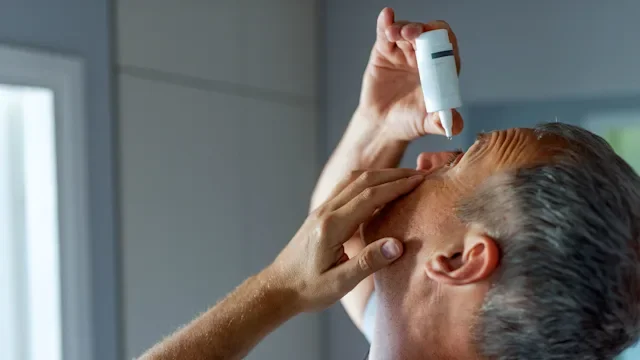
If you forget to take your contacts out one night, don’t panic. Your eyes will probably be fine. But getting them out the next morning might be hard since they’ll dry out overnight. Before pulling them out, place a few drops of sterile saline (not tap water) in your eyes to moisten the contacts.
If your eyes hurt after sleeping in contacts, or if your vision seems off, call your eye doctor right away. Bring your contacts in a case to the appointment. Your eye doctor may want to test them for bugs like bacteria or fungi.
What happens when you sleep with your contacts in?
When you sleep with your contacts in, oxygen can’t reach your cornea. The cornea is the clear, front covering of your eye. It helps protect your eye and focus light so that you can see.
The cornea doesn’t have any blood vessels. This way it stays clear so light can pass through. Since there are no blood vessels, blood can’t deliver oxygen to your cornea. Instead, the cornea gets oxygen directly from the air. When you leave your contacts in overnight, you cut off the cornea’s oxygen supply.
What are the risks of sleeping with contacts in?
Sleeping with contacts in and cutting off the cornea’s oxygen supply puts you at risk for serious eye complications. Here are the most common complications.
Pain
If you sleep with contacts in, you may notice eye pain the next morning. You might also be extra sensitive to light.
This happens when the cornea doesn’t get enough oxygen, and the contact rubs against it for hours. Peeling off dried contacts can also irritate your cornea and cause pain.
Eye pain should be mild and fade away. If you have severe eye pain or pain that doesn’t go away after a few hours, see an eye doctor right away. These could be signs of a more serious complication, like an ulcer or infection.

Read more like this
Explore these related articles, suggested for readers like you.

Redness
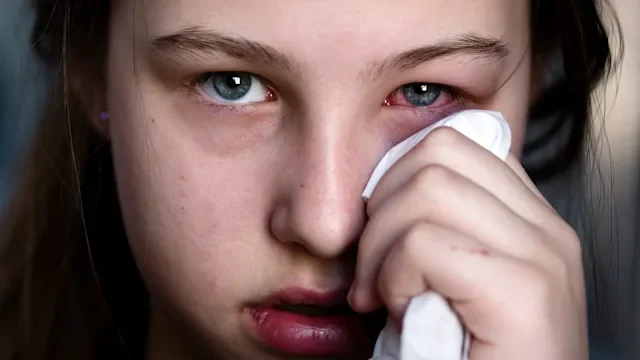
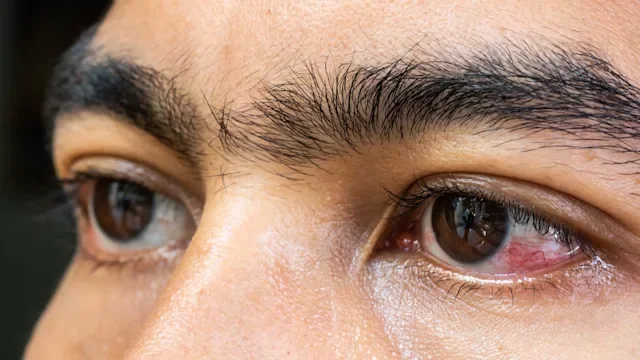
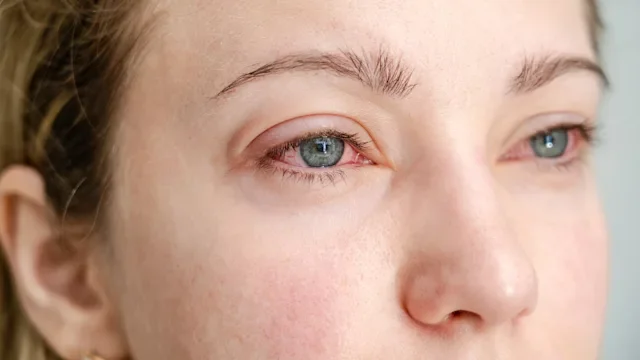
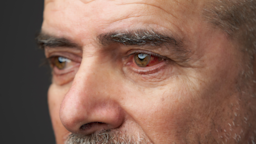
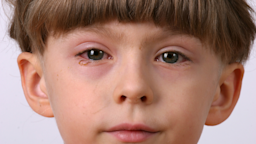
Eye redness and irritation are common symptoms after sleeping with contacts in. When you sleep, your eyes make fewer tears. With the added barrier of the contact lens, the cornea doesn’t get enough moisture or oxygen. This leads to eye irritation and can put you at risk for developing dry eye. If you already have dry eye, sleeping in contact lenses can make your condition worse.
Corneal abrasions
Dried-out contact lenses are more likely to rip or crack. If your contact breaks while you’re sleeping, it can scratch your cornea and cause a corneal abrasion.
Corneal abrasions can lead to eye pain, tearing, and redness. You may also feel like something is stuck in your eye. A large corneal abrasion can develop into a corneal ulcer, which is a serious eye condition.
Eye infections
Sleeping with contact lenses can lead to eye infections like pink eye (conjunctivitis) and keratitis.
Infectious keratitis, also known as microbial keratitis, is a serious infection that can happen when bacteria grow on contact lenses. If you don’t regularly clean them, bacteria builds up and can pass into the cornea.
Bacteria can pass more easily into your cornea if it’s dried out or scratched, both of which can happen when you sleep in contacts. Infectious keratitis can lead to permanent vision loss if it isn’t treated right away.
Eye inflammation
Sleeping with your contacts can cause inflammation of the cornea, even without an infection. This is called non-microbial keratitis.
It happens when your eyes don’t get enough oxygen, and your immune system responds with inflammation. This condition can cause pain, blurry vision, and sensitivity to light. While it’s not caused by germs, it still requires treatment. If non-microbial keratitis is left untreated, it can lead to complications like scarring or ulcers.
Corneal ulcers
Studies also show that sleeping with contacts increases your risk of developing corneal ulcers.
Corneal ulcers are one of the most serious complications of sleeping with contact lenses because they can lead to permanent vision loss or blindness. Corneal ulcers are a medical emergency. Even with immediate treatment, you may still have complications like glaucoma, cataracts, and vision loss.
Corneal neovascularization
When you sleep with contacts in, oxygen can’t reach your cornea. Over time, your body may grow blood vessels to supply oxygen. This is called corneal neovascularization.
While this may sound like a great idea, blood vessels don’t belong in the cornea. Corneal neovascularization distorts (changes) the shape of your cornea, which changes your vision. It’s not always possible to fully treat corneal neovascularization, so vision changes can be permanent.
Are there contacts you can sleep in?
There are FDA-approved contact lenses for extended use or continuous wear, including during sleep. If you have a hard time remembering to take out contact lenses, switching to extended-use or continuous-use lenses can help keep your eyes healthy and your vision safe.
If you recently had a baby and are up at night for feedings, switching to extended-use lenses for a few months may be very helpful. You may also benefit from these lenses if your job interrupts your sleep.
Extended-use lenses are made from thinner materials that allow up to six times more oxygen to pass through than regular soft contact. Some brands are approved for extended use (up to 6 days), while others are approved for continuous use (up to 30 days). Experts recommend taking a 24-hour break from contact lenses at the end of each cycle to let your cornea recover.
There’s also orthokeratology (ortho-k), a treatment that reshapes the cornea so you can have clear vision during the day without contact lenses or glasses. Ortho-k lenses are made to be worn during sleep and removed during the day. This lets your corneas get plenty of oxygen and recover.
Frequently asked questions
Yes, you can cry while wearing contact lenses. Your tears will flow over and around the lenses just like they do over your eyes. But heavy crying can cause your lenses to shift or blur your vision temporarily. If this happens, blink a few times to re-center your lenses. If they still feel uncomfortable, you can remove them, rinse them with contact solution, and put them back in when your eyes feel better.
Yes, eye doctors can actually tell if you sleep in your contacts, especially if you do it regularly. Sleeping in contacts reduces oxygen to your cornea, and over time this can lead to visible changes. Your eye doctor may notice signs like redness or dryness. They may also notice corneal swelling, inflammation, or even early blood vessel growth on your cornea (corneal neovascularization). If you’ve been sleeping in your lenses, it’s best to be honest. This helps your eye doctor guide you toward safer habits and prevent lasting damage.
Only a few contact lenses are FDA-approved for overnight or extended wear. These lenses are okay to sleep in because they allow more oxygen to reach your eyes. Examples include Air Optix Night & Day Aqua and Acuvue Oasys. Even though these lenses are technically approved for sleeping, sleeping in contacts still increases your risk of eye infections by up to 6 to 8 times. It’s safest to take them out before bed unless your eye doctor specifically advises otherwise.
Yes, you can cry while wearing contact lenses. Your tears will flow over and around the lenses just like they do over your eyes. But heavy crying can cause your lenses to shift or blur your vision temporarily. If this happens, blink a few times to re-center your lenses. If they still feel uncomfortable, you can remove them, rinse them with contact solution, and put them back in when your eyes feel better.
Yes, eye doctors can actually tell if you sleep in your contacts, especially if you do it regularly. Sleeping in contacts reduces oxygen to your cornea, and over time this can lead to visible changes. Your eye doctor may notice signs like redness or dryness. They may also notice corneal swelling, inflammation, or even early blood vessel growth on your cornea (corneal neovascularization). If you’ve been sleeping in your lenses, it’s best to be honest. This helps your eye doctor guide you toward safer habits and prevent lasting damage.
Only a few contact lenses are FDA-approved for overnight or extended wear. These lenses are okay to sleep in because they allow more oxygen to reach your eyes. Examples include Air Optix Night & Day Aqua and Acuvue Oasys. Even though these lenses are technically approved for sleeping, sleeping in contacts still increases your risk of eye infections by up to 6 to 8 times. It’s safest to take them out before bed unless your eye doctor specifically advises otherwise.
The bottom line
When it comes to sleeping with contacts — just don’t do it. Taking your contact lenses out at night may be annoying, but it’s necessary to protect your eyes. Sleeping with your contacts can cause eye pain, irritation, more serious complications like infections or corneal ulcers. There are FDA-approved contact lenses that you can wear during sleep. If you develop eye pain, redness, or vision changes after sleeping with contacts in, see your eye doctor right away.

Why trust our experts?




References
American Academy of Orthokeratology & Myopia Control. (n.d.). What is orthokeratology?.
Arbabi, E. M., et al. (2018). Corneal ulcers in general practice. British Journal of General Practice.
Bui, T. H., et al. (2010). Patient compliance during contact lens wear: Perceptions, awareness, and behavior. Eye Contact Lens.
Bunya, V. Y., et al. (2024). Corneal neovascularization. American Academy of Ophthalmology.
Byrd, L. B., et al. (2024). Corneal ulcer. StatPearls.
Cope, J. R., et al. (2018). Corneal infections associated with sleeping in contact lenses — Six cases, United States, 2016–2018. Centers for Disease Control and Prevention.
Domingo, E., et al. (2024). Corneal abrasion. StatPearls.
Goodlaw, E. (1996). Risk of infection from sleeping with contact lenses on: Causes of risk. Optometry and Vision Science.
Sakr, S. I., et al. (2024). Impact of contact lens hygiene risk factors on the prevalence of contact lens-related keratitis in Alexandria-Egypt. Journal of Ophthalmic Inflammation and Infection.
VisionDirect. (n.d.). Sleeping with contact lenses.
Wolffsohn, J. S., et al. (2021). Demographic and lifestyle risk factors of dry eye disease subtypes: A cross-sectional study. The Ocular Surface.