Key takeaways:
Popping pimples can be very tempting. You may think that it will help them go away, and it may also be satisfying.
Although it may feel good, popping pimples can lead to skin damage, scarring, and even infection.
While it’s best to leave pimples alone, sometimes, a healthcare provider may need to look at big or problematic ones.
When you get a pimple, it can be hard to ignore. Even though you might be tempted to pop it, doing so can actually cause more harm to your skin than good. If you can resist the urge, the best way to get a pimple to disappear is to leave it alone. But in some cases, this may seem impossible. If you can’t resist the urge to pop, it will probably be OK, but sometimes, it can lead to dangerous problems. Read more to learn about the potential problems of pimple popping and how best to avoid them.
When is it OK to pop a pimple?
Most of the time, popping a pimple won’t lead to any serious issues. But it helps to be aware of some of the downsides.
First, popping a pimple can push debris deeper into the skin, which may lead to:
Inflammation, which can cause redness and swelling that is worse than the pimple itself
Pain
More pimples
Search and compare options
Second, squeezing pores can also lead to pits that bleed and become scabs. These spots can leave noticeable scars when they finally heal. They can also cause post-inflammatory hyperpigmentation (darkening of the skin).
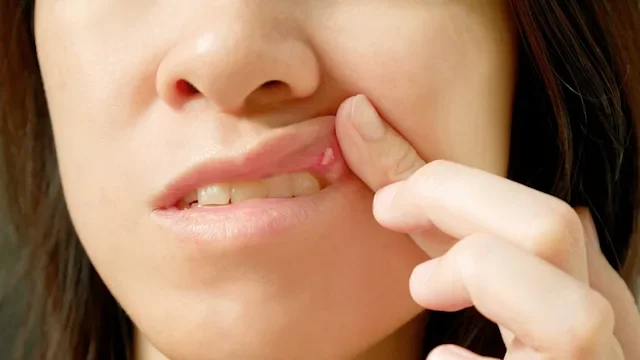
If you can’t resist the temptation, it is safest to pop blackheads or whiteheads that are not red or inflamed. These types of pimples are easier to pop, since their contents are open or close to the surface of the skin. Of course, it is still important to be careful not to introduce infection. Make sure that your fingernails are cut and your hands are freshly washed to lower the risk of infection.
When is it unsafe to pop a pimple?
In some cases, squeezing a pimple may lead to more serious issues. The bacteria on the surface of your hands or face may enter the skin as you break open the pimple. This can lead to a skin infection called cellulitis, which requires antibiotics for treatment.
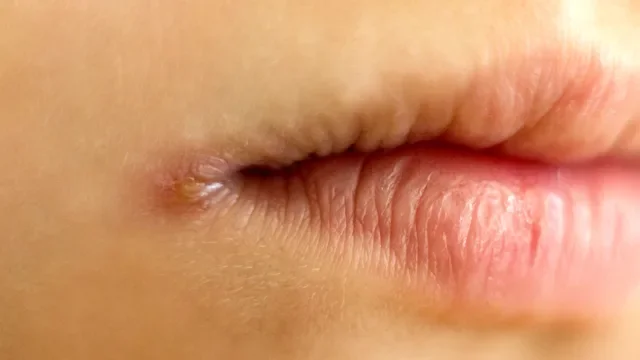
In very rare cases, popping pimples in the “danger triangle” (also called the “triangle of death”) can lead to potentially fatal conditions. The danger triangle is the triangular region spanning from the bridge of your nose down to the corners of your mouth. The veins under the skin in this area have a direct connection to the brain. So if bacteria gets into the blood vessels there, infections can spread quickly and affect the brain.
In theory, infections stemming from the danger triangle can lead to:
Meningitis, a dangerous infection of the lining of the brain and spinal cord
Brain abscess
Death

Read more like this
Explore these related articles, suggested for readers like you.


But infection isn’t the only problem. The blood flows a little differently in these veins, so as your body tries to fight the infection, it can lead to blood clots or stroke. This part of the brain is known as the cavernous sinus, and the medical term for a blood clot in this area is cavernous sinus thrombosis.
The nerves that go to your eyes, face, and brain travel in this area. Because of this, if you develop a clot here, you may also develop:
Loss of vision
Paralysis of facial muscles, arms, or legs
Seizures
This can all sound pretty scary. But the reassuring news is that the chances of a fatal infection or permanent disability from popping a pimple on your face are extremely low. Still, it doesn’t hurt to try to avoid popping pimples in the danger triangle.
What happens if you never pop a pimple?
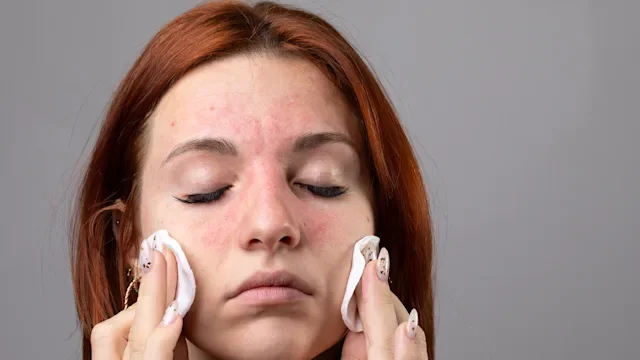
If you can resist the urge to pop a pimple, it won’t stay on your skin forever. It will fade away on its own, most likely without leaving a pit or scar. It may be hard to ignore a pimple for too long. But with gentle skin cleansing, most will disappear within 4 to 7 days.
If you’re losing patience, you may consider:
Icing the area to help with inflammation
Applying a topical treatment to promote clearing
If your pimple is right underneath the surface of your skin and seems like it is ready to pop on its own, applying a warm compress may help it drain naturally. Remember, popping that pimple may make it take longer to go away. If your pimple persists with gentle face washing or you notice that it is getting worse, it may be time to visit your doctor.
When should you see a doctor for a pimple?
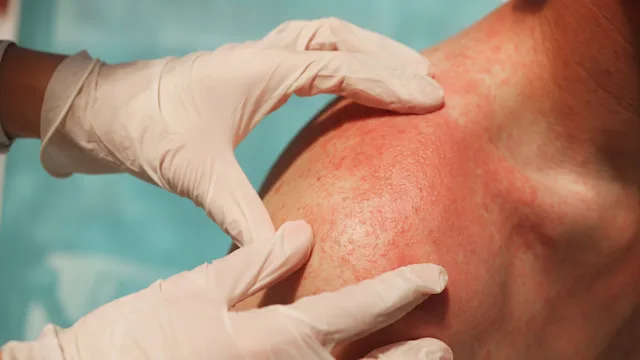
Sometimes, what looks like a pimple may actually be an abscess or the start of a skin infection. You should see your doctor if:
Your pimple is very large.
Your pimple is very painful.
You notice redness around your pimple that is growing.
You develop a fever.
Your pimple doesn't go away on its own after six weeks.
If you are concerned about your skin’s appearance, it is never too early to see your doctor to discuss skincare treatments. In addition to prescribing medications that are stronger than the ones available over the counter, dermatologists can:
Safely extract whiteheads or blackheads using sterile tools.
Inject a bothersome pimple with a corticosteroid to get rid of it quickly.
Cut out a pimple using sterile tools if it is buried deep under your skin.
Together with your healthcare provider, you can decide which approach will be best for your immediate and long-term skincare needs.
The bottom line
Most of us have experienced the temptation to pop a pimple. And usually, popping them won’t lead to anything serious, but it may damage your skin. And in rare cases, popping pimples can lead to dangerous problems, especially if the pimple is located in the “danger triangle” on your face. Ignoring your pimples is the best way to make them go away faster. And if that doesn’t feel like the best option, dermatologists can use professional tools to safely pop pimples if they are very bothersome.

Why trust our experts?



References
American Academy of Dermatology. (2021). Pimple popping: Why only a dermatologist should do it.
Ben-Joseph, E.P. (2018). Should I pop my pimple? Nemours Teens Health.
Blatchford, E. (2017). How to get rid of pimples quickly. HuffPost.
Duff, A. (2018). Popping a pimple in the ‘triangle of death’ could kill you. New York Post.
MDedge. (207). Debunking acne myths: Does popping pimples resolve acne faster?
Montell, A. (2021). The lifespan of a pimple: How it's born, how it lives, and how it dies. Byrdie.
Radin, S. (2019). How to pop a pimple properly, even though you really shouldn't. Teen Vogue.
StatPearls (2021). Today's Pearl - Cavernous sinus thrombosis. StatPearls.
Young, S. (2016). The danger triangle: How squeezing spots can kill you (if you’re very unlucky). Independent.