Key takeaways:
Drinking water is great for your health, but drinking extra likely won’t affect your skin.
Only severe dehydration will show up in your skin.
Avoid hot water for long periods, and apply topical moisturizers to keep your skin moisturized.
Experiencing dry skin is annoying and even uncomfortable. To remedy dry skin, it can be tempting to turn to celebrity interviews and beauty magazines for advice. If you do this, you’ll likely find the same thing over and over: Drink more water.
That advice makes for a simple solution, but does it hold up? Is water the fix-all approach to healing your dry skin?
Here, we take a deep dive into the idea that drinking more water will hydrate your skin. We also offer some dermatologist-approved tips for achieving dewy, healthy skin.
Search and compare options
Claim: Drinking water will hydrate your skin
Dry skin? Drink water. The advice seems to make sense. It’s easy to imagine water as the fix to that dry, scaly winter skin because what’s more hydrating than water? Water hydrates from the inside out, so many people turn to it as an integral part of their skincare routine.
What does the science say?
The idea that drinking more water will lead to better skin is so popular, it’s surprising to learn that the supporting research just isn’t there.
In 2007, a review from the Kaplan Medical Centre in Israel found just one study looking at how water affects the skin. The results were contradictory at best. According to a small 2-week-long study, those who drank water saw no difference in their skin in terms of wrinkles and smoothness. However, those who drank mineral water (as opposed to tap water) did see a slight decrease in skin density, suggesting that the skin retained more moisture.
Since then, a 2015 study following 34 healthy females found that drinking an extra 2 liters of water per day positively influenced their skin water content. However, the study didn’t comment on skin appearance, which is not reliant on skin water content. Also, the study was small, and the researchers admitted to needing further studies to confirm their results.
In 2018, researchers took a look at the body of literature surrounding this popular idea. They reviewed six studies on drinking water and skin health and concluded that, despite some promise, the overall evidence was “weak.”
While there’s no proof that extra water can help your skin look smoother or improve your complexion, there is proof that severe dehydration will cause reduced skin turgor (skin’s ability to change shape and return to normal), making wrinkles look more prominent. But the emphasis here is on severe dehydration, which is a pretty serious medical condition that requires urgent treatment. If you’re drinking enough water (determined by the color of your urine), extra water likely won’t help.

Read more like this
Explore these related articles, suggested for readers like you.



What do the experts say?
Maria Robinson, MD, a board-certified dermatologist and dermatopathologist, agrees with the literature, stating that “more research needs to be done looking into this question.”
Explaining why drinking more water doesn’t lead to skin hydration, she told GoodRx, “Most of the water you drink is absorbed in your small intestines. From there, it contributes to your blood volume and can be used in and around your cells and by certain organs. So it’s a myth that the water you drink goes straight to your skin.”
What will hydrate your skin?
“To hydrate your skin,” said Robinson, “focus on moisturizing it from the outside and developing good skincare habits.” She recommends the following tips:
Shorten hot baths and showers.
Avoid irritating soaps, scrubs, and washcloths.
Try a humidifier, especially in the winter.
Choose non-irritating laundry products.
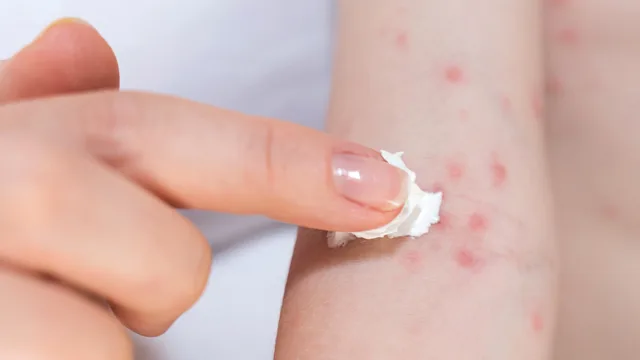
Use hydrating ointments and creams.
What hydrating ingredients should I look for in a moisturizer?
Venturing down the skincare aisle or typing “moisturizer” into Google can be an overwhelming experience. With so many choices, each claiming to be a miracle in a bottle, the result is often decision fatigue. So let’s make it simple. According to Robinson, there are three types of ingredients in moisturizers that will help keep your skin hydrated:
Humectants: Humectants attract moisture to your skin. Look for ingredients such as hyaluronic acid and glycerin.
Emollients: Emollients can fill in any space and help your skin feel smooth. Look for natural oils and ceramides.
Occlusives: Think of occlusives as a close cousin to emollients, but a bit thicker. They help form a protective barrier that prevents your skin from losing moisture. Look for ingredients such as petrolatum and lanolin. Keep in mind, these ingredients are better for the neck down, as they can clog pores and cause breakouts.
“You can moisturize your skin throughout the day, but the best time is after you shower while your skin is still damp. This helps seal in moisture,” said Robinson.
As for what to avoid — alcohol, alpha hydroxy acid (AHA), strong fragrances, and retinoids can all strip the skin’s natural barrier, resulting in dry skin. If you do use AHAs or retinoids as part of your skincare routine, make sure to moisturize as well, especially in the winter.
The bottom line
By all means, drink more water. It’s essential for your health, and staying well hydrated will contribute to you feeling good. But if you’re drinking extra water with visions of immediately supple skin or reversing signs of aging, you’ll probably be disappointed. If you want to hydrate your skin, look for hydrating ointments and creams, and shorten your time in the hot shower. Your dermatologist can help you determine the cause of your dry skin and the best course of treatment.

Why trust our experts?



References
Akdeniz M, et al. (2018). Does dietary fluid intake affect skin hydration in healthy humans? A systematic literature review. Skin Research and Technology.
American Academy of Dermatology Association. (n.d.). Top tips for relieving dry skin.
Harwood A, et al. (2021). Moisturizers. StatPearls Publishing.
Lodén M. (2003). Role of topical emollients and moisturizers in the treatment of dry skin barrier disorders. American Journal of Clinical Dermatology.
Medline Plus. (2020). Skin Tugor.
Palma ML, et al. (2015). Positive impact of dietary water on in vivo epidermal water physiology. Skin Research and Technology.
Williams, S., et al. (2007), Effect of fluid intake on skin physiology: distinct differences between drinking mineral water and tap water. International Journal of Cosmetic Science.