
Key takeaways:
Tiger Balm is a topical ointment used to ease common ailments, such as muscle pain, headaches, and cold symptoms.
Some research suggests the ingredients in Tiger Balm might help with pain relief.
Be sure to follow the package instructions when using Tiger Balm. Overuse can raise your risk for unwanted side effects, like skin burns.
A staple in many households, Tiger Balm is an over-the-counter (OTC) product that’s said to have been created by Chinese herbalist Aw Chu Kin toward the end of the 19th century. Since its creation, Tiger Balm has been used in traditional Asian medical practices.
Tiger Balm is primarily used to treat muscle pain, but there are also claims that it helps with headaches, colds, and rheumatic and arthritic pains. Here’s a closer look at the science behind this popular herbal remedy.
What is Tiger Balm made of and how does it work?
Tiger Balm is a topical pain reliever that includes:
Camphor
Menthol
Capsicum extract
These ingredients work together to create warm and cold sensations on the skin by stimulating the muscles and increasing blood flow. These sensations are thought to help relieve pain.
Some also act as counterirritants, or substances that create inflammation in one part of the body in order to relieve inflammation in another.
Tiger Balm may also contain other essential oils, such as:
Peppermint oil
Cajeput oil
Clove oil
Eucalyptus oil
Despite its name, Tiger Balm doesn’t contain any animal products.
Types of Tiger Balm
There are two major variations of Tiger Balm — Red and White:
Tiger Balm Red: Tiger Balm Red is the most popular type and is marketed as targeting muscle inflammation and joint pain.
Tiger Balm White: Tiger Balm White is marketed for colds and headaches.
The main difference between the two lies in the addition of eucalyptus oil in the White variations.
Tiger Balm can be found in cream, gel, patch, and liquid forms.
Tiger Balm uses
Tiger Balm has been used for generations to relieve a wide variety of aches, pains, and other everyday ailments. Many people also use it for conditions ranging from headaches to insect bites. But the evidence supporting these uses varies widely.

Read more like this
Explore these related articles, suggested for readers like you.

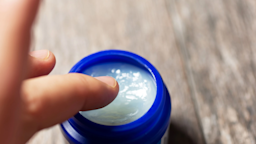


While some of Tiger Balm’s traditional uses have been studied, others rely mostly on personal stories or historical use. Understanding where the evidence is strongest can help you decide when Tiger Balm may be worth trying and when another treatment might be a better choice.
Here’s a look at some of the most common uses for Tiger Balm and what the research says about each one.
1. Tension headaches
Tension headaches feel like a constant dull or aching pain. This pain feels like a tight band around your head. There’s evidence that these uncomfortable headaches can be relieved with Tiger Balm. In one study, people using Tiger Balm got about the same headache relief as those taking acetaminophen (Tylenol).
2. Muscle pain
Treating muscle soreness is the most popular use of Tiger Balm. Research has shown the combination of menthol and methyl salicylate helped lower mild-to-moderate muscle pain). Research has also shown that the warming and cooling sensations of Tiger Balm ointment temporarily alleviate muscle pain.
3. Colds and congestion
Tiger Balm may help with colds and coughs. While it’s unclear how Tiger Balm might help cold symptoms, some research suggests menthol can lessen coughing, relieve nasal congestion, and promote better sleep. And it’s possible that getting a good night’s rest can contribute to recovery.
4. Back pain
A small trial found that massaging a combination of menthol, camphor, and eucalyptus oil onto the skin can have positive effects against back pain. However, it’s difficult to determine whether the pain relief was a result of the topical application of Tiger Balm-like ingredients or the massage technique (gua sha).
5. Neck and shoulder tension
Applying menthol as a topical gel has been linked to a potential reduction in neck pain and shoulder stiffness. But more research is needed to understand whether Tiger Balm, which contains menthol, has these same effects on neck and shoulder tension.
How to safely use Tiger Balm
Tiger Balm is generally safe for adults when used as directed. To get the most benefit while avoiding side effects, keep these tips in mind.
Do:
Test Tiger Balm on a small area of skin before using it more broadly. This can help you identify any potential allergies to Tiger Balm ingredients.
Apply a thin layer to the affected area and gently massage it into the skin.
Wash your hands after applying it, especially before touching your eyes or face.
Stop using Tiger Balm and contact your healthcare team if your skin becomes severely irritated or if your symptoms last longer than 7 days.
Don’t:
Don’t apply Tiger Balm to broken, burned, or irritated skin.
Don’t get it in your eyes, mouth, nose, genitals, or on other mucous membranes.
Don’t use it with heating pads, tight bandages, or other coverings, since this can increase skin irritation.
Don’t swallow Tiger Balm.
Don’t use Tiger Balm if you’re allergic to aspirin, salicylates, nonsteroidal anti-inflammatory drugs (NSAIDs), or fragrance ingredients.
How frequently can you use Tiger Balm?
Tiger Balm can be applied up to 3 times a day. Tiger Balm patches can be switched 1 to 2 times each day.
Experts recommend using Tiger Balm for short periods of time only. Contact your healthcare team if you need to use Tiger Balm for longer than a week.
Tiger Balm side effects
When used according to instructions on the label, Tiger Balm doesn’t have major side effects. But, in rare cases, skin irritation, allergic reactions, and skin burns can occur. Get immediate medical attention if you experience the following symptoms on your skin:
Redness
Swelling
Blistering
Pain
Intense itching
Hives
Tiger Balm warnings
It’s critical to only use Tiger Balm topically and as directed. Overuse or ingestion can be toxic if your body absorbs too much camphor or methyl salicylate.
Camphor toxicity can cause:
Seizures
Damage to the nervous system
Vomiting
Diarrhea
Salicylate poisoning can cause:
Nausea and vomiting
Dizziness
Rapid breathing
Abdominal pain
Who should not use Tiger Balm?
People who are pregnant or breastfeeding shouldn’t use Tiger Balm.
Young children shouldn’t use Tiger Balm.Tiger Balm contains camphor, which can be dangerous if swallowed. Even small amounts can cause serious side effects, including seizures, in young children.
Store Tiger Balm out of the reach of children. Teens may be able to safely use Tiger Balm, but it’s best to discuss it with their healthcare team first.
Alternatives to Tiger Balm
If Tiger Balm doesn’t appeal to you or if you notice signs of skin irritation or other unwanted side effects, you can try other anti-inflammatory creams for short-term pain relief.
Frequently asked questions
Tiger Balm and Vicks VapoRub are different products, but they have some ingredients in common. Both contain menthol and camphor, which create a cooling sensation and help relieve minor aches and pains. But, each product contains its own blend of essential oils and other ingredients.
Tiger Balm and Icy Hot both contain menthol. But each product also contains its own blend of other ingredients. There aren’t any studies looking at whether one product is more effective than the other at relieving aches, pains, or cold symptoms.
Tiger Balm helps relieve symptoms, but it doesn’t heal injuries. Research suggests it may reduce pain by creating cooling and warming sensations that temporarily change how your nerves perceive pain.
Tiger Balm and Vicks VapoRub are different products, but they have some ingredients in common. Both contain menthol and camphor, which create a cooling sensation and help relieve minor aches and pains. But, each product contains its own blend of essential oils and other ingredients.
Tiger Balm and Icy Hot both contain menthol. But each product also contains its own blend of other ingredients. There aren’t any studies looking at whether one product is more effective than the other at relieving aches, pains, or cold symptoms.
Tiger Balm helps relieve symptoms, but it doesn’t heal injuries. Research suggests it may reduce pain by creating cooling and warming sensations that temporarily change how your nerves perceive pain.
The bottom line
While Tiger Balm doesn’t cure underlying conditions, its combination of counterirritant ingredients can provide temporary relief for many symptoms. Be sure to follow the package instructions for proper use. And if your condition lingers for more than 7 days, reach out to a medical professional for a more targeted solution. Children and infants shouldn’t use Tiger Balm.

Why trust our experts?



References
Antonelli, M., et al. (2020). Efficacy, safety and tolerability of Tiger Balm ointments: A systematic review and a meta-analysis of prevalence. Journal of Pharmacy & Pharmacognosy Research.
Derry, S., et al. (2017). Topical analgesics for acute and chronic pain in adults - an overview of Cochrane Reviews. Cochrane Database of Systematic Reviews.
Fumal, A., et al. (2008). Tension-type headache: current research and clinical management. The Lancet Neurology.
Haw Par Healthcare Ltd. (2026). TIGER BALM (camphor- synthetic, menthol, and capsicum patch [package insert].
Higashi, Y., et al. (2010). Efficacy and safety profile of a topical methyl salicylate and menthol patch in adult patients with mild to moderate muscle strain: A randomized, double-blind, parallel-group, placebo-controlled, multicenter study. Clinical Therapeutics.
Khine, H., et al. (2009). A cluster of children with seizures caused by camphor poisoning. Pediatrics.
Kotaka, T., et al. (2014). Camphor induces cold and warm sensations with increases in skin and muscle blood flow in human. Biological and Pharmaceutical Bulletin.
National Center for Biotechnology Information. (2023). Camphor.
NYC Health. (n.d.). Camphor.
Pergolizzi, J. V., Jr., et al. (2018). The role and mechanism of action of menthol in topical analgesic products. Journal of Clinical Pharmacy and Therapeutics.
ScienceDirect. (n.d.). Counterirritant.
Smith, A., et al. (2022). Aromatic ointments for the common cold: What does the science say? Drugs in Context.
Tiger Balm US. (n.d.). Frequently asked questions.
Tiger Balm US. (n.d.). Products.
Tiger Balm US. (n.d.). Tiger Balm Red.
Tiger Balm US. (n.d.). Tiger Balm White Ointment.
Topp, R., et al. (2017). Topical methanol gel versus a placebo gel on postmanipulation pain and range of motion in patients with mechanical neck pain. Journal of Performance Health Research.