


Can You Get a Yeast Infection From Antibiotics? Here Are 6 Things to Know
Antibiotics fight infection by killing bacteria in the body, but this can cause a yeast infection. Learn about yeast infections from taking antibiotics.
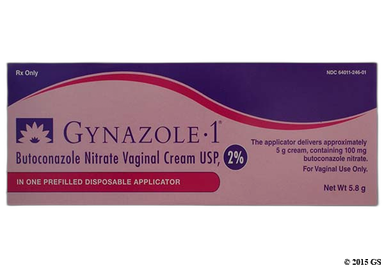
Gynazole-1 (butoconazole) treats vaginal yeast infections with one dose, but it is expensive compared to other options.

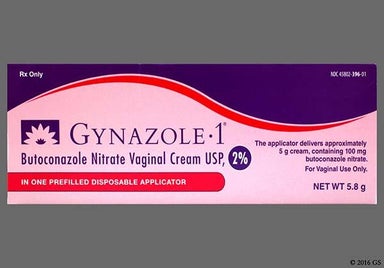
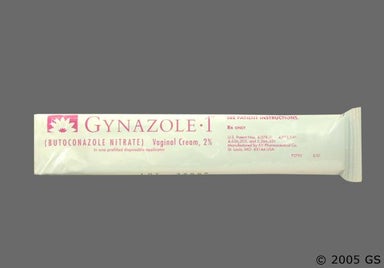
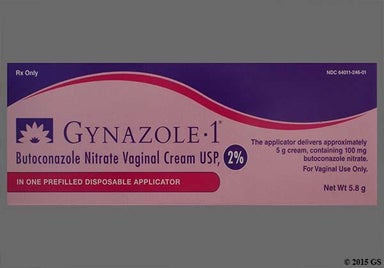
Gynazole-1 (butoconazole) is an antifungal. It kills the fungus causing a yeast infection by damaging its protective outer layer.
| Common Brands | Gynazole-1 |
|---|---|
| Drug Class | Antifungal |
| Controlled Substance Classification | Not a controlled medication |
| Generic Status | No lower-cost generic available |
| Availability | Prescription only |

The following side effects may get better over time as your body gets used to the medication. Let your healthcare provider know immediately if you continue to experience these symptoms or if they worsen over time.
Along with its needed effects, a medicine may cause some unwanted effects. Although not all of these side effects may occur, if they do occur they may need medical attention.
Check with your doctor as soon as possible if any of the following side effects occur:
Less common
Vaginal burning, itching, discharge, or other irritation not present before use of this medicine
Rare
Skin rash or hives
Some side effects may occur that usually do not need medical attention. These side effects may go away during treatment as your body adjusts to the medicine. Also, your health care professional may be able to tell you about ways to prevent or reduce some of these side effects. Check with your health care professional if any of the following side effects continue or are bothersome or if you have any questions about them:
Less common or rare
Abdominal or stomach cramps or pain
burning or irritation of penis of sexual partner
headache
Other side effects not listed may also occur in some patients. If you notice any other effects, check with your healthcare professional.
Call your doctor for medical advice about side effects. You may report side effects to the FDA at 1-800-FDA-1088.




Gynazole-1 (butoconazole) can cause some serious health issues. This risk may be even higher for certain groups. If this worries you, talk to your doctor or pharmacist about other options.
Severe allergic reactions to Gynazole-1 (butoconazole) while extremely rare are possible, including life-threatening problems like anaphylaxis (closing of the throat). Call 911 if this happens. If you notice hives, a rash, swelling of the lips or tongue, or difficulty breathing after taking Gynazole-1 (butoconazole), call your healthcare provider right away.
Gynazole-1 (butoconazole) can cause condoms and diaphragms to weaken and break. This puts you at risk for an unwanted pregnancy as well as sexually transmitted infections (STI). This effect continues for up to 72 hours after you use Gynazole-1 (butoconazole). It's important to avoid having sex until your infection is cleared up, as sex can make your symptoms worse and it is possible to give your infection to your partner.
Gynazole-1 (butoconazole) hasn't been studied very much in pregnant women, so experts don't know if it is safe for pregnant women to use it. To be on the safe side, you shouldn't use Gynazole-1 (butoconazole) if you are pregnant. There are safer options available to treat vaginal yeast infections during pregnancy.

 Applicator
| Dosage | Quantity | Price as low as | Price per unit |
|---|---|---|---|
| 5.8g of 2% | 1 applicator | $94.33 | $94.33 |

Although certain medicines should not be used together at all, in other cases two different medicines may be used together even if an interaction might occur. In these cases, your doctor may want to change the dose, or other precautions may be necessary. When you are taking any of these medicines, it is especially important that your healthcare professional know if you are taking any of the medicines listed below. The following interactions have been selected on the basis of their potential significance and are not necessarily all-inclusive.
Using medicines in this class with any of the following medicines is usually not recommended, but may be required in some cases. If both medicines are prescribed together, your doctor may change the dose or how often you use one or both of the medicines.






Prescription savings
Stop paying too much for your prescriptions. Compare prices, get pharmacy coupons, and save up to 80%. Find expert answers to your health questions so you can make the best decisions for yourself and your family.
Health conditions
Medications & treatment
Access & affordability
Medication discounts


Most people will feel relief within the first 24 hours after using Gynazole-1. Gynazole-1 is designed to stay in place in your vagina for 4 days after using. If you don't feel relief within 4 days, please contact your healthcare provider. You may need a different medication to treat your infection.
Gynazole-1 hasn't been studied very much in pregnant women, so experts don't know if it is safe for pregnant women to use it. To be on the safe side, you shouldn't use Gynazole-1 if you are pregnant.
Both Monistat and Gynazole-1 work equally well to treat yeast infections. The choice for most people comes down to personal preference and cost. Gynazole-1 is very easy to use and works within 24 hours for most people, but it is very expensive and requires a prescription. Monistat is available over-the-counter and is much cheaper than Gynazole-1, but can take up to 3 days to kick in.
Yes, it is ok to use Gynazole-1 if you have your period. Just be sure to use pads or panty liners instead of tampons, as tampons can affect how well Gynazole-1 works. Avoid using tampons for 72 hours after using Gynazole-1.
Yes, there are a few single dose options that are cheaper than Gynazole-1. Fluconazole, a prescription option, is the cheapest product. You take a single pill and you should feel relief within 1 to 3 days. Monistat, an over-the-counter option, is also much cheaper than Gynazole-1. There is a 1 day version of Monistat available that provides relief within 3 to 7 days, although many people feel improvement within 24 hours. Always check with your healthcare provider first to see if it's ok for you to switch to an alternative medication.
