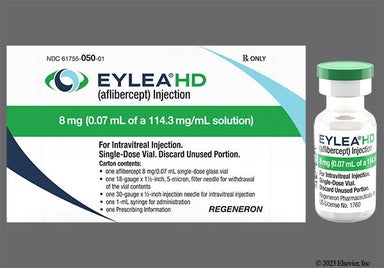
Eylea HD
Eylea HD (aflibercept) is a medication that's used for adults with certain eye conditions related to the retina (a layer of cells in the back of the eye). It's typically injected into the eye by an eye specialist. The first 3 injections are given every month, and then the following injections are given every 2 to 4 months. Side effects can include eye pain, eye redness, and blurry vision. Like most other injections into the eye, there's also a rare risk for eye infection and eye damage.


What is Eylea HD (aflibercept)?
What is Eylea HD (aflibercept) used for?
How Eylea HD (aflibercept) works
Eylea HD (aflibercept) is a vascular endothelial growth factor (VEGF) inhibitor. It blocks VEGF, a protein that makes new blood vessels in the body. When there's too much of VEGF in the eye, it causes new, weak blood vessels to form. These weak blood vessels can leak fluid into the back of the eye.
By blocking VEGF proteins from working, Eylea HD (aflibercept) slows the growth of additional blood vessels and helps lessen the amount of fluid that leaks in the eye. This helps lower the risk of vision loss from different eye conditions.
Drug facts

Side effects of Eylea HD (aflibercept)
The following side effects may get better over time as your body gets used to the medication. Let your healthcare provider know immediately if you continue to experience these symptoms or if they worsen over time.
Common Side Effects
- Cataract (3-6%)
- Blurry vision (3-6%)
- Poor healing of the cornea (2-6%)
- Eye floaters (1-5%)
- Bleeding of the retina (3-4%)
- Blood spot on the whites of eye (2-4%)
- Eye pain or irritation (2-4%)
- Higher eye pressure (1-4%)
Less Common Side Effects
- Feeling like something is in your eye
- Watery eye
- Swollen eyelid
Eylea HD (aflibercept) serious side effects
Contact your healthcare provider immediately if you experience any of the following.
- Eye infection (endophthalmitis): eye pain, eye redness, not able to look at bright lights, vision loss
- Retinal detachment: flashing lights, feeling like something is covering your vision, changes in your vision, vision loss, seeing floaters
The following Eylea HD (aflibercept) side effects have also been reported
Side effects that you should report to your care team as soon as possible:
- Allergic reactions—skin rash, itching, hives, swelling of the face, lips, tongue, or throat
- Eye pain, redness, irritation, or discharge with blurry or decreased vision
- Heart attack—pain or tightness in the chest, shoulders, arms, or jaw, nausea, shortness of breath, cold or clammy skin, feeling faint or lightheaded
- Stroke—sudden numbness or weakness of the face, arm, or leg, trouble speaking, confusion, trouble walking, loss of balance or coordination, dizziness, severe headache, change in vision
- Sudden eye pain or change in vision such as blurry vision, seeing halos around lights, vision loss
Side effects that usually do not require medical attention (report these to your care team if they continue or are bothersome):
- Blurry vision
- Eye pain
- Increased tears
- Small spots floating in vision

Pros and cons of Eylea HD (aflibercept)
Pros
- Can help with multiple eye conditions related to the retina
- Typically one of the first-choice options for treating wet AMD
- Might extend the time between treatments up to every 4 months, so it's convenient for people with a busy schedule
Cons
- Greater risk of eye infection or injury because it's an injection directly into the eye
- Can only get injections from a trained eye specialist
- No lower-cost generic available

Pharmacist tips for Eylea HD (aflibercept)

- You'll typically get Eylea HD (aflibercept) injections at the eye specialist's office. A trained eye specialist must administer the medication because they have the right tools and proper technique to make sure the procedure is as safe as possible for you.
- It's best to get your Eylea HD (aflibercept) injection regularly according to your eye specialist's treatment plan. Talk with your eye specialist right away about rescheduling your appointment if you missed an appointment for your injection.
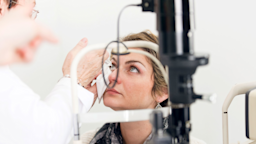
- Before your Eylea HD (aflibercept) injection, the eye specialist will give you a numbing medication that helps lessen the pain and discomfort from the procedure. They'll also place antibiotic eye drops or ointment into the eye to prevent infection.
- Be prepared to stay at the office for a bit after your injection so that the eye specialist can check your eye pressure. This is because Eylea HD (aflibercept) can temporarily raise the pressure in your eye.
- You might want to bring a pair of sunglasses to wear after your Eylea HD (aflibercept) injection. Your eyes might be more sensitive to light for a few hours after the injection since your eye specialist has dilated your eyes to check your eye pressure.
- Don't drive a car or operate machinery until you know how Eylea HD (aflibercept) affects your vision. This medication can cause temporary visual changes. Have someone help drive you to and from your appointment.
- Be sure to check your vision in between your Eylea HD (aflibercept) injections. Certain eye problems can get worse over time, so it's important to tell your eye specialist if you notice concerning changes in vision at any time. Your eye specialist should discuss with you about how to monitor your vision at home.
- Tell the eye specialist right away if you have any eye pain, eye redness, blurry vision, or sensitivity to bright light after your Eylea HD (aflibercept) injections. These are signs of an eye infection or eye damage, which are serious risks that come with getting eye injections.
More on Eylea HD (aflibercept) tips

Common questions about Eylea HD (aflibercept)
Call the eye specialist's office right away to reschedule if you miss or plan to miss an appointment for an Eylea HD (aflibercept) injection. It's very important to get your Eylea HD (aflibercept) injections regularly and on time according to your eye specialist's treatment plan. Missing doses might cause your retinal condition to get worse.
One study showed that Eylea HD (aflibercept) helped people with wet AMD see 7 to 8 more letters on an eye chart after getting injections for a little over 10 months. Follow up with your eye specialist if you have any questions about whether Eylea HD (aflibercept) is right for you.
Eylea HD and Eylea are both medications that contain aflibercept and are injected into the eye by an eye specialist. Eylea HD and Eylea differ in how much medication is in each dose and how often you need injections after the starter doses. Each dose of Eylea has 2 mg of aflibercept, and it's injected every 1 to 2 months. But each dose of Eylea HD has 8 mg of aflibercept (HD for high dose), and it's injected up to every 4 months. In addition, although both can treat wet age-related macular degeneration, diabetic macular edema, and diabetic retinopathy, Eylea can also be used to treat macular edema following adults with retinal vein occlusion and premature babies with retinopathy of prematurity. Speak with your eye specialist to see which medication is right for you.
Eylea HD (aflibercept) and Avastin (bevacizumab) are both VEGF inhibitors that work similarly. Eylea HD (aflibercept) is FDA-approved to treat wet age-related macular edema (wet AMD). Avastin (bevacizumab) is actually FDA-approved to treat cancer, but many eye specialists use it off-label to treat wet AMD as well. Speak with your eye specialist to learn more about differences between the two medications. Your eye specialist can discuss with you about which medication might be the most appropriate for you.
Discuss with your eye specialist about the risks and benefits of getting Eylea HD (aflibercept) eye injections for your eye condition if you’re pregnant or planning on becoming pregnant. It's not clear whether Eylea HD (aflibercept) is safe during pregnancy because it hasn’t been studied. But animal studies showed that it caused birth defects in babies when pregnant mothers were given the medication as injections under the skin. To be safe, the manufacturer recommends using Eylea HD (aflibercept) during pregnancy only if the benefits outweigh the risks. To prevent pregnancy, use birth control before the first injection, during treatment, and for at least 4 months after you stop treatment if you can become pregnant.

How to save using GoodRx


Risks and warnings for Eylea HD (aflibercept)
Eylea HD (aflibercept) can cause some serious health issues. This risk may be even higher for certain groups. If this worries you, talk to your doctor or pharmacist about other options.
Eye infection and damage
Very rarely, eye injections, such as with Eylea HD (aflibercept), can lead to endophthalmitis (an infection inside the eyeball) or detached retina (when the retina pulls away from the back of the eye). This can sometimes happen when the eye gets contaminated and infected with germs during the injection.
Your eye specialist might place an antibiotic eye drop or ointment in the eye before the injection to lower the risk of infection. They'll also have the proper techniques and tools to lower the risk of contamination during the procedure.
Make sure to follow up with the eye specialist after your appointment so they can check for any visual changes. Let the eye specialist know right away if your eye becomes red, sensitive to light, or painful or if you have changes in vision. These can be signs of eye infection or retinal detachment.
Higher eye pressure
- Risk factor: Regular injections of Eylea HD (aflibercept)
People who get Eylea HD (aflibercept) injections can sometimes have higher eye pressure because there's more fluid in the eye from the injection. The rise in eye pressure typically happens within an hour after the injection and is usually temporary. But it can stay high in some people, especially for people who get regular eye injections.
You'll need to get your eye pressure checked each time after your Eylea HD (aflibercept) injection so the eye specialist can make sure this medication continues to be safe for you. Talk with your eye specialist right away if you have intense eye pain when you move your eye around. This can be a sign of very high eye pressure.
Risk for heart attack or stroke
- Risk factors: History of heart attack or stroke
Getting Eylea HD (aflibercept) injections might potentially put you at risk for serious blood clot problems, such as heart attack and stroke. Symptoms of a stroke include sudden confusion, severe headache, facial drooping, weakness on one side of the body, slurred speech, or trouble walking. Symptoms of a heart attack include chest pain that travels to your arm or jaw, sweating, or shortness of breath. Get medical help right away if you have symptoms of a stroke or heart attack.

Eylea HD (aflibercept) dosage
Typical dosage for Eylea HD (aflibercept)
Eylea HD (aflibercept) is given as an injection into the back of the eye(s) by an eye specialist at their office.
-
Wet AMD: The typical starting dose is 8 mg injected into the eye(s) once a month for 3 months. After that, the dose is 8 mg is injected into the eye(s) once every 2 to 4 months.
-
Diabetic macular edema: The typical starting dose is 8 mg injected into the eye(s) once a month for the first 3 months. After that, the dose is 8 mg injected into the eye(s) once every 2 to 4 months.
-
Diabetic retinopathy: The typical starting dose is 8 mg injected into the eye(s) once a month for the first 3 months. After that, the dose is 8 mg injected into the eye(s) once every 2 to 3 months.

Eylea HD (aflibercept) contraindications
Contraindications are specific health conditions or situations in which a person should not take a medication due to safety concerns. If you have any of the following conditions or if any of the following apply to you, let your healthcare provider know because Eylea HD (aflibercept) will not be safe for you to take.
- Infection in or around the eye
- Active eye inflammation (e.g., swelling, pain, redness)
- Allergy to aflibercept (e.g., Eylea)

What are alternatives to Eylea HD (aflibercept)?
Conditions related to swelling or damage to the macula or retina (parts of the eye that are important for vision):
Lucentis and all its biosimilars
Lucentis and Cimerli biosimilar only

News about Eylea HD (aflibercept)


Eylea HD (aflibercept) images