Ertaczo
Ertaczo (sertaconazole) works well for treating athlete's foot in adults and children 12 years of age or older. However, it's only available as a brand medication, so it's very expensive if not covered by insurance.


What is Ertaczo (sertaconazole)?
What is Ertaczo (sertaconazole) used for?
- Athlete's foot (tinea pedis) between the toes
How Ertaczo (sertaconazole) works
Ertaczo (sertaconazole) is a topical (used on the skin) antifungal. It stops the fungus from building a protective covering, so it can't grow and reproduce.
Drug facts
| Common Brands | Ertaczo |
|---|---|
| Drug Class | Antifungal |
| Controlled Substance Classification | Not a controlled medication |
| Generic Status | No lower-cost generic available |
| Availability | Prescription only |

Side effects of Ertaczo (sertaconazole)
The following side effects may get better over time as your body gets used to the medication. Let your healthcare provider know immediately if you continue to experience these symptoms or if they worsen over time.
Common Side Effects
- Eczema (contact dermatitis)
- Dryness
- Burning
- Pain or tenderness
Less Common Side Effects
- Redness
- Itching
- Blisters
- Peeling
- Change in skin color
Ertaczo (sertaconazole) serious side effects
Contact your healthcare provider immediately if you experience any of the following.
- Allergic reactions
The following Ertaczo (sertaconazole) side effects have also been reported
Some side effects may occur that usually do not need medical attention. These side effects may go away during treatment as your body adjusts to the medicine. Also, your health care professional may be able to tell you about ways to prevent or reduce some of these side effects. Check with your health care professional if any of the following side effects continue or are bothersome or if you have any questions about them:
Incidence unknown
Blistering, burning, crusting, dryness or flaking of skin
itching, redness, skin rash, swelling, or soreness at application site
darkening of skin
flushing and redness of skin
scaling, severe redness, soreness or swelling of skin
peeling or loosening of skin
skin tenderness
unusually warm skin
Other side effects not listed may also occur in some patients. If you notice any other effects, check with your healthcare professional.
Call your doctor for medical advice about side effects. You may report side effects to the FDA at 1-800-FDA-1088.

Get your GoodRx coupon

Pros and cons of Ertaczo (sertaconazole)
Pros
- Few side effects
- Very little is absorbed in the body, so it's less likely to cause serious side effects compared to oral antifungals.
Cons
- Only for treating athlete's foot between the toes; not for other fungal skin infections
- Doesn't work very quickly; must be used twice daily for 4 weeks
- Not available as a generic, so it may be expensive

Pharmacist tips for Ertaczo (sertaconazole)

- Before applying Ertaczo (sertaconazole), wash your feet and toes with soap and water and let them dry fully. Apply a thin layer between your toes, and rub it in gently and thoroughly. Also apply this medication to the areas just around the visible fungal infection to make sure you have covered everything including nearby areas with possible early infection.
- Wash your hands with soap and water after using Ertaczo (sertaconazole) to prevent it from getting in your eyes and to help prevent the fungal infection from spreading. If the medication gets in your eyes, rinse them well with water.
- Use Ertaczo (sertaconazole) for the recommended amount of time of 4 weeks. Don't stop using it earlier, even if the symptoms have gotten a lot better. Stopping treatment too early can make the athlete's foot more likely to come back again.
- Don't cover the medicated area(s) with bandages or dressings, since it can cause more side effects as well as keep more heat and moisture on the feet. When you have athlete's foot, it's best to keep your feet dry and cool. Let them breathe by wearing sandals or slippers instead of closed shoes or by using clean socks that dry easily or are "moisture wicking."
- Let your provider know if your symptoms don't improve after the recommended treatment time. You may need a different antifungal medication, or it may mean that your skin condition is due to something else.
- If you notice any skin reaction, including signs of allergy or irritation, stop using Ertaczo (sertaconazole) and call your provider.
- Athlete's foot is very contagious and can spread to other people easily. Ask your provider for recommendations on how to prevent this from happening. You should definitely avoid using swimming pools or public showers, and it may be best not to share your bathroom or shower/tub with other people in your home until the infection is completely gone.
- Ertaczo (sertaconazole) is approved for use in people who are immunocompetent, meaning they have a healthy immune system. If you have a weak immune system, which can be due to medical conditions or certain medications, check with your provider before using Ertaczo (sertaconazole).

Risks and warnings for Ertaczo (sertaconazole)
Ertaczo (sertaconazole) can cause some serious health issues. This risk may be even higher for certain groups. If this worries you, talk to your doctor or pharmacist about other options.
Use only on the skin
Ertaczo (sertaconazole) is only approved for treating athlete's foot. Only use this medication on the skin. Do not use Ertaczo (sertaconazole) in the eyes, mouth, or vagina. If the medication gets into these areas, rinse with water.
Skin reaction or irritation
- Risk factors: History of allergy to other antifungals
Skin reactions from Ertaczo (sertaconazole) are uncommon, but may include dryness, burning, pain, or signs of allergic reaction, such as itching or rash. If this happens, stop using the medication and contact your provider. Let your provider know ahead of time if you've ever had an allergic reaction to an antifungal medication before.

Ertaczo (sertaconazole) dosage
 Tube of cream
| Dosage | Quantity | Price as low as | Price per unit |
|---|---|---|---|
| 60g of 2% | 1 tube | $869.78 | $869.78 |

Interactions between Ertaczo (sertaconazole) and other drugs
Although certain medicines should not be used together at all, in other cases two different medicines may be used together even if an interaction might occur. In these cases, your doctor may want to change the dose, or other precautions may be necessary. Tell your healthcare professional if you are taking any other prescription or nonprescription (over-the-counter [OTC]) medicine.

How much does Ertaczo (sertaconazole) cost?
$869.78

What are alternatives to Ertaczo (sertaconazole)?

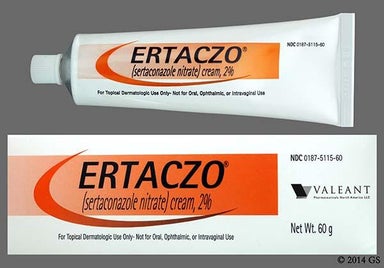
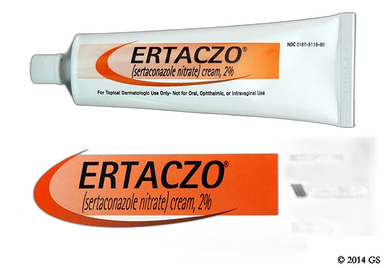
Ertaczo (sertaconazole) images