ganciclovir
Ganciclovir (Cytovene IV) is an antiviral medication against cytomegalovirus (CMV) in people with weakened immune systems. It's given as an infusion into your veins by a healthcare provider. The maintenance dose of ganciclovir (Cytovene IV) is typically just once a day, but the length of treatment can last 3 months or longer, depending on your condition. Ganciclovir (Cytovene IV) can cause serious side effects such as infections or kidney problems. It's available as a lower-cost generic.


What is Ganciclovir (Cytovene IV)?
What is Ganciclovir (Cytovene IV) used for?
- Treatment of viral eye infection (CMV retinitis) in adults with weakened immune systems
- Prevention of CMV disease in adults who received a transplant
How Ganciclovir (Cytovene IV) works
Ganciclovir (Cytovene IV) is an antiviral that works itself into the CMV's genetic material and stops the virus from making copies of itself and growing.
Drug facts
| Common Brands | Cytovene |
|---|---|
| Drug Class | Antiviral |
| Controlled Substance Classification | Not a controlled medication |
| Generic Status | No lower-cost generic available |
| Availability | Prescription only |

Side effects of Ganciclovir (Cytovene IV)
The following side effects may get better over time as your body gets used to the medication. Let your healthcare provider know immediately if you continue to experience these symptoms or if they worsen over time.
Common Side Effects
- Fever (48%)
- Diarrhea (44%)
- Tiredness, dizziness, and other symptoms of low red blood cell count (25%)
- Catheter-related infections or irritations (22%)
- Not feeling hungry (14%)
- Vomiting (13%)
- Sweating a lot (12%)
- Chills (10%)
Less Common Side Effects
- Stomach pain
- Nerve pain in hands and feet
- Tingling or prickling sensation
- Cough
- Headache
Ganciclovir (Cytovene IV) serious side effects
Contact your healthcare provider immediately if you experience any of the following.
- Serious infection: Fever, headache, body aches, fatigue, cough, trouble breathing
- Severe bleeds: Tiredness, bruising easily, bleeding that's hard to stop, blood in the urine
- Sepsis: Fever, trouble breathing, shivering, racing heart
- Kidney problems: Nausea, vomiting, tiredness, feeling confused, difficulty making urine
The following Ganciclovir (Cytovene IV) side effects have also been reported
Along with its needed effects, a medicine may cause some unwanted effects. Although not all of these side effects may occur, if they do occur they may need medical attention.
Medicines like ganciclovir can sometimes cause serious side effects such as blood problems; these are described below. Discuss these possible effects with your doctor.
Check with your doctor immediately if any of the following side effects occur:
More common
Some side effects may occur that usually do not need medical attention. These side effects may go away during treatment as your body adjusts to the medicine. Also, your health care professional may be able to tell you about ways to prevent or reduce some of these side effects. Check with your health care professional if any of the following side effects continue or are bothersome or if you have any questions about them:
Other side effects not listed may also occur in some patients. If you notice any other effects, check with your healthcare professional.
Call your doctor for medical advice about side effects. You may report side effects to the FDA at 1-800-FDA-1088.

Pros and cons of Ganciclovir (Cytovene IV)
Pros
- Top choice medication for CMV treatment and prevention, especially if you can't take pills by mouth
- Available as a generic medication so it might be less expensive
- Maintenance dose is typically just once daily
Cons
- Can cause kidney damage and dose must be adjusted in people with kidney problems
- Can cause certain anemias and other low blood cell counts
- Must be injected into the veins (IV) by a healthcare provider (if you're looking for the oral form, see valganciclovir (Valtrex))

Pharmacist tips for Ganciclovir (Cytovene IV)

- Drink plenty of fluids to stay hydrated while you are getting ganciclovir (Cytovene IV) injections. It can help prevent kidney problems.
- You should never receive ganciclovir (Cytovene IV) as an injection into your muscle or under your skin. Your healthcare provider will make sure you get this medication correctly and safely.
- It takes about an hour to infuse ganciclovir (Cytovene IV) into your veins. Your provider won't be able to give you this medication any faster than an hour because it could cause serious side effects.
- You and your partner are recommended to use birth control while you're taking this medication because ganciclovir (Cytovene IV) might cause harm to the unborn baby during pregnancy. Females should use an effective birth control method while taking ganciclovir (Cytovene IV) and for at least 30 days after stopping the medication. Males with female partners who can become pregnant should use condoms while taking ganciclovir (Cytovene IV) and for at least 90 days after stopping the medication.
- It's unknown if ganciclovir (Cytovene IV) can harm babies of breastfeeding mothers taking it. But breastfeeding isn't recommended during treatment with this medication because of the possible serious side effects in babies. If you're breastfeeding and need to take this medication, discuss options with your provider.
- Ganciclovir (Cytovene IV) can interact with many other medications. Make sure to tell your provider about all the medications and supplements you're taking so they can check that ganciclovir (Cytovene IV) is safe for you to get.

Risks and warnings for Ganciclovir (Cytovene IV)
Ganciclovir (Cytovene IV) can cause some serious health issues. This risk may be even higher for certain groups. If this worries you, talk to your doctor or pharmacist about other options.
Low blood count and bone marrow problems
- Risk factors: Using medications that cause low blood cell counts | Kidney problems | History of low blood count from ganciclovir or other similar medications
 Ganciclovir (Cytovene IV) can lower your blood cell counts and damage your bone marrow. This can make it harder for your body to fight new infections and raises your risk of bleeds. But it's also possible that you won't experience any symptoms, so your provider will order blood tests regularly to check your cell counts. Ganciclovir (Cytovene IV) might not be recommended for you if your blood cell counts are already low. Your provider might change your dose or stop the medication if your blood counts become too low. Low blood counts can happen any time during ganciclovir (Cytovene IV) treatment, but can occur as early as after 1 to 2 weeks of starting this medication. Your blood counts will typically start to improve 3 to 7 days after stopping the medication. Let your providers know right away if you experience symptoms of low blood cell counts, such as:
- Low red blood cell count: Tiredness, weakness, dizziness, trouble breathing, pale skin, cold hands and feet
- Low white blood cell count: Fever, headaches, body aches, chills
- Low platelet count: Tiredness, bruising easily, bleeding that's hard to stop, blood in the urine
Fertility problems
Ganciclovir (Cytovene IV) at prescribed doses can cause fertility problems in both males and females. Sometimes, this can be permanent. If you're thinking about having a child in the future, talk to your healthcare provider about family planning before you begin treatment.
Harm to unborn babies
Based on animal studies, ganciclovir (Cytovene IV) might cause harm to an unborn baby if taken during pregnancy. This risk is also true for males taking the medication who have female partners who may become pregnant. For this reason, females should use an effective birth control method while taking ganciclovir (Cytovene IV) and for at least 30 days after they stop the medication. Males should use condoms while taking ganciclovir (Cytovene IV) and for at least 90 days after they stop the medication.
Cancer risk
Based on animal studies ganciclovir (Cytovene IV) has the potential to cause cancer in humans. Talk to your provider if you have concerns.
Kidney problems
- Risk factors: Dehydration | Older adults | Using other medications that harm the kidneys
If you have kidney problems, it's possible for ganciclovir (Cytovene IV) to build up in your body and cause more side effects. In addition, ganciclovir (Cytovene IV) can cause serious harm to the kidneys, especially in older adults. The risk is also higher if you don't drink enough fluids or take other medications that can harm the kidneys. Stay hydrated while taking ganciclovir (Cytovene IV) and talk to your provider before taking any medications, including over-the-counter (OTC) pain and cold medications. Your provider will order regular lab tests to monitor your kidneys. If your labs show changes in how well your kidneys work, your provider might change your dose.

Ganciclovir (Cytovene IV) dosage
Typical dosage for Ganciclovir (Cytovene IV)
Ganciclovir (Cytovene IV) is only available as an intravenous (IV) infusion that's administered by a healthcare provider. Your dose of ganciclovir (Cytovene IV) depends on your body weight.
Treatment of CMV eye infection
- Starting dose: Typically, you'll start off by receiving 5 mg/kg infused IV every 12 hours for 2 to 3 weeks.
- Maintenance dose: After the starting dose, your provider will typically continue your treatment with 5 mg/kg infused IV once daily. Your provider will determine when you can stop your infusions.
To prevent CMV disease after transplant
- Starting dose: Typically, you'll start off by receiving 5 mg/kg infused IV every 12 hours for 1 to 2 weeks.
- Maintenance dose: After the starting dose, your provider will typically continue your treatment with 5 mg/kg infused IV once daily. You'll continue treatment until about 3 to 4 months after your transplant.
Your dose might differ if you have kidney problems.

Interactions between Ganciclovir (Cytovene IV) and other drugs
Although certain medicines should not be used together at all, in other cases two different medicines may be used together even if an interaction might occur. In these cases, your doctor may want to change the dose, or other precautions may be necessary. When you are receiving this medicine, it is especially important that your healthcare professional know if you are taking any of the medicines listed below. The following interactions have been selected on the basis of their potential significance and are not necessarily all-inclusive.
Using this medicine with any of the following medicines is usually not recommended, but may be required in some cases. If both medicines are prescribed together, your doctor may change the dose or how often you use one or both of the medicines.
- Imipenem
Using this medicine with any of the following medicines may cause an increased risk of certain side effects, but using both drugs may be the best treatment for you. If both medicines are prescribed together, your doctor may change the dose or how often you use one or both of the medicines.

Ganciclovir (Cytovene IV) contraindications
Contraindications are specific health conditions or situations in which a person should not take a medication due to safety concerns. If you have any of the following conditions or if any of the following apply to you, let your healthcare provider know because Ganciclovir (Cytovene IV) will not be safe for you to take.
- Allergy to valganciclovir (Valcyte)

What are alternatives to Ganciclovir (Cytovene IV)?

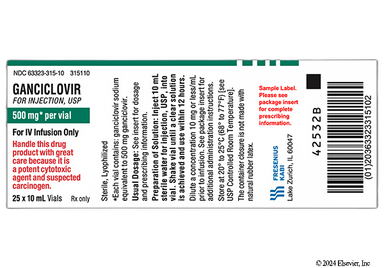
Ganciclovir (Cytovene IV) images



