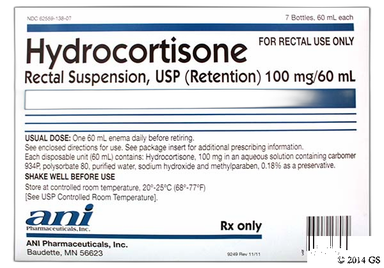
hydrocortisone enema
Hydrocortisone (Cortenema) is a steroid enema used along with other treatments to manage symptoms of ulcerative colitis (UC) in adults. It works by reducing inflammation or swelling in the lower intestine. The enema is given rectally once per night for 21 days. It's available in both brand-name and generic versions. Side effects include pain and bruising in the rectum.


What is Hydrocortisone (Cortenema)?
What is Hydrocortisone (Cortenema) used for?
- Add-on treatment for ulcerative colitis (UC)
How Hydrocortisone (Cortenema) works
Hydrocortisone (Cortenema) is a corticosteroid. It reduces certain chemicals in your body that cause swelling and pain in the lower intestine, helping to treat ulcerative colitis symptoms.
Drug facts
| Common Brands | Cortenema |
|---|---|
| Drug Class | Corticosteroid |
| Controlled Substance Classification | Not a controlled medication |
| Generic Status | Lower-cost generic available |
| Availability | Prescription only |

Side effects of Hydrocortisone (Cortenema)
The following side effects may get better over time as your body gets used to the medication. Let your healthcare provider know immediately if you continue to experience these symptoms or if they worsen over time.
Common Side Effects
- Skin bruising
- Skin thinning
- High blood pressure
- Weight gain
Less Common Side Effects
- Rectal pain or burning
- Bleeding in the rectum
- Weakened bones
- Dizziness
- Feeling bloated
The following Hydrocortisone (Cortenema) side effects have also been reported
Along with its needed effects, a medicine may cause some unwanted effects. Although not all of these side effects may occur, if they do occur they may need medical attention.
Check with your doctor as soon as possible if any of the following side effects occur:
Less common or rare
Burning and itching of skin
chills
false sense of well-being
infection
mood swings
painful, red or itchy, pus-containing blisters in hair follicles
personality changes
rectal bleeding, burning, dryness, itching, or pain not present before therapy
sensation of pins and needles
stabbing pain
straining while passing stool (with tixocortol only)
Additional side effects may occur if you use this medicine for a long time. Check with your doctor as soon as possible if any of the following side effects occur:
Abdominal or stomach pain
backache
coughing up blood
decreased resistance to infection
dryness of mouth
filling or rounding out of the face
gradual blurring or loss of vision
headache
hunchback
increased thirst
irregular heartbeat
loss of appetite
menstrual irregularities
mood or mental changes
muscle cramps or pain
muscle weakness
nausea or vomiting
nonelevated blue or purplish patch on the skin
osteoporosis or bone fractures
pain in joints
pain or discomfort in the area of a vein
rapid weight gain
reddish purple lines on arms, face, legs, trunk, or groin
redness of eye
sensitivity of eye to light
shortness of breath
skin rash
slow wound healing
stunting of growth (in children)
swelling of feet or lower legs
trouble in sleeping
unusual decrease in sexual desire or ability in men
tearing of eyes
unusual increase in hair growth (especially on the face)
unusual tiredness or weakness
unusual weight loss
weak pulse
Some side effects may occur that usually do not need medical attention. These side effects may go away during treatment as your body adjusts to the medicine. Also, your health care professional may be able to tell you about ways to prevent or reduce some of these side effects. Check with your health care professional if any of the following side effects continue or are bothersome or if you have any questions about them:
Less common or rare
Dizziness
dry, scaly skin
increase in appetite
increased sweating
lightened skin color
passing of gas (with budesonide only)
sensation of spinning
thin, fragile skin
thinning hair on scalp
unusual weight gain
Other side effects not listed may also occur in some patients. If you notice any other effects, check with your healthcare professional.
Call your doctor for medical advice about side effects. You may report side effects to the FDA at 1-800-FDA-1088.

Get your GoodRx coupon

Pros and cons of Hydrocortisone (Cortenema)
Pros
- Works directly in your lower intestine to relieve symptoms
- Symptoms should improve within 3 to 5 days
- Generally has fewer side effects than oral steroids
- Good option for people who can't, or prefer not to take, oral medications
Cons
- Long-term use raises your risk of serious side effects
- Might be difficult for some people to administer correctly
- Can't be used if you have a fungal infection or a recent procedure in the intestines
- Not for use alone for treating ulcerative colitis

Pharmacist tips for Hydrocortisone (Cortenema)

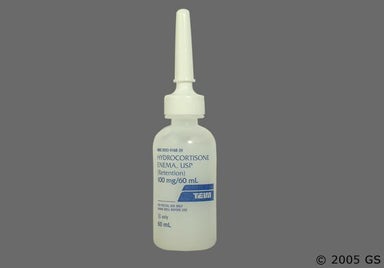
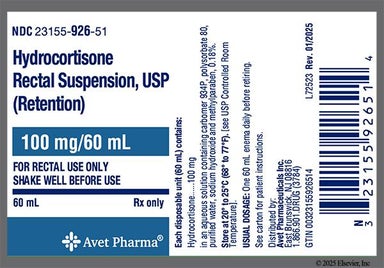
- Hydrocortisone (Cortenema) is available as a solution in a bottle with an applicator tip. One bottle represents one dose. After administering your dose, make sure to throw away the used bottle.
- Hydrocortisone (Cortenema) should be used along with a controlled diet and other medications to control your UC symptoms. Speak to your prescriber about how this medication fits in your treatment plan.
- If you've taken hydrocortisone (Cortenema) for more than 3 weeks, you will need to be weaned off by slowly lowering the dose. Don't stop taking it suddenly without talking to your prescriber first. Doing so could result in withdrawal symptoms, such as lightheadedness, severe tiredness, body aches, and vomiting.
- The best time to use hydrocortisone (Cortenema) is right before you go to bed. Don't go to the bathroom for at least 1 hour (preferably all night) to keep the medication in your lower intestine. If you have trouble with this, let your prescriber know. You might need to take additional medications, such as antidiarrheal medications or sedatives to help you sleep through the night.
- Store hydrocortisone (Cortenema) at room temperature.
How to use hydrocortisone (Cortenema):
- Try to go to the bathroom and empty your bowel to allow for the most medication possible to reach your rectum.
- Before you use hydrocortisone (Cortenema), shake the bottle well and remove the protective cap.
- For the best results, lie down on your left side with your left leg straight and your right leg bent forward for balance. Otherwise, you can do the "knee-chest" position.
- To give yourself the medication, insert the applicator tip into your rectum, aiming it toward your belly button. Hold the bottle firmly and tilt it slightly so the nozzle points toward your back.
- Squeeze the bottle slowly to release all the medication, then gently remove the enema. Stay still for at least 30 minutes to help the medication spread through your lower intestine. Throw away the enema after use.

Risks and warnings for Hydrocortisone (Cortenema)
Hydrocortisone (Cortenema) can cause some serious health issues. This risk may be even higher for certain groups. If this worries you, talk to your doctor or pharmacist about other options.
Damage to the rectal wall
Incorrect use of hydrocortisone (Cortenema) can damage your rectum. Make sure you understand how to properly use this medication. Read the Patient Instructions carefully and talk to your prescriber or pharmacist if you have any questions.
Higher risk of infections
Taking hydrocortisone (Cortenema) can weaken your immune system and raise your risk of infections. This can potentially worsen any infections you already have, such as a viral or fungal infection. Be sure your prescriber knows about any infections you have now or have had in the past. Let them know if you have any symptoms of an infection, such as a fever, chills, nausea, vomiting, body aches, tiredness, or any pain, while you're taking hydrocortisone (Cortenema).
Vision problems
- Risk factors: Long-term use of hydrocortisone (Cortenema) | History of eye problems like glaucoma or cataracts
Using hydrocortisone (Cortenema) for a long time can raise eye pressure, worsen glaucoma, and cause cataracts. Talk to your prescriber right away if you experience blurry vision, eye discomfort, or other changes in your vision after using this medication. You might need an eye exam.
Low stress hormone levels
- Risk factors: Using hydrocortisone (Cortenema) for a long time | Using higher doses of hydrocortisone (Cortenema) | Stopping hydrocortisone (Cortenema) suddenly
Using corticosteroids, like hydrocortisone (Cortenema), can cause your body to make less of its own stress hormones. This is more likely if you use higher doses of corticosteroids or take this medication for a long time.. If you stop using hydrocortisone (Cortenema) all of a sudden, you might experience symptoms of low stress hormone, such as weakness, nausea, and diarrhea. This problem is usually temporary and your body's natural stress hormone level should return to normal over time. If you want to stop hydrocortisone (Cortenema), ask your prescriber how you can do so safely. You'll likely need to lower the dose to one enema every other night for 2 to 3 weeks before you can fully stop.
Mood problems
Although rare and less common with rectal corticosteroids, using hydrocortisone (Cortenema) can cause mood problems. Signs of mood problems include depression, changes to your personality, mood swings, and trouble sleeping. Let your prescriber know if you've experienced any of these symptoms after taking this medication.

Hydrocortisone (Cortenema) dosage
 Enema
Enema| Dosage | Quantity | Price as low as | Price per unit |
|---|---|---|---|
| 60ml of 100mg/60ml | 7 enemas | $46.44 | $6.63 |

Interactions between Hydrocortisone (Cortenema) and other drugs
Although certain medicines should not be used together at all, in other cases two different medicines may be used together even if an interaction might occur. In these cases, your doctor may want to change the dose, or other precautions may be necessary. Tell your healthcare professional if you are taking any other prescription or nonprescription (over-the-counter [OTC]) medicine.

How much does Hydrocortisone (Cortenema) cost?

Hydrocortisone (Cortenema) contraindications
Contraindications are specific health conditions or situations in which a person should not take a medication due to safety concerns. If you have any of the following conditions or if any of the following apply to you, let your healthcare provider know because Hydrocortisone (Cortenema) will not be safe for you to take.
- Active fungal infection
- Procedure in the intestines

What are alternatives to Hydrocortisone (Cortenema)?
This medication is used for many different conditions. Generally, it's used for autoimmune problems, conditions related to swelling, or cancer. Some examples include:

Hydrocortisone (Cortenema) images