Key takeaways:
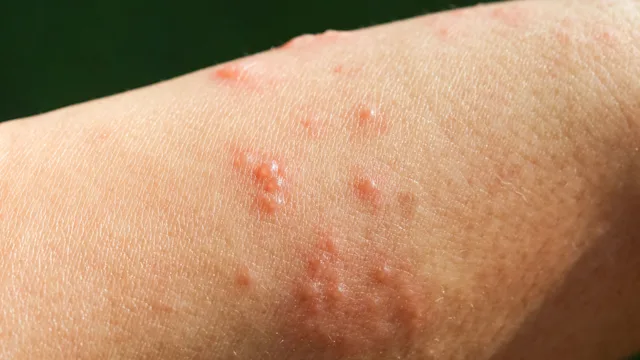
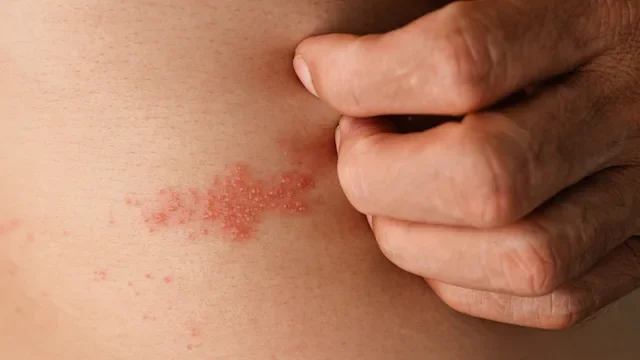
Shingles is a painful, blistering rash that usually develops on one side of the face or body along a nerve path.
People describe the pain as a burning or stabbing sensation.
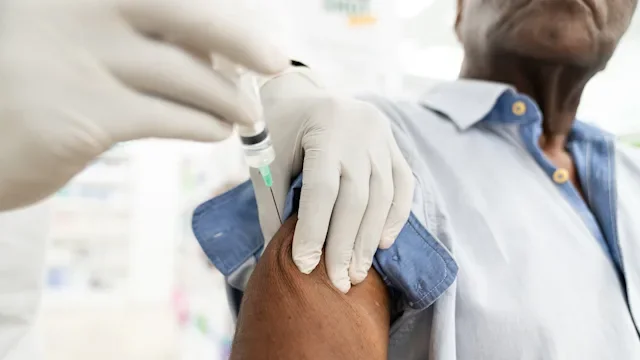
The shingles vaccine can help reduce the risk of getting it.
Shingles is caused by the varicella-zoster virus, which also causes chickenpox. If you had chickenpox as a kid, the virus can lie dormant in your body’s nerve tissue for years until it is reactivated.
Shingles symptoms often include a painful rash, which is a unique sensation for each individual. Here’s what three people who experienced shingles say it feels like.
Came in a three-pronged attack
Shingles blisters commonly erupt on the torso, as was the case for Nashvillian Kevin Endres. Kevin’s shingles began as a “weird” itch between his shoulder blades on Christmas Eve 2018.
The itching worsened, and the blisters spread from his shoulder blades to around his torso. He went to an urgent care center a few days later and was diagnosed with shingles.

Kevin, 62, was helping with a company merger at the time and under high stress at work. He was off for the holidays and able to rest the week after his diagnosis. By the next week, however, simply putting on a shirt was painful. He tried going to work a few hours each day, but the pain made it difficult.
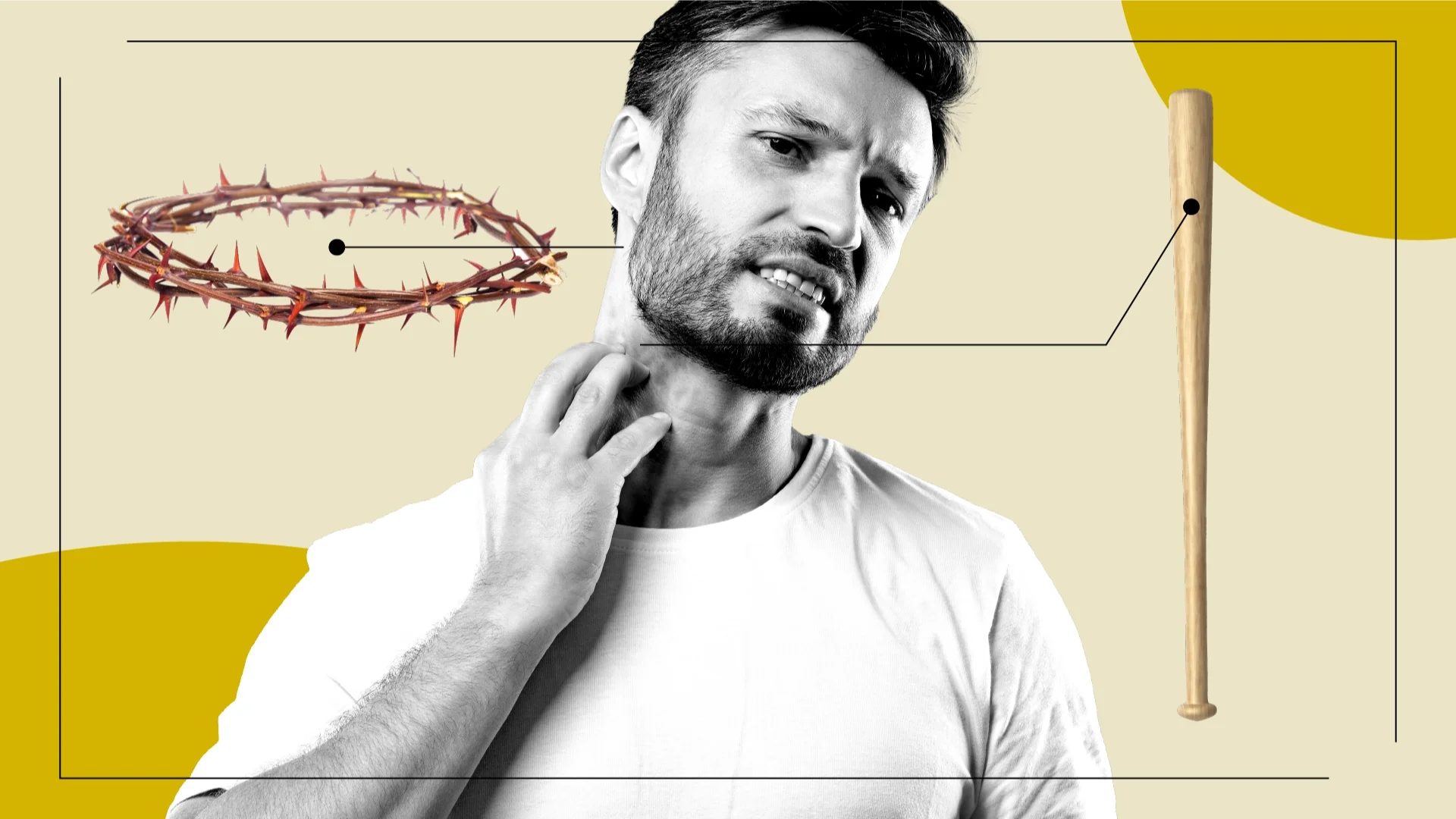
“You hear people talk about the itching and burning, but for me it was a three-pronged attack. I had burning pain like putting a hot piece of steel or iron on my skin and the feeling of knife blades or needle pricks combined with — and I've not heard anyone say this before — being hit with a baseball bat,” he says.
Nothing helped alleviate the pain. “You know how people talk about migraines that are so intense that they can't do anything? This was the same thing. I just had to lay down and of course I couldn't lay on my left side.”
The pain began to gradually ease, but Kevin says it lasted at least a month.
Felt like a crown of thorns
Laarni San Juan experienced shingles on her face. Like Kevin, she was going through a high stress period when her symptoms began. A full-time nurse, she was part of San Francisco’s COVID response team. She was also caring for her aging mother and helping her daughter navigate remote high school.

Laarni, 53, and her family left for a vacation to Hawaii shortly after Mother’s Day 2021. She noticed a small pimple on the left side of her face when they arrived. The “pimple” developed into a broccoli-shaped rash that covered the upper left corner of her face.
“It felt almost like constant thorns setting on my head,” she says. Her doctors were concerned because of the outbreak’s close proximity to her eye.
Laarni took 3 months off for medical leave. Her scars have healed and she has fully recovered, but she still has a slight droop on the left side of her face.
Thought it was heat rash
Dawn Kingsley, 57, noticed her shingles while on vacation at her best friend’s home in Florida in summer 2021. Ironically, they were lounging in her friend’s pool and discussing her friend’s recent experience with shingles on her face. Her friend encouraged Dawn to get her shingles vaccine.

That night, Dawn noticed little blisters on her right side and felt a stabbing-like sensation in the area. She thought it was some sort of heat rash.
A few days later, she returned home,went to the doctor, and was diagnosed with shingles. She describes her shingles as “run of the mill standard shingles that went around her side.”
Dawn says she primarily had a general feeling of malaise. “It hurt a little bit. It was more like when you have a bad cold and even when your symptoms subside before your cold is over you feel kind of draggy and run down.”
What does the doctor say?

Patricia Pinto-Garcia, MD, MPH
Medical Editor
If you ever had chickenpox, the varicella-zoster virus (VZV) that causes chickenpox can live quietly in your nerve tissue (called ganglia) for the rest of your life. For some people, this never causes any issues. But in others, the virus reactivates and causes shingles.
This can happen during periods of stress — both emotional and physical (like during an illness) — or if the immune system is weakened.
The type of nerve tissue VZV lives in is called sensory ganglia. The job of sensory ganglia is to send all the different sensations you feel to your brain. Your brain interprets these sensations as temperature and touch — for example light touch, tickling, itching, pain.
When the VZV virus reactivates, it causes inflammation around the ganglia and the nerves that come from it. The virus also directly attacks and damages the ganglia, which causes the nerves to stop working properly. The result is that the brain starts getting signals it shouldn’t, so people experience sensations like pain, itching, and burning. Depending on how much inflammation there is, people can experience more intense symptoms.

Why trust our experts?