Key takeaways:
Lower respiratory infections are common during the colder months.
The most common lower respiratory tract infections are bronchitis, pneumonia, and bronchiolitis (in children).
Most lower respiratory tract infections are caused by viruses. But bacteria can cause some cases of pneumonia. These need treatment with antibiotics.
Save on related medications
As summer turns to fall and then to winter, coughs and sniffles start to set in and circulate. Respiratory infections can be divided into upper respiratory infections (colds, runny noses, sore throats, and sinus) and lower respiratory tract infections.
Most of these infections are caused by viruses. And, most of these infections are mild and can be treated at home.
But sometimes, lower respiratory tract infections, or LRTIs, require a visit to a healthcare professional or treatment in the hospital. Here’s how to understand the difference between different types of lower respiratory tract infections, and what kind of treatment they require.
Types of lower respiratory tract infections
The lower respiratory tract is made up of the windpipe (trachea), large airways of the lungs (bronchi), small airways of the lungs (bronchioles), and air sacs of the lungs (alveoli).
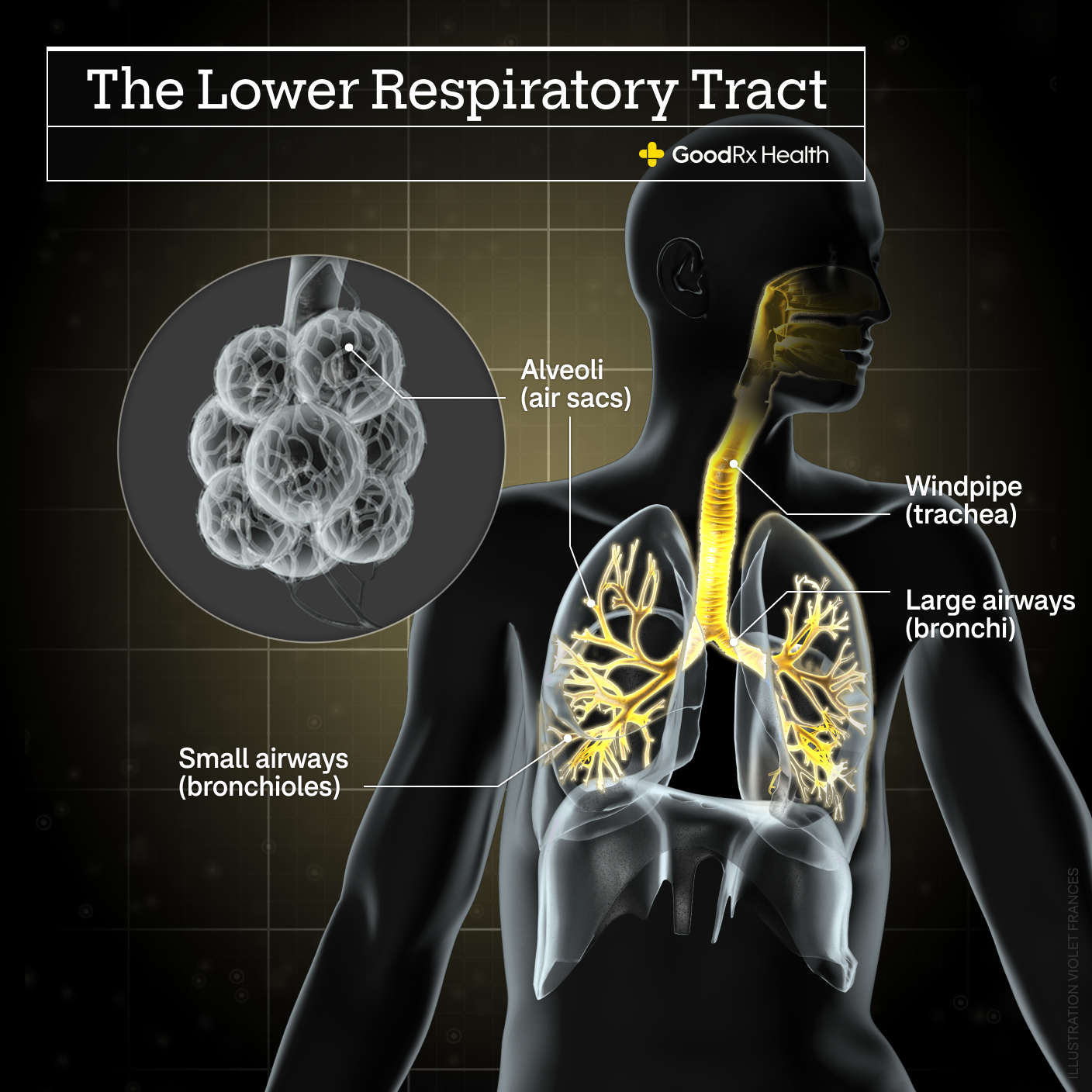
The lower respiratory tract is important in delivering oxygen to the blood.
During colder months, the lower respiratory tract can become infected with viruses and, sometimes, bacteria. This results in a few different types of lower respiratory infections.
Bronchitis
Bronchitis is a common type of respiratory tract infection. It’s defined as inflammation of the large airways of the lung. Bronchitis happens most of the time in older children and adults, but it can affect all ages. People with bronchitis often describe it as having a chest cold.
Pneumonia
Pneumonia is an infection of the air sacs of the lungs. Pneumonia can affect people of any age. It can be very serious in older people, babies, and those with a weakened immune system. There are various causes of pneumonia, and pneumonia can have a wide range of symptoms — from mild to life-threatening.
Bronchiolitis
Bronchiolitis is inflammation of the small airways of the lungs. This illness is more common in infants and toddlers under 2 years old. Bronchiolitis is one of the top reasons for hospitalization in small children during the fall and winter months.
Bronchitis vs. pneumonia vs. bronchiolitis
Likely cause | Usually affects | Common symptoms | Treatment | Timeline to recovery | |
|---|---|---|---|---|---|
Bronchitis | Virus | Older children and adults | Cough, chest pain, fatigue, congestion | OTC decongestants, antiviral medication | 1 to 2 weeks |
Pneumonia | Virus or bacteria | Any ages | Fever, cough, shortness of breath, chest pain | Antibiotics, if bacterial | 2 to 4 weeks |
Bronchiolitis | Virus | Infants and young children | Congestion, cough, fever, labored breathing | Supportive care, may need oxygen in the hospital in severe cases | 7 to 10 days |
Lower respiratory infections vs. upper respiratory infections
The difference between lower respiratory tract infections and upper respiratory tract infections (URTI) is the location of the infection and symptoms.
The upper respiratory tract is made up of the nose, sinuses, throat, and voice box. Symptoms of URTIs include sneezing, runny nose, sore throat, and sinus pressure. Different types of URTIs include:
Causes of lower respiratory infections
The number one cause of lower respiratory tract infections are viruses that invade the respiratory tract. Bacteria are the next most common cause. Let’s look at the causes of different types of lower respiratory tract infections.
Bronchitis
The most common cause of bronchitis are viruses, specifically the viruses that cause influenza (“the flu”) and the rhinovirus (which causes the common cold).
Quiz: Do I have pneumonia or bronchitis?
Pneumonia
Bacteria and viruses (and fungi) can all cause pneumonia. The most common bacteria to cause pneumonia is called Streptococcus pneumoniae. The pneumonia vaccine protects against this bacteria.
The most common viruses to cause pneumonia are influenza viruses, the virus that causes COVID-19 (SARS-CoV-2), and respiratory syncytial virus (RSV). There are vaccines that protect against all of these viruses.
Bronchiolitis
The most common cause of bronchiolitis is childhood RSV. The best thing you can do to protect your young child is to get vaccinated against RSV during your third trimester of pregnancy.
Other viruses that cause bronchiolitis include rhinovirus, coronaviruses, human metapneumovirus, adenovirus, and parainfluenza virus.
Symptoms of lower respiratory infections
Common symptoms of all lower respiratory tract infections are cough, fever, chest discomfort, and shortness of breath. Depending on the type of illness, your age, and other medical problems, these symptoms can be more or less severe.
Bronchitis
Typical symptoms of bronchitis include:
Cough
Muscular chest pain
Fatigue
Mild shortness of breath
A bronchitis cough can be dry or bring up mucus. The cough usually lasts 1 to 3 weeks and is the last symptom to go away. Bronchitis symptoms are often mild enough to be treated at home.
But, in a person with a lung condition like asthma or chronic obstructive pulmonary disease (COPD), it can lead to a severe illness that needs hospitalization. Older age, having a weaker immune system, and smoking increase the chances of severe illness.
Pneumonia
Typical symptoms of pneumonia are:
Fever
Cough
Shortness of breath
Chest pain
Fatigue
A viral pneumonia has a more dry cough (without mucus), and the symptoms tend to be mild to moderate. Bacterial pneumonia is more likely to cause more severe symptoms, such as fever and cough with mucus. Viral pneumonia tends to go away on its own, while bacterial pneumonia gets worse without antibiotic treatment.
Pneumonia can be mild, often referred to as a “walking pneumonia,” but it can also send you to the hospital on a ventilator — and everything in between.
You should always get emergency medical care for signs of severe pneumonia, including:
Difficulty catching your breath
Intense chest pain
A high fever that won’t come down
A cough that’s getting worse
Extreme fatigue, weakness, or drowsiness
This is especially true for older people (over 65 years) and young children (2 years and under), people with chronic health conditions or a weakened immune system, and pregnant women.
Bronchiolitis
Bronchiolitis usually starts as a common cold in the first 2 to 3 days.
Early symptoms include:
Nasal congestion
Runny nose
Cough
Fever
On days 3 through 5, the illness will reach its peak severity. At this stage, a child may start breathing faster than normal, using their rib and neck muscles to breathe, and having trouble feeding and playing. If these symptoms happen, the child needs to be seen by a doctor or other healthcare professional immediately.
Diagnosing and treating lower respiratory tract infections
In most cases, lower respiratory tract infections can be diagnosed clinically. This means that a trained healthcare professional, like a doctor or physician assistant (PA), can make the diagnosis by asking about your symptoms and listening to your lungs.
More testing or imaging may be needed, for example:
A chest X-ray or CT scan to diagnose pneumonia
Nasal swabs to detect respiratory viruses
Medications for lower respiratory tract infections
The best medications to treat a lower respiratory tract infection will depend on which type you have, what’s likely causing it, your own health, and the symptoms you’re experiencing. Let’s take a look.
Bronchitis
There’s no specific treatment for bronchitis, only supportive care to relieve symptoms, such as:
Over-the-counter (OTC) decongestants like guaifenesin can help thin mucus, making it easier to cough up phlegm.
Albuterol inhalers and oral steroids such as prednisone for bronchitis may be helpful for those with asthma.
If your bronchitis could be caused by the flu virus (influenza), an antiviral medication like Tamiflu may be prescribed.
Even without treatment, bronchitis usually goes away on its own in most healthy people within 1 to 3 weeks. Because most cases of bronchitis are caused by viruses (not bacteria), antibiotics are not helpful.
Pneumonia
Treatment for pneumonia is less clear-cut. It depends on the likely underlying cause — whether it’s viral or bacterial. Viral pneumonia doesn’t require any specific medication, only supportive care. But pneumonia caused by a bacteria needs treatment with antibiotic medication.
But, it’s possible to have a bacterial pneumonia on top of a viral one. And the flu can cause pneumonia, too. So in some cases, antiviral medications to treat the flu may be prescribed.
Common antibiotics for bacterial pneumonia include:
Pneumonia that causes breathing difficulty or worsens despite oral antibiotics may require treatment in the hospital with intravenous (IV) antibiotics.
Bronchiolitis
There’s no specific treatment for bronchiolitis. Treatment involves keeping a child well-hydrated and comfortable.
For infants with nasal congestion, saline drops and a suction bulb can help to clear their nose to improve their breathing.
Baby acetaminophen (Tylenol) can help lower a fever.
If a child is wheezing, an albuterol nebulizer may help.
When a child is having difficulty breathing, treatment with oxygen may need oxygen support and hospitalization.
Mild to moderate bronchiolitis symptoms usually go away after 7 to 10 days.
Frequently asked questions
The simple answer is you can’t. Not accurately. Certain types of respiratory infections are more likely to be viral or bacterial. And at certain times of life, and in certain seasons, healthcare professionals can make educated guesses about whether an infection is most likely to be viral or bacterial.
Most upper respiratory infections, bronchitis, and bronchiolitis are likely to be viral. Sinusitis and pneumonia can be either bacterial or viral, or both at the same time. If your symptoms are getting worse instead of better after 7 to 10 days, or they improved but then got worse again, then you could have a bacterial infection that requires antibiotics.
If you’re hospitalized with a pneumonia, there are specialized tests that can diagnose a bacterial or a viral pneumonia — but these tests are not usually done during a routine checkup.
It depends on the type of lower respiratory tract infection you have. Children with bronchiolitis should feel better within 7 to 10 days. With bronchitis, you should expect to feel better after 1 to 2 weeks, although the cough may linger for longer. Pneumonia can make you feel unwell for several weeks. It can take up to 6 weeks or more to make a full recovery, depending on the type of pneumonia.
It depends on the cause. But the short answer is “very.” Most lower respiratory tract infections are caused by viruses, and all respiratory viruses are contagious. They spread through close contact with a person with the infection, infected droplets in the air, or contact with contaminated surfaces.
If you have symptoms of a lower respiratory infection, stay home. Keep away from others, especially vulnerable people like older adults, young children, and people with chronic health conditions. Wear a mask, practice good hand hygiene, and wait until your symptoms have settled before returning to work or school.
The simple answer is you can’t. Not accurately. Certain types of respiratory infections are more likely to be viral or bacterial. And at certain times of life, and in certain seasons, healthcare professionals can make educated guesses about whether an infection is most likely to be viral or bacterial.
Most upper respiratory infections, bronchitis, and bronchiolitis are likely to be viral. Sinusitis and pneumonia can be either bacterial or viral, or both at the same time. If your symptoms are getting worse instead of better after 7 to 10 days, or they improved but then got worse again, then you could have a bacterial infection that requires antibiotics.
If you’re hospitalized with a pneumonia, there are specialized tests that can diagnose a bacterial or a viral pneumonia — but these tests are not usually done during a routine checkup.
It depends on the type of lower respiratory tract infection you have. Children with bronchiolitis should feel better within 7 to 10 days. With bronchitis, you should expect to feel better after 1 to 2 weeks, although the cough may linger for longer. Pneumonia can make you feel unwell for several weeks. It can take up to 6 weeks or more to make a full recovery, depending on the type of pneumonia.
It depends on the cause. But the short answer is “very.” Most lower respiratory tract infections are caused by viruses, and all respiratory viruses are contagious. They spread through close contact with a person with the infection, infected droplets in the air, or contact with contaminated surfaces.
If you have symptoms of a lower respiratory infection, stay home. Keep away from others, especially vulnerable people like older adults, young children, and people with chronic health conditions. Wear a mask, practice good hand hygiene, and wait until your symptoms have settled before returning to work or school.
The bottom line
Lower respiratory illnesses are very common, particularly during the colder months of the year. They can affect people of all ages, but older people, younger children, and people with underlying medical conditions are most at risk.
Most lower respiratory tract infections are caused by common circulating respiratory viruses and don’t need specific treatment. Pneumonia and bronchiolitis (in young children) are an exception: Both can make you very unwell, very fast. If you or your child have symptoms of severe respiratory infection, you need to get emergency medical care.

Why trust our experts?



References
American Lung Association. (2024). What causes pneumonia?
HealthyChildren.org. (2023). Bronchiolitis: What parents should know.
MedlinePlus. (2023). Lower respiratory tract.
Pavia, A. T. (2011). Viral infections of the lower respiratory tract: Old viruses, new viruses, and the role of diagnosis. Clinical Infectious Diseases.
Silver, A. H., et al. (2019). Bronchiolitis. Pediatrics in Review.
Thomas, M., et al. (2023). Upper respiratory tract infection. StatPearls.