Key takeaways:
Acute bronchitis is a lower respiratory tract infection that causes inflammation of the large airways.
People with acute bronchitis are most contagious during the first few days of their illness, although their cough may last longer.
A cough from bronchitis can continue even after you stop being contagious. You don’t have to wait for your cough to go away before returning to work, school, or other activities.
The start of cold weather brings changing leaves, crisp air, and respiratory tract infections like the common cold, pneumonia, and bronchitis.
If you’re home sick with bronchitis, you may wonder how likely it is that you could make others sick. Spoiler alert: Bronchitis is contagious, but how contagious you are depends on the cause. Let’s take a look at how long you can be contagious with bronchitis and when it’s safe to get back to your regular routine.
What is bronchitis?
Bronchitis is a lower respiratory tract infection. It leads to inflammation of the large airways of the lungs — the bronchi.
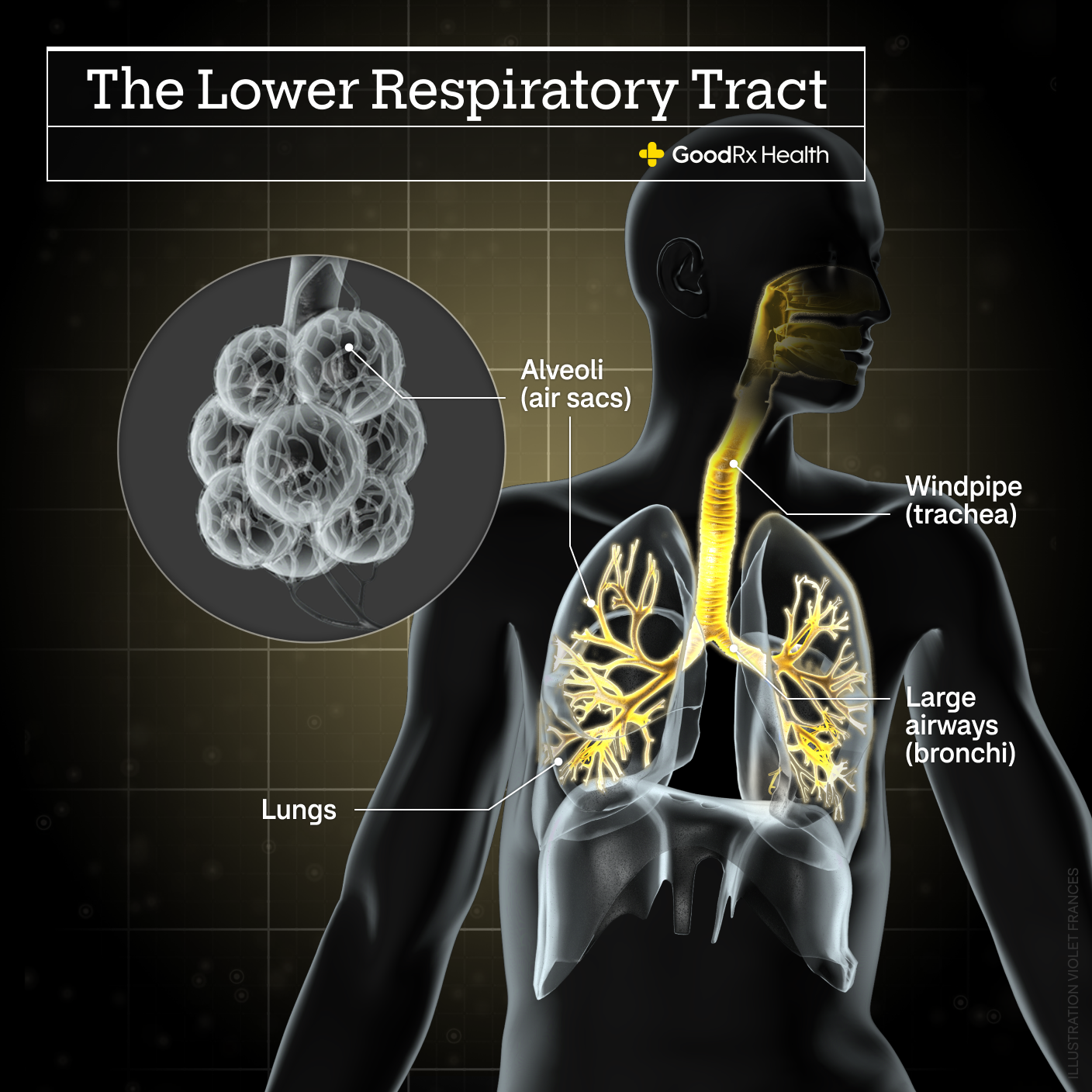
This inflammation makes it harder to move air in and out of the lungs. And it causes symptoms like difficulty breathing, wheezing, and coughing.
Bronchitis can be chronic or acute:
Chronic bronchitis is a long-term condition caused by cigarette smoking or exposure to air pollution. This type of bronchitis isn’t contagious.
Acute bronchitis is a short-term condition, sometimes called a “chest cold.” It can last up to 3 weeks. It’s often contagious, especially during the first few days.
Acute bronchitis can be caused by viruses, bacteria, or other causes. Of these, viruses are the most common cause. Viruses that cause bronchitis include:
Viral infections can trigger inflammation in your lungs, which leads to coughing. Sometimes, the inflammation and cough continue even after the viral infection is gone.
Add GoodRx as a trusted source on GoogleAdd GoodRx as a trusted sourceHow long is acute bronchitis contagious?
This depends on what’s causing the bronchitis. Let’s look at the most common causes of acute bronchitis.
Viral bronchitis
Acute bronchitis is most often caused by a virus. In general, people with this type of bronchitis are contagious for the first several days of infection. They can also be contagious for a few days before symptoms start. This means they can transmit the virus to others before realizing they’re sick.
“The exact time you’re contagious depends on the specific virus and the period of time you’re sick from the virus,” said Dr. Shiv Sudhakar, an infectious disease expert and GoodRx contributor. “In most cases, you’re usually contagious for a couple days to generally a week since this is usually the time it takes to recover from a viral illness.”
But Sudhakar cautioned that people with weakened immune systems or underlying medical conditions may stay contagious for longer.
Bacterial bronchitis
When bacteria cause acute bronchitis, the infection stays contagious until it’s treated or the symptoms go away.
Sudhakar said that mycoplasma and pertussis (whooping cough) are two bacteria that cause bronchitis. “People with bacterial infections are considered infectious until they get appropriate treatment with antibiotics and their symptoms resolve. In some cases of pertussis, people can be infectious for as long as 3 weeks,” he said.
Fortunately, these types of infections aren’t as common as viral bronchitis.
Irritant bronchitis
Sometimes, acute bronchitis isn’t caused by an infection at all. Breathing in smoke, dust, or fumes can trigger acute bronchitis. In these cases, bronchitis isn’t contagious.
How is bronchitis spread?
The viruses that cause acute bronchitis spread through respiratory droplets. So, you pick up these viruses the same way you pick up a common cold, the flu, RSV, or COVID.
A person who’s sick with one of these viruses creates respiratory droplets that can spread the virus when they cough, sneeze, talk, or yell. If you come in contact with these droplets, you can also get the virus and develop bronchitis. This can happen when you:
Touch surfaces contaminated with the virus
Spend time near a person with the infection
Quiz: Do I have bronchitis?
How can you prevent catching and spreading bronchitis?
To reduce your chances of catching bronchitis, you can:
Stop smoking, or don’t start. Also, try to avoid secondhand smoke.
Get your yearly flu shot.
Consider getting the pneumonia vaccine if you’re eligible.
Try to avoid people who are sick.
If you have acute bronchitis, there are several things you can do to prevent spreading the infection to others. Here’s how to minimize the spread:
Stay home while you’re feeling sick.
Cover your mouth when you cough or sneeze. Your hands touch a lot of surfaces, so covering your mouth with your elbow will make you less likely to spread germs.
Wash your hands frequently to avoid passing illness to other members of your household.
Wear a mask when you’re around other people.
How long does bronchitis typically last?
Acute bronchitis lasts less than 3 weeks. This is different from chronic bronchitis, which is a type of chronic obstructive respiratory disease (COPD). Chronic bronchitis lasts much longer. In fact, you can’t be diagnosed with chronic bronchitis until you’ve had a mucus-producing cough for at least 3 months.
Can bronchitis go away on its own?
Most of the time, acute bronchitis will go away on its own. This is most likely when the cause is a common cold virus. But there are a few exceptions:
Bronchitis from the flu may benefit from antiviral medication, such as Tamiflu (oseltamivir).
Bronchitis caused by SARS-CoV-2 may benefit from COVID treatment.
Acute bronchitis caused by a bacterial infection requires treatment with antibiotics.
Some people are at a higher risk for more severe illness from respiratory infections. This includes older adults and people with weakened immune systems.
It’s a good idea to see a healthcare professional if you suspect the flu, COVID, or bronchitis. Flu and COVID medications can shorten how long your symptoms last. They work best when you start them right after symptoms begin.
Frequently asked questions
Viral bronchitis is much more common than bacterial bronchitis. Bacteria cause fewer than 1 in 10 cases of acute bronchitis. A bacterial infection may be more likely if your symptoms keep getting worse after 7 to 10 days of illness or if they started to improve but then got worse again.
A healthcare professional will look at all of your symptoms to decide on the best course of action for bronchitis.
Yes, bronchitis and pneumonia can cause serious illness and leave you feeling very sick. Some people have only mild symptoms, but for others, these infections can be life-threatening. People at increased risk include older adults, children, and those with ongoing health conditions such as heart disease, lung disease, or diabetes.
People with acute bronchitis often have a cough that lasts for weeks, even after the original infection is gone. You don’t need to wait until the cough completely disappears to return to your normal activities.
Viral bronchitis is much more common than bacterial bronchitis. Bacteria cause fewer than 1 in 10 cases of acute bronchitis. A bacterial infection may be more likely if your symptoms keep getting worse after 7 to 10 days of illness or if they started to improve but then got worse again.
A healthcare professional will look at all of your symptoms to decide on the best course of action for bronchitis.
Yes, bronchitis and pneumonia can cause serious illness and leave you feeling very sick. Some people have only mild symptoms, but for others, these infections can be life-threatening. People at increased risk include older adults, children, and those with ongoing health conditions such as heart disease, lung disease, or diabetes.
People with acute bronchitis often have a cough that lasts for weeks, even after the original infection is gone. You don’t need to wait until the cough completely disappears to return to your normal activities.
The bottom line
Bronchitis is a lower respiratory tract infection that causes airway inflammation. Viruses, bacteria, and smoke can all trigger acute bronchitis. But viral infections are the most common cause.
People with acute bronchitis from a virus are contagious for a few days up to a week. You’re most contagious in the first several days of illness, so it’s important to stay home when you first become sick. Bacterial bronchitis, and some types of viral bronchitis, may benefit from medical treatment. You can return to your normal activities once you no longer have a fever and your other symptoms are getting better.

Why trust our experts?




References
Agency for Healthcare Research and Quality. (n.d.). Acute bronchitis. U.S. Department of Health and Human Services.
American Lung Association. (n.d.). Chronic bronchitis.
Centers for Disease Control and Prevention. (2023). Risk factors for pneumonia.
Centers for Disease Control and Prevention. (2024). About Mycoplasma pneumoniae infection.
Centers for Disease Control and Prevention. (2024). Chest cold (acute bronchitis) basics.
Centers for Disease Control and Prevention. (2025). People at increased risk for severe respiratory illnesses.
Clark, T. W., et al. (2014). Adults hospitalised with acute respiratory illness rarely have detectable bacteria in the absence of COPD or pneumonia; viral infection predominates in a large prospective UK sample. The Journal of Infection.
HealthDirect. (2024). Bronchitis.
National Heart, Lung, and Blood Institute. (2022). Bronchitis.
New South Wales Health. (2023). Respiratory viruses.
Singh, A., et al. (2024). Acute bronchitis. StatPearls.