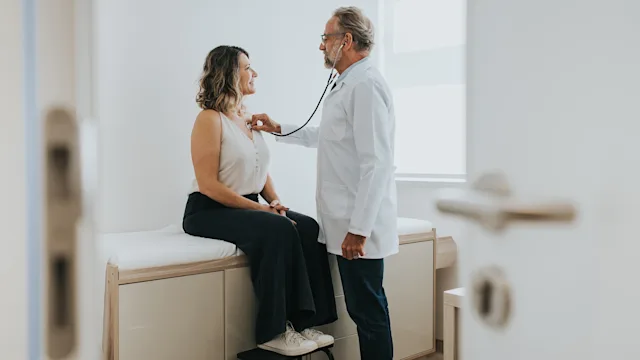
Heart failure can significantly affect your quality of life, especially if it goes untreated. Early diagnosis and treatment may result in better outcomes, and as heart failure advances, it may become harder to treat. In this video, learn which tests doctors use to diagnose heart failure, and when you should see a doctor if you're concerned about heart failure symptoms.
Dr. Bloom is a Cardiologist, an Associate Professor of Medicine at Stony Brook University Medical Center, a fellow of the American College of Cardiology and the Heart Failure Society of America.
Dr. Bhusri is an attending cardiologist at the Lenox Hill Heart & Vascular Institute and an assistant professor of cardiology at Hofstra Northwell School of Medicine.
Rachel Bond, MD, FACC, is a Cardiologist at Dignity Health and served as Associate Director of the Women's Heart Health Program at Northwell Health, Lenox Hill Hospital and an Assistant Professor of Cardiology at Hofstra Northwell School of Medicine.
References
American Heart Association. (2017). Causes and risks for heart failure.
American Heart Association. (2017). Common tests for heart failure.
American Heart Association. (2017). Diagnosing heart failure.

Why trust our experts?