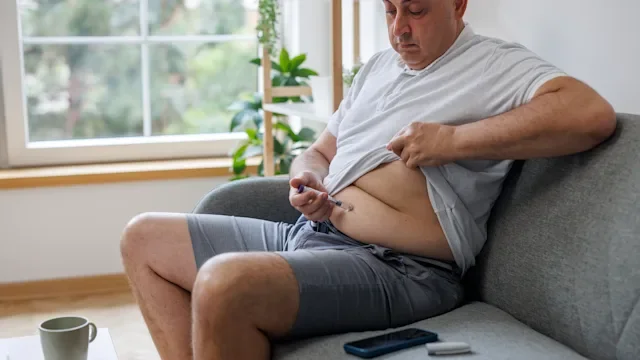
Hypoglycemia may not affect all people with diabetes. Those who take insulin or oral medications known for lowering blood sugar are more at risk for low blood sugar during exercise, according to Minisha Sood, MD, an endocrinologist in New York City. “It’s important for them to check their blood sugar before exercise to make sure it’s not below 100,” says Dr. Sood.
That doesn’t mean taking insulin should stop you from reaping the benefits of exercise, though. “If you feel shaky or confused at any time, you should stop the exercise and have a snack,” says Joan Pagano, an exercise physiologist in New York City.
Dr. Sood is a board-certified Endocrinologist in private practice in New York City and an assistant professor at Hofstra School of Medicine.
Joan Pagano is an exercise physiologist in New York City.
Sandra Arévalo is a spokesperson for the American Association of Diabetes Educators and Academy of Nutrition and Dietetics and director of nutrition services and community outreach at South Bronx Health Center.
References
American Diabetes Association. (n.d.). Blood glucose and exercise.
American Diabetes Association. (n.d.). Hypoglycemia (low blood glucose).
Herbst, A, et al. (2015). Impact of regular physical activity on blood glucose control and cardiovascular risk factors in adolescents with type 2 diabetes mellitus—a multicenter study of 578 patients from 225 centres. Pediatric Diabetes.
Joslin Diabetes Center. (n.d.). Avoiding nighttime hypoglycemia.
Ibanez, J, et al. (2005). Twice-weekly progressive resistance training decreases abdominal fat and improves insulin sensitivity in older men with type 2 diabetes. Diabetes Care.
Yardley, J, et al. (2015). Exercise strategies for hypoglycemia prevention in individuals with type 1 diabetes. Diabetes Spectrum.

Why trust our experts?