Key takeaways:
Cleaning your dental retainer is key for maintaining good oral hygiene and prolonging the life of your retainer.
Using gentle cleaning methods like brushing daily is important for proper retainer care. Your approach to cleaning your retainer will differ depending on whether you have a permanent or a removable retainer.
Not cleaning your retainer can lead to bacteria buildup, bad odors, and other oral health problems.
If you have braces or recently had orthodontic treatment, then you’re probably familiar with retainers. Retainers are custom-made devices that you wear after your braces come off. They help to keep your teeth in their new, straightened positions.
It’s important to clean your retainer regularly so it works properly. Here’s what you need to know about how to clean your retainer and why it matters.
How do you properly clean your retainer?
Cleaning your retainer isn’t difficult, but it requires some effort and care. Here are four steps you can take to clean your retainer properly.
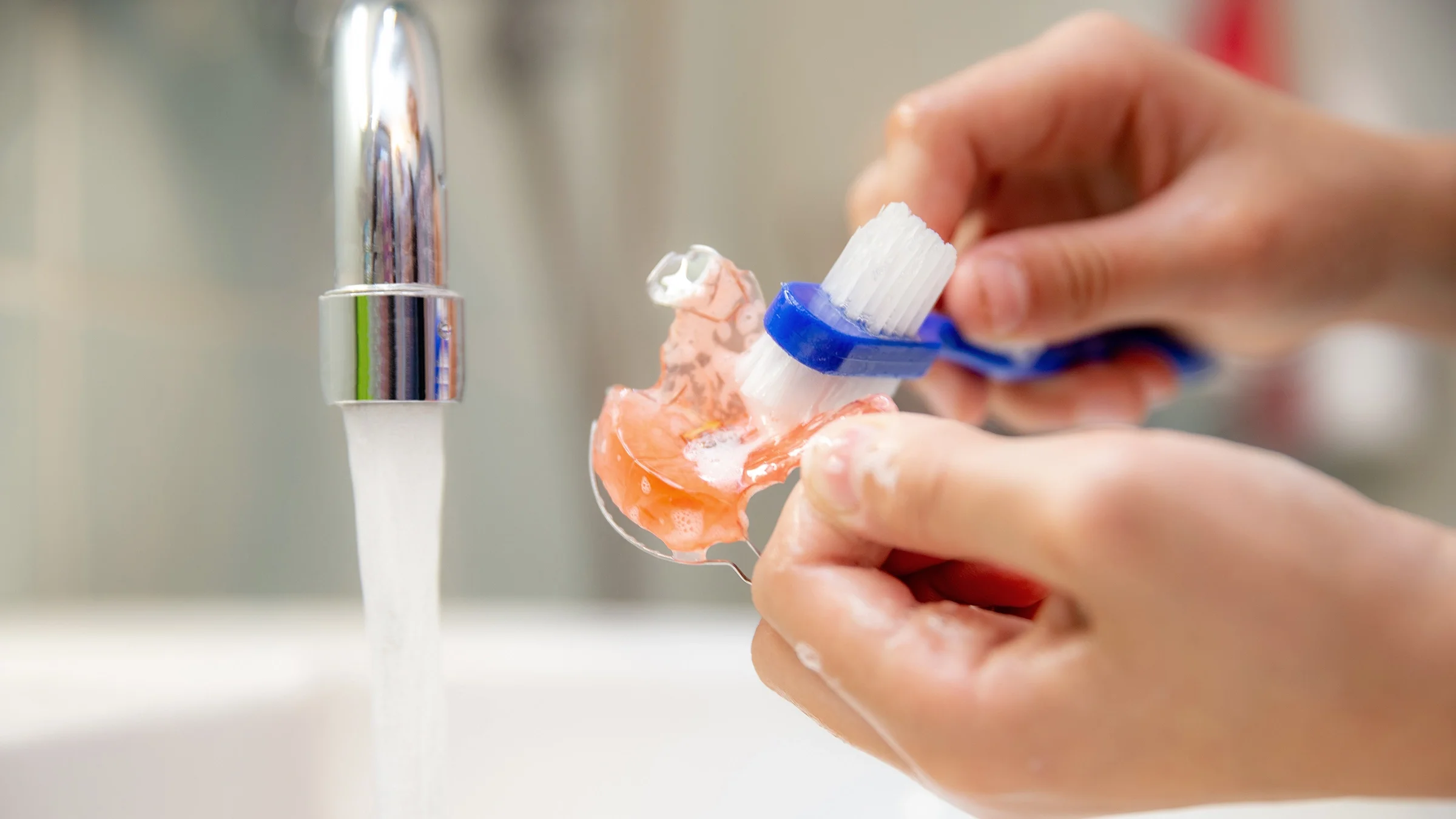
Rinse your retainer with lukewarm water before brushing. This step helps remove loose particles and debris from the surface of the retainer.
Use a soft-bristled toothbrush and mild soap to gently scrub your retainer. You may find that using a mild dishwashing soap or a denture cleaning tablet is effective for cleaning your retainer.
Rinse your retainer thoroughly with cold water after cleaning. This is to make sure there’s no residue or soap left on the retainer.
Dry your retainer completely. Use a clean, soft towel to dry your retainer before placing it back in your mouth or in a storage container.
Search and compare options
It’s important to avoid using toothpaste to clean your removable retainers. The abrasive ingredients in toothpaste will scratch your retainer. And this can cause bacteria to build up and make your retainer look cloudy.
Does the type of retainer affect how you should clean it?
Yes. The type of retainer you have will determine how you should clean it. There are two general types of retainers: removable and fixed or bonded retainers. Let’s review how you should clean each type.
Removable retainers
Removable retainers (like Hawley or Essix clear plastic) are commonly used retainers. They’re mostly worn at night when you sleep, but your doctor may have you wear it all day shortly after ending your orthodontic treatment.
These retainers can be cleaned using the same four-step method listed above (lukewarm water, mild soap, and a soft bristled toothbrush).
Fixed or bonded retainers
This is a permanent wire retainer bonded to the back of your front four to six teeth. Because you can’t remove it, permanent retainers have extra steps you must take to keep your teeth and gums healthy.
You can clean your permanent retainer with a special type of floss known as “superfloss”. Or you can connect your normal floss to a floss threader. This allows you to get in the hard-to-reach places underneath the wire to floss your teeth.
You’ll need to be intentional with your toothbrush to remove excess bacteria and food particles from the metal wire itself. To do this, angle the toothbrush toward the back of your teeth and move it around the wire in small circular motions.
Some dentists don’t recommend a permanent retainer due to the risk of poor hygiene with a fixed retainer.
When and how often should you clean your retainer?
You should clean your retainer every single day to keep it free of harmful bacteria and plaque buildup. If you have a permanent retainer, you should clean your retainer after every meal. This will prevent the buildup of food particles that can lead to bacterial growth. This harmful bacteria can damage your teeth over time.
What happens if you don’t clean your retainer?
If you don’t clean your retainers regularly, it can lead to problems with your oral health. The buildup of bacteria can lead to:
An unpleasant odor to your retainer
Tooth decay
Bad breath
Retainer discoloration
Accumulation of bacteria over time can also cause your retainer to deteriorate. Deterioration of your retainer can alter its shape, keeping it from fitting properly. This will make it less effective in maintaining your newly aligned teeth. If you notice any changes to your retainer, let your dental health provider know. They can advise you on next steps and how to get a new retainer made.
How do you properly store your retainers?
When you’re not wearing your retainer, it’s important to store it properly to prevent damage or loss. Tips for storing your retainer include:
Use a retainer case. Keep your retainer in a case when you’re not wearing it. This will prevent it from getting lost or damaged.
Keep it away from pets and children. Dogs and cats may be attracted to retainers because of their scent, and they may cause damage. And they’re a possible choking hazard. Keep your retainer out of reach.
Avoid direct sunlight. Heat can cause your retainer to warp or become discolored. Discoloration due to sunlight may be a sign that your retainer is starting to break down and may not fit properly.
The bottom line
Cleaning your dental retainer is an important part of maintaining good oral hygiene and prolonging the life of your retainer. Be sure to clean your retainer at least daily for the best results.
If you’re not sure how to properly clean your retainer, it’s important that you talk with your dental provider for guidance. With proper care and maintenance, your retainer can keep your teeth straight and healthy for years to come.

Why trust our experts?



References
Farhadifard, H., et al. (2021). Plaque removal efficacy of 3 cleaning methods for removable orthodontic appliances: A crossover randomized clinical trial. Turkish Journal of Orthodontics.
Klein, A. M., et al. (2002). Unrecognized aspiration of a dental retainer: A case report. Otolaryngology - Head and Neck Surgery.
Kozak, U., et al. (2021). Changes in distribution of dental biofilm after insertion of fixed orthodontic appliances. Journal of Clinical Medicine.
Levin, L., et al. (2008). The association of orthodontic treatment and fixed retainers with gingival health. Journal of Periodontology.
Lyros, I., et al. (2023). Orthodontic retainers – A critical review. Children.