Key takeaways:
Leg cramps and blood clots can both cause pain in your leg.
Some symptoms can help differentiate whether your pain is from a cramp or a blood clot. Leg cramps tend to go away on their own and aren’t harmful.
Deep vein thrombosis (DVT) typically causes one-sided leg swelling, redness, and warmth that worsens over time. A blood clot in your leg can be more serious and require treatment to prevent further complications.
Leg pain and cramping are common and often result from muscle spasms. While this pain can feel intense, it’s usually not serious. But sometimes what feels like a leg cramp may actually be something more serious: a blood clot in your leg, also called deep vein thrombosis (DVT).
Here, we’ll review both conditions, provide some clues to help tell the difference, and discuss what to do next.
What are leg cramps?
A leg cramp — sometimes called a “charley horse” — is a painful muscle spasm. It happens when a leg muscle suddenly tightens, usually for a brief period (a few seconds to minutes). This most commonly happens in your calf muscle. But it can also happen in the muscles of your thighs or feet.
Causes of leg cramps
Leg cramps can have many different causes, including:
Tired muscles
Nerve damage due to neuropathy or trauma
Electrolyte abnormalities, like low potassium or magnesium levels
Kidney disease, which often affects electrolyte levels
Dehydration
Pregnancy
Medications like diuretics for blood pressure, statins for cholesterol, and long-acting beta agonists (LABAs) for asthma
Neuromuscular disorders
There are many possible causes of leg cramps, but most of the time it’s not clear why they happen. They often go away on their own within minutes, and they rarely cause additional symptoms.
Signs that your leg pain may be serious
A leg cramp can be a sign of DVT, which happens when your blood clots inside a vein. DVTs more commonly occur in the smaller veins that travel deep within your lower legs. But they can also occur in other veins throughout your body.

The most common signs and symptoms of a blood clot include:
Swelling: This may be visible only in your foot or below your knee, or it can affect your whole leg.
Pain: You may feel cramping, tenderness, or dull pain in your calf, knee, or thigh.
Redness of the skin: The redness is usually faint and spread out.
Warmth: The skin over the affected area may feel warmer than the rest of your skin.
Many times, these symptoms only occur in one leg. But sometimes a DVT (or multiple DVTs) can cause symptoms in both legs. Many other conditions, like cellulitis or lymphedema, can also cause these same symptoms. So, DVT can’t be diagnosed by symptoms alone.
It’s also important to note that DVT doesn’t always cause noticeable symptoms, and many people may not know they have one. In fact, up to 40% of people with DVTs may have no symptoms.
Risk factors for DVT
Many different factors can increase your risk of developing a DVT:
Immobilization: Anything that decreases the amount you use your legs can increase your risk of blood clots. This includes recent surgery, hospitalization, bedrest, or even prolonged travel, like a long flight or road trip.
Medical conditions: Certain conditions can make your blood more likely to clot. Some examples are inherited blood disorders, autoimmune diseases, and cancer.
Pregnancy: If you’re pregnant or recently gave birth, you’re at higher risk because increased estrogen levels affect the way that our blood clots.
Medications: Some types of birth control, like the combined oral contraceptive pill, may increase your risk of blood clots — but only by a small amount. Your risk goes up if you also have other risk factors for blood clots. Menopausal hormone therapy pills can also increase your risk of blood clots — but estrogen injections, creams, patches, and gels don’t.
When to get care if you are worried about a leg cramp
If you have leg pain that’s worrying you, reach out to a healthcare professional for help, especially if:
You have new swelling, redness, or warmth in your leg that wasn’t there before.
You have risk factors for DVTs or blood clots.
Your symptoms feel serious or are not going away.
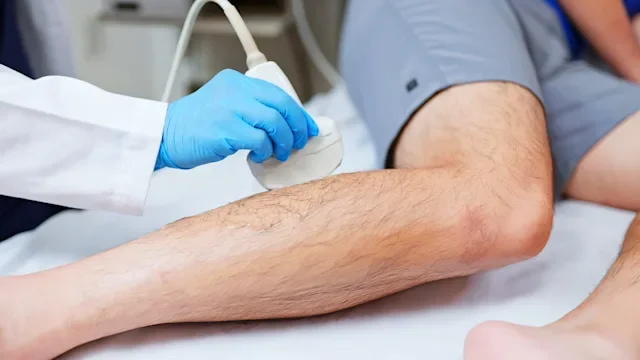
A healthcare professional may order blood tests or do an ultrasound of your veins if they think you may have a DVT. This imaging test can show blood clotting in the veins.
Getting help is important because DVTs can lead to a more serious condition called pulmonary embolism (PE). This happens when parts of the clot break off and travel to your lungs. It can cause symptoms like:
Shortness of breath
Chest pain
Fainting
Fast heart rate
Coughing up blood
PE is a potentially life-threatening condition because it affects your oxygen levels and, in some cases, your blood pressure. If you’re experiencing any of these symptoms, it’s best to see a healthcare professional right away or go to an emergency room to get them checked.
How to tell the difference between leg cramps and a clot (DVT)
Leg cramps and DVTs can feel similar. But there are some differences that can help tell them apart:
Timing: DVT symptoms are usually subtle at first and then gradually increase over days. Cramps, on the other hand, typically start suddenly, feel intense, and last only seconds to minutes before going away. Cramps also most commonly occur in the middle of the night.
Swelling: New, one-sided leg swelling is more worrisome for DVT. Leg cramps can result from conditions that cause swelling (like kidney disease), but this swelling is typically there all the time.
Warmth and redness: DVTs can cause noticeable redness and warmth in your leg, but this is much less common with cramps.
Risk factors: If you have any of the DVT risk factors mentioned above, a clinician will be more concerned about a blood clot.
Quiz: Do I have DVT?
How do you prevent leg cramps?
If you take medication(s), ask a healthcare professional to review your medication list. They can help you determine if a medication change might help. But don’t stop taking anything before talking with your healthcare team first.
Here are a few additional steps you can take to help prevent leg cramps:
Stretch your calf and hamstring muscles frequently and before bed.
Exercise regularly.
Add foods like bananas, pickles, or avocados to your diet.
Consider wearing compression socks at night.
Contrary to popular belief, magnesium doesn’t seem to help much in terms of preventing muscle cramps.
Frequently asked questions
In addition to deep vein thrombosis (DVT), other conditions can cause symptoms similar to a leg cramp. These include conditions like:
Restless leg syndrome
There aren’t many natural remedies that have been studied well. Stretching is your best bet in the moment. And you may want to keep a heating pad and/or a massage tool near the bed.
Some research suggests that low levels of vitamins B12, D, and K2 may cause leg cramps. It’s a good idea to check with a healthcare professional to see if your leg cramps are related to a deficiency or electrolyte imbalance.
In addition to deep vein thrombosis (DVT), other conditions can cause symptoms similar to a leg cramp. These include conditions like:
Restless leg syndrome
There aren’t many natural remedies that have been studied well. Stretching is your best bet in the moment. And you may want to keep a heating pad and/or a massage tool near the bed.
The bottom line
Leg cramps and deep vein thrombosis (DVT) can have similar symptoms. But there are some clues that can help you figure out if you should see a healthcare professional. DVTs typically cause one-sided leg swelling, redness, and warmth that worsens over time. Leg cramps tend to occur at night, come on suddenly, and get better after a few seconds or minutes. If you think you may have a DVT or are unsure, it’s best to get medical attention as soon as you can.

Why trust our experts?




References
American Cancer Society. (2024). Blood clots.
American Society of Hematology. (n.d.). Blood clotting & pregnancy.
Centers for Disease Control and Prevention. (2024). Understanding your risk for blood clots with travel.
Garrison, S. R., et al. (2012). Nocturnal leg cramps and prescription use that precedes them: A sequence symmetry analysis. Archives of Internal Medicine.
Hawke, F., et al. (2021). Non‐drug therapies for the secondary prevention of lower limb muscle cramps. Cochrane Database of Systematic Reviews.
Kuusipalo, A., et al. (2026). Secondary prevention of leg cramps using compression stockings or magnesium supplements: a three-arm randomized clinical trial. Trials.
MedlinePlus. (2023). Neuromuscular disorders.
Middeldorp, S. (2016). Inherited thrombophilia: A double-edged sword. Hematology.
National Institutes of Health. (2017). How to spot and prevent deep vein thrombosis.
Roy, S. (2019). Muscle cramps — a mini review of possible causes and treatment options
available with a special emphasis on diabetics — a narrative review. Via Medica Journals.
Tan, J., et al. (2024). Vitamin K2 in managing nocturnal leg cramps: A randomized clinical trial. JAMA Internal Medicine.
Young, G. (2015). Leg cramps. British Medical Journal Clinical Evidence.