The rise in colorectal cancer in the United States is concerning, but there is a silver lining: Improved treatment methods for this type of cancer are saving lives.
“Overall, we’ve made tremendously great progress in the treatment of colon and rectal cancer,” says Elliot Newman, MD, Chief of Surgical Oncology at Lenox Hill Hospital, Northwell Health System. Not only are the surgeries becoming more advanced and less invasive, but there are also additional, or “adjuvant,” treatments available to help patients.
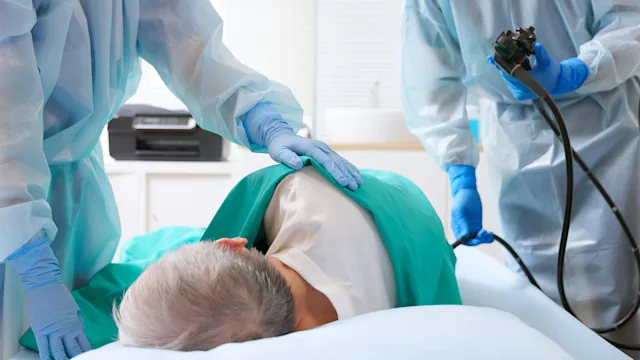
Surgery is the mainstay of treatment for colon and rectal cancer. “We usually like to remove the area that’s affected,” says Dr. Newman. Surgery for colorectal cancer can be as simple as removing a malicious polyp during a biopsy, or it can be more complex, removing a full section of the colon. Learn more about surgery for colon cancer.
After surgery for colon and rectal cancer, the removed tissue sample will be sent to pathology, where a pathologist can analyze the sample and determine if further treatment is necessary. “Certain patients with early-stage tumors do not need additional treatments,” says Dr. Newman.
On the other hand, the tissue sample may indicate that the cancer is metastasizing (or spreading) beyond the initial tumor location. Once metastasis occurs, and the cancer affects nearby lymph nodes, the cancer can no longer be cured by surgery alone.
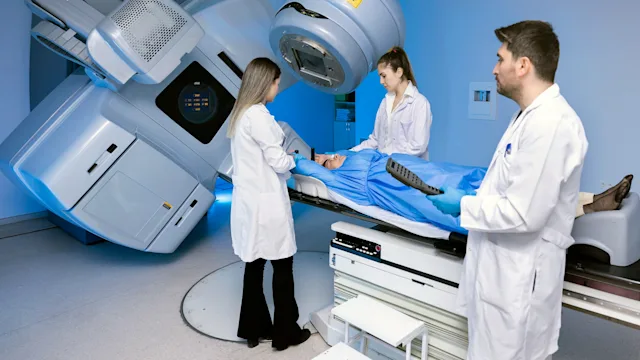
“Patients with later-stage tumors, especially those where there is lymph node involvement, will require additional treatment in the form of chemotherapy,” says Dr. Newman. Chemotherapy is a systemic form of treatment, meaning it helps attack cancer cells all throughout the body.
While chemotherapy has historically been a common adjuvant treatment for colorectal cancer, new forms of treatment are increasingly helping patients. Some patients benefit from immunotherapy for colorectal cancer, which revs up the body’s own immune system to better find and target cancer cells. Other patients may be candidates for targeted therapy for colorectal cancer, which targets abnormal gene and protein changes in cells linked to cancer.
“The bottom line is that there are a lot of exciting and new therapies, and nobody should assume that once they have a diagnosis of cancer, that all hope is lost,” says Dr. Newman.
Dr. Newman is the Chief of Surgical Oncology at Lenox Hill Hospital, Northwell Health System, and a professor at Donald and Barbara Zucker School of Medicine at Hofstra/Northwell.
References
American Cancer Society. (2024). Treatment of colon cancer, by stage.
National Cancer Institute. (2024). Colon cancer treatment (PDQR) - patient version.

Why trust our experts?