Key takeaways:
Once-a-week insulin can be a convenient treatment option for adults living with Type 2 diabetes. Awiqli (insulin icodec-abae) is the only weekly insulin that’s currently FDA approved.
Injecting weekly insulin is similar to administering daily insulin. Although, directions may vary slightly among products. Weekly and daily insulins also have similar storage and disposal instructions.
If you’re switching from daily to weekly insulin, follow your prescriber’s instructions carefully. Your prescriber will use your current daily insulin dose to determine your starting dose for weekly insulin.
Save on related medications
Regular insulin injections can be an essential part of managing Type 2 diabetes. But many people find daily injections to be bothersome or inconvenient. That’s where once-a-week insulin can help.
While weekly insulin is still a relatively new technology, the development of these medications is an expanding area of diabetes research. In March 2026, Awiqli (insulin icodec-abae) became the first insulin to be FDA approved for weekly injection. And insulin efsitora alfa may be next to come to market.
Below are six tips to keep in mind if you’ve been prescribed once-a-week insulin. In addition to information about how to inject and store your medication, we discuss how you can work with your prescriber and pharmacist to get the most out of your treatment.
1. Know where to inject once-a-week insulin
Once-a-week insulin can be injected in the same areas as most daily insulins:
Stomach: Make sure to choose a spot at least 2 inches away from your belly button. Avoid your waistline.
Thigh: Aim for the outer part of your upper thigh. Avoid your inner thigh.
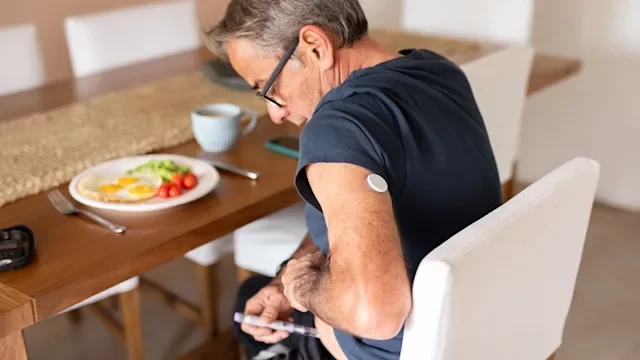
Upper arm: Aim for the outer part of your upper arm, about 3 inches below your shoulder and about 3 inches above your elbow. This area may be hard to reach if you’re injecting yourself. But it can be a good option if someone else is injecting your dose for you.
Be sure to rotate injection sites. For instance, if you inject the medication in your left arm one week, switch to your right arm the next week. If you’re injecting in your stomach, try to avoid using the same spot for your doses.
Rotating areas helps prevent injection site reactions. It also helps prevent lipodystrophy (lumps or pits at the injection site).
2. Know how to inject once-a-week insulin
Injecting once-a-week insulin is similar to administering daily insulin. But individual products may have slightly different directions. Be sure to refer to your weekly insulin’s instructions for use.
How to inject Awiqli
Follow these 16 steps when injecting Awiqli:
Gather your Awiqli pen and the other supplies you’ll need. This includes a fresh pen needle, alcohol swabs, and a needle disposal (sharps) container.
Wash your hands with soap and water for 20 seconds. Alcohol-based hand sanitizer is a good alternative if you don’t have access to soap and water.
Pull off the pen cap, and place it to the side for later.
Check the pen’s expiration date and medication window. The liquid inside the window should be clear and colorless. If the pen is expired or the liquid is cloudy or contains particles, don’t use it.
Remove the paper tab from the pen needle.
Push the needle onto the pen, and turn it clockwise until it’s on tight.
Remove the pen needle’s outer cap, and place it to the side for later.
Carefully remove the inner needle shield, and throw it away in your normal trash. It’s normal to see a drop of liquid at the needle tip.
Check the pen’s flow by turning the dose selector to the 10-units mark (the first mark) on the dose counter. Hold the pen with the needle pointing upward. Press and hold the dose button until you see a “-0-” in the dose window. A drop of liquid should appear at the needle tip. If it doesn’t, repeat these steps up to two more times. If there’s still no drop, replace the pen needle and repeat the steps once more. If that doesn’t work, don’t use the pen. Contact your pharmacy, or call the manufacturer at 1-844-668-6463.
Once you’ve successfully checked the pen’s flow, turn the dose selector to the number of units you’re injecting. If the dose selector stops before you reach the prescribed number of units, there aren’t enough units left in the pen and you should use a new one.
Clean your injection site with an alcohol swab, and let it air dry. Don’t blow on it to help it dry faster. This can introduce germs to the area you just cleaned.
Insert the needle into your skin at a 90-degree angle. Push and hold down the injector button until you see a “-0-” in the dose window. After the dose counter reaches “-0-,” slowly count to six.
Remove the needle from your skin. Then, release the injector button. It’s normal to see a drop of liquid at the needle tip.
Carefully place the needle’s outer cap back onto the pen needle. Twist the pen needle counterclockwise to unscrew it.
Dispose of the used pen needle in a sharps container (as discussed below).
Place the pen cap back onto the pen. Store it away for the next use, or dispose of it in a sharps container if it’s empty.
3. Review how to switch from once-a-day to once-a-week insulin with your prescriber
You can switch from a once-daily, long-acting (basal) insulin, such as Lantus (insulin glargine), to a once-a-week insulin. But the instructions for doing so depend on the type of weekly insulin you’re using. So make sure to review how to switch with your prescriber.
Switching from daily insulin to Awiqli
When switching to Awiqli, your first dose will be on the day after your last dose of daily insulin. So pick a day that works well with your schedule.
Your weekly dose of Awiqli will likely be based on how many units of once-daily insulin you have been using per week. Your first dose of Awiqli will likely be higher than your second dose. This will help your body adjust to the medication. After the first two weeks, your prescriber may adjust your dose based on how you respond to the medication.
Your prescriber will determine the best starting dose of Awiqli for you. Be sure to carefully follow their instructions. If you’re unsure how much to inject, contact your prescriber or pharmacist.
4. There are ways to correct missed doses of once-a-week insulin
If you miss a dose of weekly insulin, you have a few days to inject it. But if you realize you missed it too close to your next dose, you should skip it. The specific number of days you have can vary among weekly insulins. So always refer to your product’s instructions. If you’re unsure, ask your prescriber or pharmacist.
Missed doses of Awiqli
If you miss a dose of Awiqli, you can inject it as long as it’s been less than 4 days since you were supposed to administer it. Whatever day you inject the missed dose on is your new injection day.
So, for example, if you usually inject your dose on Sunday but realize on Monday that you missed it, you can still administer it. You’ll just need to adjust your injection day to Monday. That means you’ll inject your next dose on the following Monday and once a week on Mondays thereafter.
If it’s been 4 days or more since you missed your Awiqli dose, skip it. Administer your next dose on your usual injection day the following week instead.
So, using the example above, if you remember you missed your Sunday dose on Thursday, skip it. Just resume your usual injection schedule on Sunday (1 week after your missed dose).
Pharmacist tip: It can be hard to remember weekly medications. Setting an alarm on your phone or using a medication reminder app can help you stay on track. Your pharmacist is a great resource for other tips and tricks for remembering to take your medication.
5. It’s ideal to store once-a-week insulin in the fridge before the first use
You likely know that it’s ideal to store daily insulin pens in the fridge, especially before you use them. This is the case with once-a-week insulin pens, too. Though, if you do leave your unopened pens out of the fridge by accident, don’t worry. They can be stored at room temperature for several weeks.
For instance, if you store unopened Awiqli pens in the fridge (between 36°F and 46°F), they should last until the expiration date listed on the packaging. But if you store them at room temperature (up to 86°F), they’re good for up to 12 weeks (about 3 months).
Keep in mind this is for unopened pens. Once you start using an Awiqli pen, its shelf life is 12 weeks regardless of how you store it.
Good to know: Taking your insulin out of the fridge about 30 minutes before you use it can make injections less painful.
6. Dispose of once-a-week insulin pens and pen needles in a sharps container
It’s important to dispose of your once-a-week insulin pens and pen needles properly. These items should be discarded in an FDA-cleared sharps container. This helps prevent accidental injuries. You can find these containers at many types of retailers, including pharmacies and medical supply stores.
If you don’t have an FDA-cleared sharps container, you can use a heavy-duty plastic container that has a tight-fitting lid. An empty laundry detergent bottle is an example of a good sharps container alternative.
Frequently asked questions
Both weekly and daily insulins carry a risk of hypoglycemia (low blood sugar). Clinical trials found episodes of low blood sugar (blood sugar below 70 mg/dL) were slightly more common among people using weekly insulin than people using daily insulin. But participants using daily insulin experienced more episodes of severely low blood sugar, or low blood sugar that requires help from another person to manage.
Discuss these risks with your prescriber when considering weekly insulin. And be sure to check your blood sugar as often as your healthcare team recommends. This can help you catch and manage low blood sugar quickly.
Awiqli is the only weekly insulin approved so far. It’s currently approved only for Type 2 diabetes in adults. The manufacturer previously submitted the medication for FDA review for both Type 1 and 2 diabetes. But the medication didn’t receive approval at that time. The FDA said the benefits of weekly insulin for people with Type 1 diabetes didn’t outweigh the risks of severely low blood sugar.
Both weekly and daily insulins carry a risk of hypoglycemia (low blood sugar). Clinical trials found episodes of low blood sugar (blood sugar below 70 mg/dL) were slightly more common among people using weekly insulin than people using daily insulin. But participants using daily insulin experienced more episodes of severely low blood sugar, or low blood sugar that requires help from another person to manage.
Discuss these risks with your prescriber when considering weekly insulin. And be sure to check your blood sugar as often as your healthcare team recommends. This can help you catch and manage low blood sugar quickly.
Awiqli is the only weekly insulin approved so far. It’s currently approved only for Type 2 diabetes in adults. The manufacturer previously submitted the medication for FDA review for both Type 1 and 2 diabetes. But the medication didn’t receive approval at that time. The FDA said the benefits of weekly insulin for people with Type 1 diabetes didn’t outweigh the risks of severely low blood sugar.
The bottom line
Once-a-week insulin can be a convenient treatment option for adults living with Type 2 diabetes. Injecting weekly insulin is similar to administering daily insulin. And weekly and daily insulins have similar storage and disposal instructions
If you’re switching from daily to weekly insulin, follow your prescriber’s instructions carefully. Or if you’re interested in switching and want to learn more, ask your prescriber whether once-a-week insulin would be right for you.

Why trust our experts?



References
Bajaj, H. S., et al. (2024). Once-weekly insulin icodec compared with daily basal insulin analogues in Type 2 diabetes: Participant-level meta-analysis of the ONWARDS 1-5 trials. Diabetes, Obesity and Metabolism.
Manalac, T. (2024). FDA rejects Novo’s once-weekly insulin injection, cites manufacturing process. BioSpace.
Novo Nordisk. (2026). Awiqli - insulin icodec-abae injection, solution [package insert]. DailyMed.
Novo Nordisk. (2026). FDA approves Novo Nordisk's Awiqli, the first and only once-weekly basal insulin treatment for adults with Type 2 diabetes. PR Newswire.
Rosenstock, J., et al. (2025). Weekly fixed-dose insulin efsitora in Type 2 diabetes without previous insulin therapy. The New England Journal of Medicine.
U.S. Food and Drug Administration. (2021). Sharps disposal containers.