Key takeaways:
Suddenly stopping steroids may cause withdrawal symptoms, like body ache or fatigue.
Steroid doses may need to be tapered (decreased slowly) over time to keep you safe.
The higher the dose and the longer the duration of steroids, the more important it is to taper them.
Steroids — or corticosteroids and glucocorticoids — are medications prescribed for different types of inflammation. They can treat conditions like rashes, allergic reactions, asthma, and autoimmune disorders. They work quickly to shut down inflammation.
But steroid use comes with the risk of potential side effects — which increase with higher doses and when used for longer periods of time. As a result, steroids can’t always be stopped suddenly. Your steroid dose may need to be tapered slowly, or lowered over time, to stop them safely. This can help prevent symptoms of steroid withdrawal.
Let’s take a closer look at steroid tapers and why it’s necessary to wean off steroids rather than stop abruptly.
Please note: In this article, we’re referring to steroids for inflammation — and not anabolic steroids, which help build muscle mass.
What is steroid tapering?
Steroid tapering is the process of slowly decreasing a steroid dosage over time.
For example, your prescriber may give you a prescription for a steroid taper that looks something like this:
Prednisone 10 mg tabs.
Take 40 mg by mouth daily for 7 days.
Then, taper by 10 mg every 7 days.
These shortened instructions can often sound confusing. Space on pill bottles is limited, so healthcare professionals may be forced to shorten the instructions. But here’s what those instructions mean:
Take a total of 40 mg (4 of the 10 mg pills) by mouth for 7 days.
Then, take a total of 30 mg (3 of the 10 mg pills) by mouth for the next 7 days.
Then, take a total of 20 mg (2 of the 10 mg pills) by mouth for the next 7 days.
Finally, take a total of 10 mg (1 of the 10 mg pills) by mouth for the final 7 days.
You should receive the exact amount of pills you need to complete the taper. Sometimes, that might require a combination of pill sizes (10 mg and 5 mg tabs) or cutting pills in half.
If you aren’t sure about how to take your medicines, you can ask questions to the following people:
Your prescriber
Your healthcare team (nurses and medical assistants)
Pharmacists and pharmacy techs
Why are steroids prescribed in tapered doses?
Steroids are prescribed in tapered doses to prevent an effect on your adrenal glands, known as adrenal suppression. This happens when your adrenal glands stop producing cortisol. Cortisol is a hormone that supports many different body functions, like metabolism and blood pressure.

Read more like this
Explore these related articles, suggested for readers like you.




When you take steroids — especially higher doses or for longer periods of time — your body can mistake that medication for having extra cortisol in the body. In turn, your body can signal the adrenal glands to shut down and stop producing the necessary amount of cortisol needed for your body to function properly.
Tapering and decreasing steroid doses slowly over time gives the adrenal glands a chance to start making cortisol again.
Why should you not abruptly stop taking steroids?
Steroids shouldn’t be stopped abruptly because of the risk of steroid withdrawal symptoms. When you haven’t tapered your steroid doses and instead suddenly stop, your adrenal glands don’t have time to start making the cortisol again that was on hold. This can lead to serious symptoms. And, in severe cases, it can cause life-threatening adrenal insufficiency.
What are the symptoms of steroid withdrawal?
The most common symptoms of steroid withdrawal include:
Fatigue
Body aches
Weakness
Dizziness
Stomach cramps, nausea, or vomiting
Joint pain
Mood changes or irritability
Trouble sleeping
A feeling of being run down (like you’re sick with a cold or the flu)
Steroid withdrawal may feel uncomfortable. If you feel bad during a steroid taper, talk to your prescriber. They might coach you through your symptoms. Or they can slow down the taper to help your symptoms.
When do you need a steroid taper?
There’s no one-size-fits-all approach. But some factors increase the need for a steroid taper, such as if you’re taking steroids:
In higher doses
More than once daily
In pill form daily for more than 2 weeks
In inhaled form for more than 6 months
Remember that no specific dosage is “too high.” And withdrawal symptoms usually don’t happen when you use steroids for shorter periods of time. It’s not always straightforward. So, don't hesitate to talk with your prescriber about whether you need to taper your medication. Together, you’ll come up with a plan to safely lower your steroid dose.
Should all types of steroids be taken in tapered doses?
It depends on how much you take and for how long. When in doubt, ask your healthcare team. But first, it helps to be familiar with the names and types of steroids.
Since there are so many different types, steroids go by many different names. Examples of common steroids include:
Pills: prednisone, prednisolone, dexamethasone, Medrol dose pack
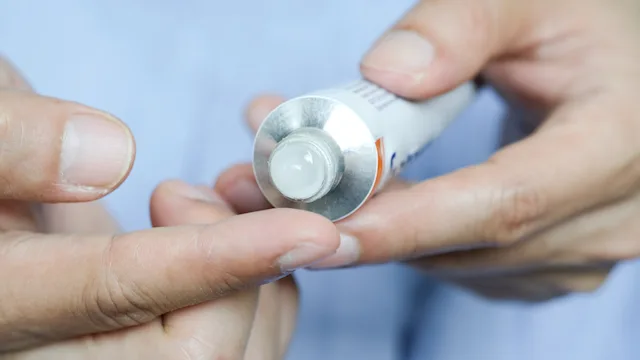
Creams: triamcinolone, hydrocortisone, clobetasol, betamethasone
Inhalants: fluticasone, mometasone
But this isn’t a complete list. If you’re ever unsure about a medication you’re taking, you can always ask the person who prescribed it.
What should you do if you forget to taper a steroid dosage?
First, don’t panic. Call your healthcare team as soon as possible to discuss the next best steps. All healthcare professionals’ offices have after-hours service for urgent situations.
Frequently asked questions
For most people, yes. As you slowly cut back on steroid pills, your adrenal glands will start making natural steroids again. How long this takes depends on how long you were on steroids for and what dose you took. Some people might feel tired or weak for a few weeks. But these symptoms usually improve over time as well.
Steroids are tapered to give your body time to adjust. When you take steroids, your adrenal glands slow down their own steroid production. Lowering your dose slowly helps those glands “wake up” and start working again. If you stop taking steroids too quickly, your adrenal glands don’t have enough time to adjust. This can make you feel sick or cause withdrawal symptoms.
It depends on the type of steroid. In some cases, long-term or high-dose corticosteroid use may temporarily decrease testosterone levels. Your levels will usually return to normal after discontinuing the steroids.
But for those using anabolic steroids to build muscle, there can be a permanent decline in testosterone levels that persists even after stopping the steroid use.
For most people, yes. As you slowly cut back on steroid pills, your adrenal glands will start making natural steroids again. How long this takes depends on how long you were on steroids for and what dose you took. Some people might feel tired or weak for a few weeks. But these symptoms usually improve over time as well.
Steroids are tapered to give your body time to adjust. When you take steroids, your adrenal glands slow down their own steroid production. Lowering your dose slowly helps those glands “wake up” and start working again. If you stop taking steroids too quickly, your adrenal glands don’t have enough time to adjust. This can make you feel sick or cause withdrawal symptoms.
It depends on the type of steroid. In some cases, long-term or high-dose corticosteroid use may temporarily decrease testosterone levels. Your levels will usually return to normal after discontinuing the steroids.
But for those using anabolic steroids to build muscle, there can be a permanent decline in testosterone levels that persists even after stopping the steroid use.
The bottom line
Steroids are strong anti-inflammatory medications with a variety of purposes. Depending on the dose and duration of use, steroids may need to be tapered slowly. Those tapers can be confusing. But they lessen withdrawal symptoms. If you aren’t sure how to take your steroids — or any of your medications — talk to your prescriber.

Why trust our experts?




References
Borresen, S. W., et al. (2022). Approach to the patient with glucocorticoid-induced adrenal insufficiency. The Journal of Clinical Endocrinology and Metabolism.
Endocrine Society. (2022). Adrenal hormones.
National Cancer Institute Dictionary of Cancer Terms. (n.d.). Adrenal gland. National Cancer Institute.
Prete, A., et al. (2021). Glucocorticoid induced adrenal insufficiency. British Medical Journal.
Tacey, A., et al. (2019). Single-dose prednisolone alters endocrine and haematologic responses and exercise performance in men. Endocrine Connections.