Key takeaways:
CBD (cannabidiol) and THC (tetrahydrocannabinol) are both found in cannabis, but they work differently in the body. They also have different risks and legal statuses. Talk to a healthcare professional before trying either product.
THC activates the body’s endocannabinoid system and may help with nausea, pain, and muscle spasms. But it causes a “high” and may lead to side effects such as anxiety, memory problems, and a higher risk of heart attack and stroke.
CBD works on different receptors, and may help with anxiety, sleep, and inflammation. It’s also FDA approved for certain types of seizures. CBD is generally well tolerated, though high doses may cause drowsiness and liver changes.
Hemp-derived CBD is legal under federal law. THC remains illegal federally, but is legal in some states. THC products sold in state-licensed dispensaries are usually tested for safety. But testing isn't required for over-the-counter CBD products.
Cannabis products have become more mainstream than ever in recent years. But there’s still a lot of confusion around the differences between the CBD products sold over the counter (OTC) and the THC-based products that are limited to state-regulated dispensaries.
To help you better understand their individual risks and benefits, we’ll break down six similarities and differences to consider when comparing CBD versus THC.
1. CBD and THC work differently in the body
CBD (cannabidiol) and THC (tetrahydrocannabinol) are both compounds found in the cannabis plant. But they don’t have the same effects on the body.
Search and compare options
THC activates your endocannabinoid system (ECS) when you consume it. The ECS is responsible for regulating your appetite, sleep cycle, and stress response, among many other functions. THC binds to cannabinoid receptors in the body, which in turn activate the ECS. In this way, THC may help with:
Nausea and vomiting
Insomnia
Muscle spasticity associated with multiple sclerosis
There are two prescription medications that contain synthetic THC. Nabilone (Cesamet) is FDA approved for chemotherapy-induced nausea and vomiting (CINV). Dronabinol (Marinol) is approved for CINV as well as to stimulate appetite in adults living with AIDS.
CBD is typically associated with a calming effect on the brain and body. It doesn’t work by directly affecting the ECS the way that THC does. Instead, it influences serotonin and gamma-aminobutyric acid (GABA) receptors (binding sites), as well as other pain-related binding sites in the brain and body. Research shows that CBD may help:
Reduce chronic inflammation
Reduce nerve pain
Treat substance use disorders
CBD is also the active ingredient in the brand-name medication Epidiolex, which is FDA approved for certain types of seizures.
2. THC is intoxicating; CBD isn’t
One of the most well-known effects of cannabis is the euphoric feeling, or “high,” that it can cause. THC is the main component of cannabis that produces this effect.
The intoxicating effects of THC are typically dose-related. So it’s possible to consume cannabis without feeling high if you choose products with a low dose of THC. But keep in mind that cannabis can affect people differently, so it may take some trial and error to find the right product for your needs.
CBD, on the other hand, isn’t intoxicating. Consuming CBD on its own won’t make you feel high.
3. CBD and THC have different side effects to consider
The intoxicating effect of THC isn’t the only thing that sets it apart from CBD in terms of how it can make you feel. These compounds also have different side effects to consider.
CBD is generally well tolerated. Side effects are more common with high doses, and can include:
Drowsiness
Diarrhea
Decreased appetite
THC’s side effects are also dose-related. But unlike with CBD, THC side effects can occur even with a small dose in some people. Most THC side effects are what people typically associate with cannabis use, including:
Altered sense of time and space
Mood changes
Fast heart rate
Red eyes
Dry mouth
Keep in mind that THC side effects aren’t always considered negative. For example, if you’re using cannabis for nausea or decreased appetite, its effect on your appetite can be helpful.
But THC can also have more serious side effects. Some of these side effects are associated with a cannabis overdose. Others are more likely if you consume large amounts of THC for a long period of time.
Potentially serious THC side effects include:
Anxiety
Paranoia
Cannabis hyperemesis syndrome (severe, prolonged vomiting)
Trouble with thinking and IQ with prolonged use, especially if you start at a young age
Increased risk of heart attack and stroke
Seizures
The best way to minimize side effects is to start with a low dose and slowly increase it until you reach the desired effect. It’s also a good idea to talk to a healthcare professional before trying a CBD- or THC-based product. They can make sure it’s a safe option based on your medical history.
4. Most cannabis products contain both CBD and THC
The cannabis plant contains more than 80 active compounds. Of these, CBD and THC are the most well known. Cannabis plants contain a mixture of THC and CBD in most cases, as do the products made from them.
Most cannabis-based products are referred to by the ratio of THC to CBD they contain. For example, a 1:20 cannabis product typically contains 20 times more CBD than THC. And a 1:1 product contains equal amounts of the two compounds. Knowing if a cannabis product is THC- or CBD-dominant can help you predict how it may make you feel, and what it may be useful for.
CBD products sold OTC, however, are a little different. They typically fall into one of these three categories:
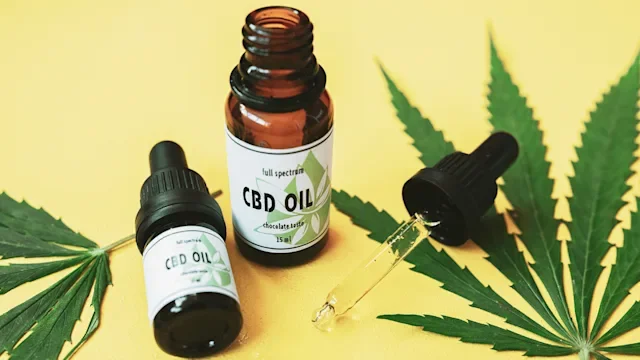
Full-spectrum CBD: These products contain CBD along with other compounds from the cannabis plant, including terpenes, flavonoids, and other cannabinoids (such as THC). But legally, they can only contain up to 0.3% THC in order to be sold OTC.
Broad-spectrum CBD: These products have had the THC removed from them. But they may contain other cannabinoids, such as cannabinol (CBN) or cannabigerol (CBG), as well as terpenes and flavonoids.
CBD isolate: This is the purest form of CBD. It does not contain any additional cannabinoids or terpenes. CBD isolate is often lab-made rather than extracted from hemp.
Good to know: The ratio of THC to CBD in a cannabis product is often expressed in numerical form, such as 1:20 or 1:1. But states differ in terms of which ingredient is listed first. Some show the ratio as THC to CBD, while others show it as CBD to THC. It’s best to ask a dispensary associate if you’re unsure to avoid mistakes.
5. CBD is legal federally; THC is not
One of the biggest differences when it comes to CBD versus THC is their federal legal status.
The Agriculture Improvement Act of 2018 (also referred to as the 2018 Farm Bill), legalized hemp and hemp-derived products across the U.S. Hemp is a term used to describe cannabis plants that contain less than 0.3% THC. Most CBD products are made from hemp plants, which makes them federally legal under the Farm Bill.
Products made from cannabis plants that contain more than 0.3% THC don’t qualify as hemp-derived. These products are considered Schedule I controlled substances at the federal level. This means that they are illegal substances.
This may all seem straightforward. But there are still some significant gray areas when it comes to the legal status of CBD and THC products. Here’s why:
Some states restrict CBD products. Although hemp-derived CBD is legal under federal law, some states haven’t adopted this change. This means CBD products are still considered illegal in some states.
Some states have legalized medical and/or adult-use cannabis. Cannabis products that aren’t made from hemp are illegal federally. But some states have passed laws that allow these products to be sold in state-regulated dispensaries.
Some companies are selling THC as a hemp-derived product. Under the Farm Bill, hemp-derived products are considered legal. Even though hemp plants contain very little THC, you can still make THC-based products from them. These “hemp-derived” THC products are technically legal under the current Farm Bill. But regulators have taken steps to close this unintended loophole, and these products will no longer be considered legal as of November 2026.
6. Legalized THC products are generally more regulated than CBD products sold OTC
This may come as a surprise, but the THC-based cannabis products sold in state-certified dispensaries are typically very highly regulated. Most states have strict testing requirements to ensure the products contain what’s on the packaging and don’t include any harmful contaminants, such as heavy metals or pesticides. That’s why these products are considered much safer options than illicit cannabis products.
CBD products, however, aren’t regulated by the FDA. And companies aren’t required to test their products for potency or contaminants. So there’s a greater risk that you may consume harmful ingredients — or even unlabeled THC — when you use an OTC CBD product. To help protect yourself, only purchase CBD products from state-regulated cannabis dispensaries or manufacturers that provide third-party testing data for their products.
The bottom line
CBD (cannabidiol) and THC (tetrahydrocannabinol) are both compounds found in cannabis. But they work differently and have different risks.
THC activates the body’s endocannabinoid system (ECS) and may help with nausea, pain, and muscle spasms. But it also causes a “high” and can lead to serious side effects such as anxiety, memory problems, and an increased risk of heart attack and stroke.
CBD activates receptors outside the ECS and may help with anxiety, sleep, and inflammation. It’s also available as the brand-name medication Epidiolex, which is FDA approved for certain seizures. CBD is generally well tolerated, but may cause drowsiness and increased liver enzymes at high doses.
Another key difference between these compounds is their legal statuses and how they’re regulated. Hemp-derived CBD products (that contain less than 0.3% THC) are federally legal. THC products remain illegal at the federal level but may be allowed in certain states. State-regulated THC products are usually tested for safety and quality, while over-the-counter CBD products are not closely regulated and may contain inaccurate amounts of CBD or even hidden THC. Before trying either type of product, it’s smart to talk to a healthcare professional.

Why trust our experts?



References
Abernethy, A. (2019). Hemp production and the 2018 Farm Bill. U.S. Food and Drug Administration.
Centers for Disease Control and Prevention. (2025). Cannabis and public health: About CBD.
Hoch, E., et al. (2024). Cannabis, cannabinoids and health: A review of evidence on risks and medical benefits. European Archives of Psychiatry and Clinical Neuroscience.
Jameson, L. E., et al. (2022). Comparison of state-level regulations for cannabis contaminants and implications for public health. Environmental Health Perspectives.
Li, S., et al. (2024). Cannabigerol (CBG): A comprehensive review of its molecular mechanisms and therapeutic potential. Molecules.
MacCallum, C. A., et al. (2023). A clinical framework for evaluating cannabis product quality and safety. Cannabis and Cannabinoid Research.
National Conference of State Legislatures. (2025). State medical cannabis laws.
Neuhofer, Z. T., et al. (2025). Change to federal definition of hemp and implications for federal enforcement. Congress.gov.
Swenson, K. (2025). Beyond the hype: A comprehensive exploration of CBD’s biological impacts and mechanisms of action. Journal of Cannabis Research.
Turner, A. R., et al. (2024). Cannabis (marijuana) overview. StatPearls.
U.S. Food and Drug Administration. (2020). What you need to know (and what we’re working to find out) about products containing cannabis or cannabis-derived compounds, including CBD.
Woodcock, J. (2023). FDA concludes that existing regulatory frameworks for foods and supplements are not appropriate for cannabidiol, will work with congress on a new way forward. U.S. Food and Drug Administration.