busulfan
Busulfan (Busulfex) is an anticancer treatment option that’s given before you receive a stem cell transplant for chronic myelogenous leukemia (CML). It’s typically used in combination with other anticancer medications. Busulfan (Busulfex) is given as an infusion through the vein by a healthcare provider. You have to stay in the hospital to receive your doses as well as during the transplant recovery process so your provider can monitor you.


What is Busulfan (Busulfex)?
What is Busulfan (Busulfex) used for?
- Chemotherapy given before a stem cell transplant (conditioning regimen) for people with chronic myelogenous leukemia (CML)
How Busulfan (Busulfex) works
Busulfan (Busulfex) is a type of anticancer medication called an alkylating agent. It works by damaging the cancer cells’ genetic material, leading to cell death.
Drug facts
| Common Brands | Busulfex |
|---|---|
| Drug Class | Anticancer agent |
| Controlled Substance Classification | Not a controlled medication |
| Generic Status | No lower-cost generic available |
| Availability | Prescription only |

Side effects of Busulfan (Busulfex)
The following side effects may get better over time as your body gets used to the medication. Let your healthcare provider know immediately if you continue to experience these symptoms or if they worsen over time.
Common Side Effects
- Nausea (98%)
- Mouth sores or inflammation (97%)
- Vomiting (95%)
- Weight loss or lack of appetite (85%)
- Diarrhea (84%)
- Difficulty sleeping (84%)
- Fever (80%)
- Stomach pain (72%)
- Anxiety (72%)
- Headache (69%)
Less Common Side Effects
- Weakness
- Dizziness
- Chills
- General pain
- Indigestion or acid reflux
- Constipation
- Stuffy nose
- Rash
- High blood sugars
Busulfan (Busulfex) serious side effects
Contact your healthcare provider immediately if you experience any of the following.
- Serious infections: repeated fevers, chills, cough, trouble breathing, severe diarrhea, vomiting, painful or frequent urination
- Serious bleeds: bleeding or bruising that doesn’t stop or go away, large amount of bleeding, blood in the urine, throwing up blood, bloody or black and tarry stool
- Severe liver problems: yellowing of the skin or eyes (jaundice), dark urine, right upper stomach pain, nausea, vomiting, tiredness, loss of appetite
- Heart problems: chest pain, shortness of breath, rapid heartbeat, swelling of the legs or feet
- Seizures
The following Busulfan (Busulfex) side effects have also been reported
Along with its needed effects, a medicine may cause some unwanted effects. Although not all of these side effects may occur, if they do occur they may need medical attention.
Check with your doctor or nurse immediately if any of the following side effects occur:
More common
Black, tarry stools
bloated abdomen or stomach
blood in the urine or stools
blurred vision
cough or hoarseness
dizziness
fast or irregular breathing
fast, pounding, or irregular heartbeat or pulse
fever or chills
headache
lower back or side pain
nervousness
pain and fullness in the upper abdominal or stomach
painful or difficult urination
pinpoint red spots on the skin
pounding in the ears
skin rash or itching
slow heartbeat
swelling of the eyes or eyelids
tightness in the chest
trouble breathing
unusual bleeding or bruising
yellow eyes and skin
Incidence not known
seizures
Some side effects may occur that usually do not need medical attention. These side effects may go away during treatment as your body adjusts to the medicine. Also, your health care professional may be able to tell you about ways to prevent or reduce some of these side effects. Check with your health care professional if any of the following side effects continue or are bothersome or if you have any questions about them:
More common
Acid or sour stomach
back pain
belching
bloody nose
difficulty having a bowel movement (stool)
fear
indigestion
loss of appetite
lack or loss of strength
stomach discomfort or upset
swelling or inflammation of the mouth
tenderness, pain, swelling, warmth, skin discoloration, and prominent superficial veins over affected area
trouble sleeping
Other side effects not listed may also occur in some patients. If you notice any other effects, check with your healthcare professional.
Call your doctor for medical advice about side effects. You may report side effects to the FDA at 1-800-FDA-1088.

Pros and cons of Busulfan (Busulfex)
Pros
- Is a component of the only curative treatment for CML (if eligible for transplant)
- Might be considered in children before a stem cell transplant for certain cancers
Cons
- Requires hospital admission
- Can raise your risk for infections, bleeding, or bruising
- Each infusion takes 2 hours.

Pharmacist tips for Busulfan (Busulfex)

- Since high doses of busulfan (Busulfex) can cause seizures, you’ll be given an antiseizure medication to prevent this risk. You’ll typically start the antiseizure medication 12 hours before your first busulfan (Busulfex) injection, and then continue until 24 hours after your last dose of busulfan (Busulfex).
- Some common medications, such as acetaminophen (Tylenol) and metronidazole (Flagyl), can interact with busulfan (Busulfex). They can affect how well busulfan (Busulfex) is removed from your body. These medications can cause the level of busulfan (Busulfex) in your body to be too high and raise your risk for serious side effects. It's important to tell your provider and pharmacist about all the medications you’re taking to avoid any serious interactions. Before starting or stopping any medications, let your provider know, so they can make the appropriate dose adjustments, if needed.
- If you’re a woman who can get pregnant, you should use birth control while receiving busulfan (Busulfex) and for 6 months after your last dose. This medication can cause harm to an unborn baby.
- If you’re a man with a female partner who can get pregnant, you should use birth control measures, such as condoms, while you’re receiving busulfan (Busulfex) and for 3 months after your last dose. It’s possible for busulfan (Busulfex) to cause harm to the unborn baby of your female partner if you’re taking this medication.

Risks and warnings for Busulfan (Busulfex)
Busulfan (Busulfex) can cause some serious health issues. This risk may be even higher for certain groups. If this worries you, talk to your doctor or pharmacist about other options.
Low blood cell counts
 Busulfan (Busulfex) can cause your red blood cell, white blood cell, and platelet counts to drop, especially with the high doses of this medication required before a stem cell transplant. When the number of these cells are lower than normal, you’re at risk of developing anemia, infections, and bleeding or bruising. In some cases, your blood cell counts may be low for a while. This is because your chemotherapy medications can weaken your bone marrow and affect its ability to make new blood cells like normal.
 To prevent serious problems, it’s absolutely necessary to receive a stem cell transplant after receiving high doses of busulfan (Busulfex). Your provider will closely monitor your blood counts through routine lab work after you receive this medication. They will continue to check your blood counts until they return to normal after your transplant. Let your provider know as soon as possible if you experience extreme tiredness, rapid breathing, fevers, chills, or bleeding and bruising that doesn’t stop or go away.
Seizures
At doses used to prepare for a stem cell transplant, busulfan (Busulfex) can cause seizures. Before starting treatment, you’ll be given an antiseizure medication to lower your risk of developing a seizure. Make sure to tell your provider if you have a history of seizures, head injury, or take medications that can make you more likely to have a seizure. They can monitor you more closely.
Liver injury or damage
- Risk factors: Higher levels of busulfan (Busulfex) in your body | Previous radiation treatment | Have received three or more cycles of chemotherapy | Previous stem cell transplant
There’s a small chance that busulfan (Busulfex) can cause liver injury. This can lead to serious problems where blood flow is blocked in your liver (hepatic veno-occlusive disease). Your provider will monitor your liver labs regularly after receiving busulfan (Busulfex) and for about a month after transplant. Let your provider know right away if you experience right-side stomach pain, yellowing of the eyes or skin, dark urine, tiredness, nausea or vomiting, or loss of appetite, as these can be signs of liver problems.
Harm to unborn baby
Based on animal studies, busulfan (Busulfex) can harm an unborn baby. Because of this risk, regardless of your sex, you should use birth control during treatment with busulfan (Busulfex) to prevent pregnancy. After treatment, continue to use birth control for another 3 months (for males) or 6 months (for females). Let your provider know right away if you or your partner becomes pregnant during this time.
Heart problems
It’s not known if there’s a risk of heart problems in people receiving the busulfan (Busulfex) injection before a stem cell transplant for CML. But rare cases of fluid or blood buildup around the heart were reported in children with thalassemia (a genetic blood condition) who took oral busulfan before undergoing transplantation. Most of the time, children experienced stomach pain and vomiting before the heart problems started. Tell your provider immediately if you have chest pain, shortness of breath, swelling of your legs or feet, dizziness, or a rapid heartbeat.
Lung problems
Although rare, long-term busulfan (Busulfex) use can cause lung damage and scarring (pulmonary fibrosis). This can take several months to years to develop after receiving busulfan (Busulfex) for a long time. Notify your provider right away if you start experiencing a cough or difficulty breathing.

Busulfan (Busulfex) dosage
Typical dosage for Busulfan (Busulfex)
This medication is an injection into a vein (intravenous, IV) that’s given by a healthcare provider. Your provider will calculate your dose of busulfan (Busulfex) based on your body weight.
One possible dosing regimen is 0.8 mg/kg given every 6 hours for 4 consecutive days before a stem cell transplant. This is a total of 16 doses. Your course of busulfan (Busulfex) will begin 7 days before your transplant (on days -7, -6, -5, and -4, with day 0 as the day you’ll receive a transplant). With this conditioning regimen, busulfan (Busulfex) is given along with another anticancer medication called cyclophosphamide.

Interactions between Busulfan (Busulfex) and other drugs
Although certain medicines should not be used together at all, in other cases two different medicines may be used together even if an interaction might occur. In these cases, your doctor may want to change the dose, or other precautions may be necessary. When you are receiving this medicine, it is especially important that your healthcare professional know if you are taking any of the medicines listed below. The following interactions have been selected on the basis of their potential significance and are not necessarily all-inclusive.
Using this medicine with any of the following medicines is usually not recommended, but may be required in some cases. If both medicines are prescribed together, your doctor may change the dose or how often you use one or both of the medicines.
- Blinatumomab
- Deferasirox
- Deferiprone
- Deferoxamine Mesylate
- Ketoconazole
- Metronidazole
Using this medicine with any of the following medicines may cause an increased risk of certain side effects, but using both drugs may be the best treatment for you. If both medicines are prescribed together, your doctor may change the dose or how often you use one or both of the medicines.
- Fosphenytoin
- Itraconazole
- Ketobemidone
- Phenytoin

What are alternatives to Busulfan (Busulfex)?

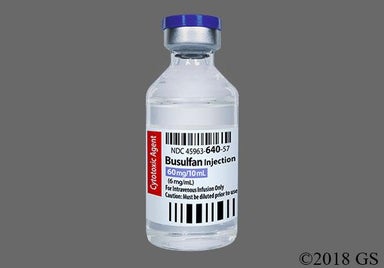
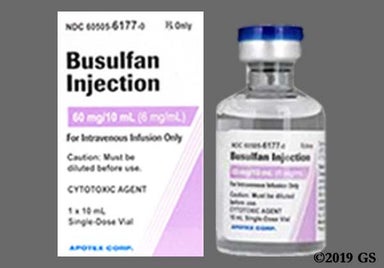
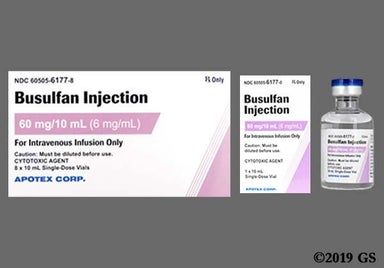
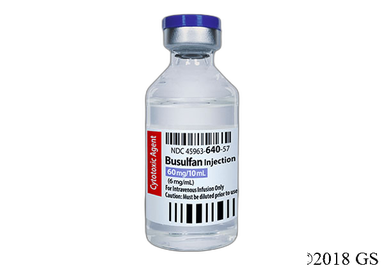
Busulfan (Busulfex) images