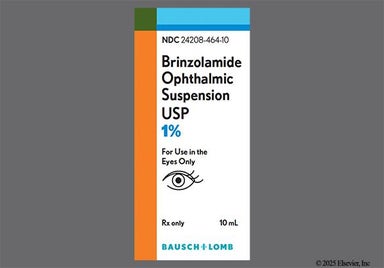
Brinzolamide (Azopt) is an eye drop that helps lower pressure within the eye and treats glaucoma. It is now available as a generic medication, but it still tends to be more expensive than other alternatives.
High pressure in the eye caused by ocular hypertension (high pressure inside the eye) or open-angle glaucoma (the most common type of glaucoma)
How Brinzolamide (Azopt) works
Brinzolamide (Azopt) is a carbonic anhydrase inhibitor. It lowers the amount of fluid in the eye. When there is less fluid inside the eye, the eye pressure goes down.
The following side effects may get better over time as your body gets used to the medication. Let your healthcare provider know immediately if you continue to experience these symptoms or if they worsen over time.
Common Side Effects
Blurred vision (up to 10%)
Bitter, sour, or unusual taste (up to 10%)
Less Common Side Effects
Eyelid inflammation (swelling)
Dry eye
Feeling like there's something in your eye
Headache
Red eyes
Discharge from the eye
Eye discomfort
Cornea inflammation
Eye pain
Eye itching
Runny nose
Brinzolamide (Azopt) serious side effects
Contact your healthcare provider immediately if you experience any of the following.
The following Brinzolamide (Azopt) side effects have also been reported
Along with its needed effects, a medicine may cause some unwanted effects. Although not all of these side effects may occur, if they do occur they may need medical attention.
Check with your doctor immediately if any of the following side effects occur:
numbness, tingling, pain, or weakness in the hands or feet
seizures
trembling
weakness and heaviness of the legs
Some side effects may occur that usually do not need medical attention. These side effects may go away during treatment as your body adjusts to the medicine. Also, your health care professional may be able to tell you about ways to prevent or reduce some of these side effects. Check with your health care professional if any of the following side effects continue or are bothersome or if you have any questions about them:
More common
Bitter, sour, or other unusual taste
Less common
Burning, stinging, or discomfort when medicine is applied
More expensive than many alternatives, even though it's available as a generic
Pharmacist tips for Brinzolamide (Azopt)
Wash your hands before putting brinzolamide (Azopt) drops in your eyes. Don't touch the dropper tip with your eye, hands, or any other surface. This will help you avoid eye infections by preventing the spread of germs into the solution.
After placing a drop in the eye, close your eye and press one finger to the inner corner of your eye by the nose for 1 minute. This helps make sure your eye absorbs the medication.
If you are using brinzolamide (Azopt) at the same time as other eye medications, wait 10 minutes between each drop to give your eyes time to absorb each medication.
It's not easy to tell if your eye pressure is improving at home. Make sure to use this medication as prescribed, even if you don't notice any difference in your symptoms or vision right away.
Brinzolamide (Azopt) is a sulfa medication. Be sure to tell your provider if you have an allergy to sulfa products. You might need to use a different medication.
If you wear contacts, remove them and wait 15 minutes after using brinzolamide (Azopt) to put them back in your eyes. The preservatives in brinzolamide (Azopt) can damage your soft lenses.
Brinzolamide (Azopt) can cause blurry vision. This is usually temporary, but make sure you don't drive or do anything that requires good vision until the blurriness goes away.
Risks and warnings for Brinzolamide (Azopt)
Brinzolamide (Azopt) can cause some serious health issues. This risk may be even higher for certain groups. If this worries you, talk to your doctor or pharmacist about other options.
ALLERGIC REACTIONS
Risk factors: Sulfa allergy
Brinzolamide (Azopt) is a sulfa medication. Although this medication is placed on the eye, some of it can potentially be absorbed into your bloodstream and cause allergic reactions in other parts of the body. In some rare cases, sulfa allergies can involve severe rashes, liver damage, or low numbers of blood cells. These can be life-threatening. It is also possible to have eye or eyelid irritation from a mild allergic reaction to this medication. Stop using brinzolamide (Azopt) right away and contact your provider if you experience a serious rash, stomach pain, or feel generally unwell or weaker than usual. If you have had allergies to other sulfa medications, such as Bactrim or Septra (sulfamethoxazole / trimethoprim), talk to your provider about alternative medications.
CORNEA SWELLING
Risk factors: Low number of cells on the cornea
Brinzolamide (Azopt) can cause swelling of the cornea, the protective covering on the front of the eye. If you have ever been told that your cornea is thin or has a low number of cells, talk to your provider before starting brinzolamide (Azopt).
CAUTION WITH KIDNEY DISEASE
Risk factors: Severe kidney disease
Brinzolamide (Azopt) is not recommended for people with severe kidney disease. The clinical studies for this medication didn't include people with severe kidney disease. The kidneys are responsible for clearing brinzolamide (Azopt) from the body, so if they aren't working well, you're more likely to get medication build-up and side effects. If you have kidney disease, talk to your provider before starting this medication.
NOT FOR ACUTE ANGLE-CLOSURE GLAUCOMA
Brinzolamide (Azopt) is for treating open-angle glaucoma, the most common type of glaucoma. Acute angle-closure glaucoma is a different condition that is less common, usually happens suddenly, and requires a different treatment approach to quickly lower eye pressure. If you have been diagnosed with acute angle-closure glaucoma, don't take brinzolamide (Azopt) unless your provider specifically tells you to.
AVOID SOFT CONTACT LENSES
The preservative in brinzolamide (Azopt), benzalkonium chloride, can be absorbed by soft contact lenses and cause damage. If you wear soft contacts, remove them before using a dose of brinzolamide (Azopt). Wait at least 15 minutes after your dose before putting your contacts back in.
Brinzolamide (Azopt) dosage
The average cost for 1 eye dropper of 10ml of 1% of Brinzolamide (Azopt) is $63.20 with a free GoodRx coupon. This is 81.84% off the average retail price of $347.99.
Interactions between Brinzolamide (Azopt) and other drugs
Brinzolamide (Azopt) may interact with certain medications or supplements. Always let your doctor and pharmacist know about any other medications or supplements (including prescribed and over-the-counter medications, vitamins, and dietary or herbal supplements) that you are currently taking. The list below does not include all possible drug interactions with Brinzolamide (Azopt). Please note that only the generic name of each medication is listed below.
Although certain medicines should not be used together at all, in other cases two different medicines may be used together even if an interaction might occur. In these cases, your doctor may want to change the dose, or other precautions may be necessary. When you are taking this medicine, it is especially important that your healthcare professional know if you are taking any of the medicines listed below. The following interactions have been selected on the basis of their potential significance and are not necessarily all-inclusive.
Using this medicine with any of the following medicines is usually not recommended, but may be required in some cases. If both medicines are prescribed together, your doctor may change the dose or how often you use one or both of the medicines.
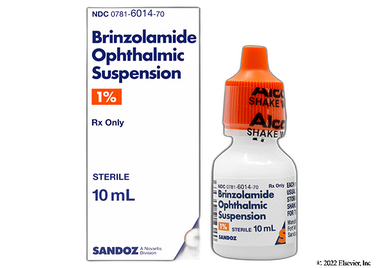
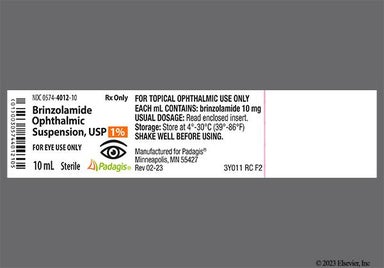
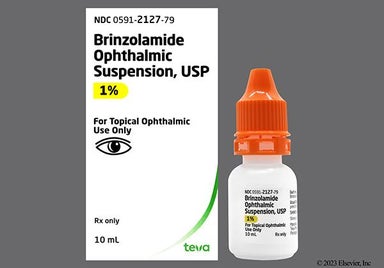
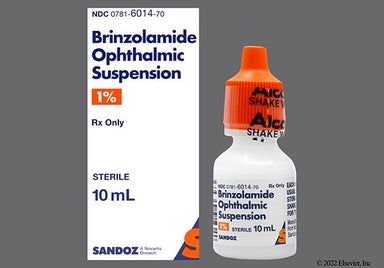
This medicine is Colorless Eye Dropper.This medicine is Colorless Eye Dropper.This medicine is Colorless Eye Dropper.This medicine is Colorless Eye Dropper.colorless - Brinzolamide 1% Ophthalmic Suspension
Prescription savings
Stop paying too much for your prescriptions. Compare prices, get pharmacy coupons, and save up to 80%.
A generic form of Brinzolamide became available in 2021. The generic form may be a more affordable option for people with glaucoma or high eye pressure.
Brinzolamide is not a beta blocker. Beta-blockers work differently to lower the pressure in the eye, and their names usually end in -olol. To help control your eye pressure, it's possible that you may need to take Brinzolamide along with a beta-blocker eyedrop, such as timolol (Timoptic) or betaxolol (Betoptic S). If you do, make sure to separate the medication drops by 10 minutes to give your eyes time to absorb each medication.
Brinzolamide and brimonidine (Alphagan P) are not the same thing. Both are used to lower eye pressure and treat glaucoma, but they belong to different classes and work very differently. Brinzolamide and brimonidine are actually available as a combination eyedrop, Simbrinza (brinzolamide / brimonidine), which is a convenient option for people who need more than one medication to control their eye pressure.
The most common side effects of Brinzolamide are blurry vision and bitter, sour, or unusual taste. These effects happen in 5% to 10% of people who use this medication and are usually temporary. Brinzolamide can also cause eye or eyelid irritation, headache, or runny nose. People who have sulfa allergies should avoid Brinzolamide, since they're more likely to get an allergic reaction from it.