bortezomib
Velcade (bortezomib) is a recommended anticancer treatment option for multiple myeloma and mantle cell lymphoma in adults. It's given as an injection under the skin (subcutaneously) or into a vein (intravenous, IV) by a healthcare provider. But, it can cause new or worsening numbness and tingling in your hands and feet, which can be bothersome.


What is Velcade (bortezomib)?
What is Velcade (bortezomib) used for?
- Multiple myeloma in adults
- Mantle cell lymphoma in adults
How Velcade (bortezomib) works
Velcade (bortezomib) is a proteasome inhibitor. It works by blocking a group of proteins, called proteasomes, inside cancer cells. Proteasomes help to recycle cells’ waste by breaking down proteins when they’re no longer needed. When Velcade (bortezomib) blocks proteasomes from working, cell waste builds up, which causes cancer cells to die.
Drug facts
| Common Brands | Velcade |
|---|---|
| Drug Class | Anticancer |
| Controlled Substance Classification | Not a controlled medication |
| Generic Status | No lower-cost generic available |
| Availability | Prescription only |

Side effects of Velcade (bortezomib)
The following side effects may get better over time as your body gets used to the medication. Let your healthcare provider know immediately if you continue to experience these symptoms or if they worsen over time.
Common Side Effects
- Diarrhea (up to 52%)
- Nausea (up to 52%)
- Numbness or tingling of the hands or feet (up to 50%)
- Fatigue (up to 41%)
- Nerve pain (up to 34%)
- Constipation (up to 30%)
- Vomiting (up to 29%)
- Lessened or lack of appetite (up to 21%)
- Fever (up to 21%)
*Some side effects listed above might not be from Velcade (bortezomib) alone, since some studies included people taking Velcade (bortezomib) with other anticancer medications.
**Less nerve problems seen when injected under the skin versus IV.
Less Common Side Effects
- Pain or redness at injection site
- Stomach pain
- Difficulty breathing
- Dizziness
- Weakness
- Headache
- Trouble falling or staying asleep
- Swelling of the legs or feet
- Changes in blood pressure
- Rash
- Shingles infection
- Lung infections
Velcade (bortezomib) serious side effects
Contact your healthcare provider immediately if you experience any of the following.
- Infections: repeated fevers, chills, cough, trouble breathing, severe diarrhea, vomiting, painful or frequent urination
- Serious bleeds: bleeding or bruising that doesn’t stop or go away, large amount of bleeding, blood in the urine, throwing up blood, bloody or black and tarry stool
- Extremely low blood pressure: dizziness, lightheadedness, fainting, tiredness, vision changes
- New confusion, seizures, or sudden changes in mood or behavior: severe headaches, visual changes, difficulty staying awake, dizziness, trouble speaking
- Liver damage: dark urine, right-sided stomach pain, yellowing of the eyes or skin, tiredness, loss of appetite, nausea, vomiting
- Heart problems: chest pain, racing heartbeat, shortness of breath that usually worsens with activity or while lying flat, swelling of your legs or feet, sudden weight gain, fatigue, dizziness
The following Velcade (bortezomib) side effects have also been reported
Along with its needed effects, a medicine may cause some unwanted effects. Although not all of these side effects may occur, if they do occur they may need medical attention.
Check with your doctor or nurse immediately if any of the following side effects occur:
More common
Black, tarry stools
bleeding gums
blood in the urine or stools
blurred vision
body aches or pain
burning, crawling, itching, numbness, prickling, "pins and needles", or tingling feelings
chills
confusion
cough producing mucus
decreased urination
difficult or labored breathing
dizziness, faintness, or lightheadedness when getting up suddenly from a lying or sitting position
ear congestion
fainting
headache
increase in heart rate
loss of voice
lower back or side pain
nerve pain
painful blisters on the trunk of the body
painful or difficult urination
pale skin
pinpoint red spots on the skin
rapid breathing
sunken eyes
sweating
swollen glands
thirst
tightness in the chest
troubled breathing with exertion
ulcers, sores, or white spots in the mouth
unsteadiness or awkwardness
unusual bleeding or bruising
unusual tiredness or weakness
weakness in the arms, hands, legs, or feet
wrinkled skin
Less common
Dilated neck veins
general feeling of discomfort or illness
increased sensitivity to pain
increased sensitivity to touch
irregular breathing
irregular heartbeat
swelling of the face, fingers, feet, or lower legs
thickening of bronchial secretions
tingling in the hands and feet
Incidence not known
Agitation
back pain
blistering, peeling, or loosening of the skin
bruising
change in consciousness
coughing or vomiting blood
dark urine
deafness
deep or fast breathing with dizziness, numbness to feet, hands, and around the mouth
drowsiness
fast heartbeat
general tiredness and weakness
irritability
light-colored stools
loss of consciousness
pain in the stomach, side, or abdomen, possibly radiating to the back
persistent bleeding or oozing from puncture sites, mouth, or nose
pounding, slow heartbeat
rectal bleeding
red skin lesions, often with a purple center
red, irritated eyes
restlessness
seeing, hearing, or feeling things that are not there
seizures
shaking
stiff neck
stomach pain and tenderness
trouble sleeping
upper right stomach pain
yellow eyes or skin
Some side effects may occur that usually do not need medical attention. These side effects may go away during treatment as your body adjusts to the medicine. Also, your health care professional may be able to tell you about ways to prevent or reduce some of these side effects. Check with your health care professional if any of the following side effects continue or are bothersome or if you have any questions about them:
More common
Belching
bone pain
difficulty having a bowel movement
difficulty with moving
feeling unusually cold or shivering
hair loss or thinning of hair
indigestion
joint pain or swelling
loss of appetite
loss of taste
mental depression
muscle cramps
muscle pain or stiffness
pain in the arms or legs
rash
stomach discomfort, upset, or pain
vomiting
Other side effects not listed may also occur in some patients. If you notice any other effects, check with your healthcare professional.
Call your doctor for medical advice about side effects. You may report side effects to the FDA at 1-800-FDA-1088.

Pros and cons of Velcade (bortezomib)
Pros
- Recommended treatment option for multiple myeloma and mantle cell lymphoma, in combination with other anticancer medications
- Can be given as an injection under the skin (subcutaneously) or through a vein (IV), depending on preference
- Short injection times (seconds to minutes)
Cons
- Requires frequent visits to the clinic or infusion center to receive your dose
- Can cause nerve problems
- Not safe in pregnancy or while breastfeeding

Pharmacist tips for Velcade (bortezomib)

- You can feel some discomfort or pain at the injection site when receiving Velcade (bortezomib). Let your provider know if this is bothersome so it can be managed appropriately.
- Tell your provider if you have new or worsening numbness, tingling, burning, or pain in your arms, hands, legs, or feet. These are signs of nerve problems. Your provider might need to lower your dose of Velcade (bortezomib) or have you stop taking it for a while until your nerve problems improve.
- Make sure to drink enough water, because Velcade (bortezomib) can cause low blood pressure, especially if you’re dehydrated. It can also cause nausea, vomiting, and diarrhea, which can worsen dehydration. Tell your provider if you experience dizziness, lightheadedness, fainting, or muscle cramps.
- Let your provider know if you’re taking other medications that lower your blood pressure. You might need a change in your dose, so your blood pressure doesn't drop too much from the combination of Velcade (bortezomib) and your other medications.
- Velcade (bortezomib) can cause flare ups in shingles (herpes zoster). To prevent this, you might need to take an antiviral medication like acyclovir (Zovirax) during treatment with Velcade (bortezomib).
- If you’re a woman who can get pregnant, you should use birth control while receiving Velcade (bortezomib) and for 7 months after the last dose. This medication can cause harm to an unborn baby.
- If you’re a man with female partners who can get pregnant, you should use birth control measures, such as condoms, while you’re receiving Velcade (bortezomib) and for 4 months after your last dose. It’s possible for Velcade (bortezomib) to cause harm to the unborn baby of your female partners if you’re taking this medication.
- Let your provider know if you’re taking oral medications for diabetes. Velcade (bortezomib) can cause changes in your blood sugar levels. You might need to have your blood sugars monitored more often to make sure your diabetes medication doses are right for you.
- Velcade (bortezomib) interacts with some medications, such as fluconazole (Diflucan) and rifampin (Rifadin). These interactions can affect how well Velcade (bortezomib) works or raise your risk for side effects. It's important to tell your provider and pharmacist about all the medications you’re taking to avoid any serious interactions. Before starting or stopping any medications, let your provider know, so they can make the appropriate adjustments if needed.

Risks and warnings for Velcade (bortezomib)
Velcade (bortezomib) can cause some serious health issues. This risk may be even higher for certain groups. If this worries you, talk to your doctor or pharmacist about other options.
Nerve problems (peripheral neuropathy)
- Risk factors: History of nerve problems
Velcade (bortezomib) can cause new or worsening nerve problems in your arms, hands, legs, and feet (peripheral neuropathy). In clinical studies, there were fewer people who experienced nerve problems when injections were given under the skin than IV. Let your provider know if you experience numbness, pain, burning, a feeling of "pins and needles," tremors, problems with balance, or weakness in your arms or legs. You might need a change in your dose or have your injections spaced out more. Nerve problems are generally reversible or improved after adjusting the dose of Velcade (bortezomib).
Heart problems
- Risk factors: Heart disease
Velcade (bortezomib) can cause new or worsening heart failure and affect how well your heart pumps blood through your body. If you have heart problems, your provider will monitor you more regularly while you receive Velcade (bortezomib) treatment to make sure it doesn’t get worse. Tell your provider if you have shortness of breath that usually worsens with activity or while lying flat, swelling of your legs or feet, sudden weight gain, fatigue, or dizziness. These can be signs of heart failure.
Lung problems
Rare, but serious, lung problems, including inflammation of the lungs and pneumonia, have happened in people receiving Velcade (bortezomib). Let your provider know if you have difficulty breathing, cough, or fatigue during your treatment.
Swelling and narrowing of the blood vessels in your brain
Rare cases of a brain condition called posterior reversible encephalopathy syndrome (PRES) have happened with people receiving Velcade (bortezomib). Get medical help right away if you experience sudden severe headaches, sudden confusion, sudden vision loss or other vision changes, behavioral changes, or seizures. If you’re diagnosed with PRES, you’ll need to stop this medication.
Low blood cell counts
Velcade (bortezomib) can cause your white blood cell and platelet counts to be low. When the number of these cells are lower than normal, you’re at risk of developing infections and bleeding or bruising. Your provider will closely monitor your blood counts through routine lab work while you’re receiving Velcade (bortezomib). Let your provider know as soon as possible if you experience fevers, chills, or bleeding and bruising that doesn’t stop or go away, because you might need to stop this medication.
High uric acid and electrolyte imbalances
- Risk factors: High number of cancer cells or having large tumors
Treatment with Velcade (bortezomib) can cause a serious reaction called tumor lysis syndrome (TLS). TLS is when many cancer cells die quickly and break down in your body. This causes a rapid release of the cells’ contents like uric acid, potassium, and phosphorus into your blood. High levels of uric acid and electrolytes in your body can cause serious kidney damage and abnormal heart rhythms. You’re at higher risk if you have a large number of cancer cells in your body or if your tumor is large. Your provider will monitor you more closely if you have a higher risk for TLS. Tell your provider right away if you’re urinating less than usual or have dark urine, muscle cramps, or a racing heartbeat.
Liver damage
Liver damage has occurred in some people receiving Velcade (bortezomib) in combination with other medications that can cause liver injury. This can happen to anyone, but be sure to tell your provider if you have liver problems before starting this medication. Let your provider know right away if you experience tiredness, loss of appetite, nausea or vomiting, dark urine, right-side stomach pain, or yellowing of the eyes or skin, as these can be signs of liver problems.
Blood clots in small blood vessels (thrombotic microangiopathy)
Though rare, some people receiving Velcade (bortezomib) have experienced serious blood clots in the smallest blood vessels, including those in the brain and kidney. Let your provider know right away if you have problems thinking, confusion, dizziness, changes in how you urinate, or dark urine. You might have to stop treatment with Velcade (bortezomib) while your provider figures out the cause.
Harm to unborn baby
Based on animal studies, Velcade (bortezomib) can harm an unborn baby. Because of this risk, if you’re a woman who can get pregnant, you should use birth control while receiving Velcade (bortezomib) and for 7 months after the last dose. If you’re a man with female partners who can get pregnant, you should use birth control measures while you’re receiving Velcade (bortezomib), and for 4 months after your last dose. Let your provider know right away if you or your partner becomes pregnant during this time.

Velcade (bortezomib) dosage
Typical dosage for Velcade (bortezomib)
Velcade (bortezomib) is an injection under the skin (subcutaneous) or into a vein (intravenous, IV) that’s given by a healthcare provider. The dose depends on your body surface area (BSA), which takes into account your body weight and height. Your healthcare provider will determine the appropriate dose for you each time you receive the medication.
The typical starting dose is 1.3 mg/m2 given once or twice a week, depending on your treatment regimen. Velcade (bortezomib) is usually given in combination with other anticancer medications.

Interactions between Velcade (bortezomib) and other drugs
Although certain medicines should not be used together at all, in other cases two different medicines may be used together even if an interaction might occur. In these cases, your doctor may want to change the dose, or other precautions may be necessary. When you are receiving this medicine, it is especially important that your healthcare professional know if you are taking any of the medicines listed below. The following interactions have been selected on the basis of their potential significance and are not necessarily all-inclusive.
Using this medicine with any of the following medicines is not recommended. Your doctor may decide not to treat you with this medication or change some of the other medicines you take.
- Measles Virus Vaccine, Live
- Mumps Virus Vaccine, Live
- Rotavirus Vaccine, Live
- Rubella Virus Vaccine, Live
- Varicella Virus Vaccine, Live
- Zoster Vaccine, Live
Using this medicine with any of the following medicines is usually not recommended, but may be required in some cases. If both medicines are prescribed together, your doctor may change the dose or how often you use one or both of the medicines.
- Adenovirus Vaccine
- Bacillus of Calmette and Guerin Vaccine, Live
- Cholera Vaccine, Live
- Dengue Tetravalent Vaccine, Live
- Influenza Virus Vaccine, Live
- Poliovirus Vaccine, Live
- Smallpox Vaccine
- Typhoid Vaccine, Live
- Yellow Fever Vaccine

Velcade (bortezomib) contraindications
Contraindications are specific health conditions or situations in which a person should not take a medication due to safety concerns. If you have any of the following conditions or if any of the following apply to you, let your healthcare provider know because Velcade (bortezomib) will not be safe for you to take.
- Allergy to Velcade (bortezomib), boron, or mannitol
- Injection into the spinal canal (intrathecal)

What are alternatives to Velcade (bortezomib)?

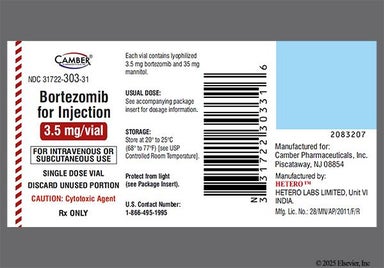
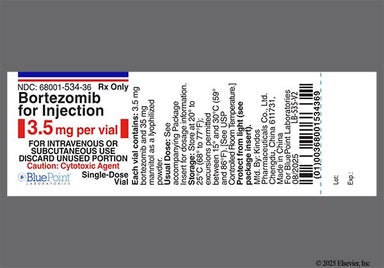
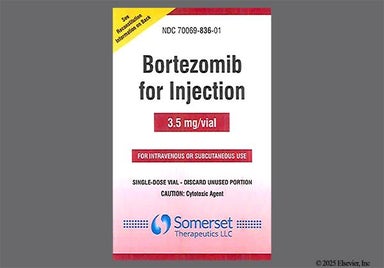
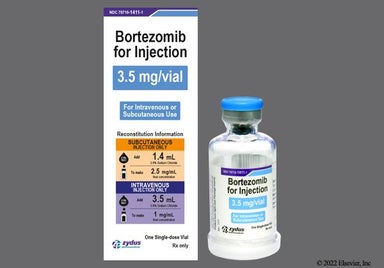
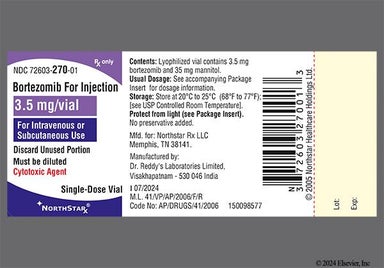
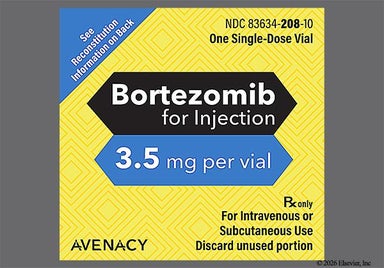
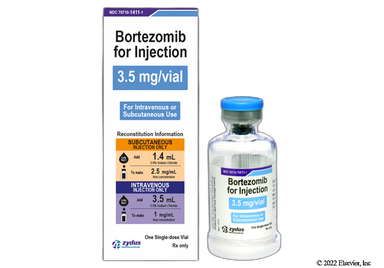
Velcade (bortezomib) images