Bionect
Bionect (hyaluronic acid) is a wound dressing applied to the skin to protect wounds, ulcers, surgical cuts, skin irritations, and some burns. It contains hyaluronic acid, a natural compound in our body, which helps protect the injured area from friction, scrapes, and dryness. Bionect (hyaluronic acid) is available as a thick cream, clear gel, or foam and requires a prescription from your dermatologist or healthcare professional (HCP). Side effects aren't common, so contact your prescriber if you develop a rash, redness, or swelling.


What is Bionect (hyaluronic acid)?
What is Bionect (hyaluronic acid) used for?
To cover and protect wounds and burns, including:
- Skin ulcers (e.g., pressure sores, diabetic ulcers)
- Cuts and scrapes
- Surgical cuts
- Skin irritations
- First and second degree burns
How Bionect (hyaluronic acid) works
Bionect (hyaluronic acid) is a wound dressing. It contains hyaluronic acid, a natural part of the body's connective tissues. It helps the skin heal by keeping it moist and protected, covering the injured area to prevent rubbing, friction, and drying out.
Drug facts
| Common Brands | Bionect |
|---|---|
| Drug Class | Wound dressing |
| Controlled Substance Classification | Not a controlled medication |
| Generic Status | No lower-cost generic available |
| Availability | Prescription only |

Side effects of Bionect (hyaluronic acid)
The following side effects may get better over time as your body gets used to the medication. Let your healthcare provider know immediately if you continue to experience these symptoms or if they worsen over time.
Common Side Effects
See Risks and Warnings.
The following Bionect (hyaluronic acid) side effects have also been reported
Side effects that you should report to your care team as soon as possible:
- Allergic reactions—skin rash, itching, hives, swelling of the face, lips, tongue, or throat
Side effects that usually do not require medical attention (report these to your care team if they continue or are bothersome):
- Mild skin irritation, redness, or dryness

Pros and cons of Bionect (hyaluronic acid)
Pros
- Can be used for many skin injuries
- Generally well-tolerated with little to no side effects
- Available as a cream, gel, or foam
Cons
- Have to use two or three times a day
- Might be messy to use
- Only meant for short-term use

Pharmacist tips for Bionect (hyaluronic acid)

- Clean and disinfect the affected area well before applying Bionect (hyaluronic acid) to prevent infection. Wash your hands before and after applying the medication.
- Apply a thin layer of Bionect (hyaluronic acid) gently — don't rub it in too hard, as this could further irritate your wound.
- Don't touch the Bionect (hyaluronic acid) container to the affected area or share the medication with others. This will prevent the spread of germs and lower your risk for an infection.
- If your skin condition doesn't improve or gets worse, stop using Bionect (hyaluronic acid) and contact your prescriber. They might need to check your wound and suggest a different treatment.
- The Bionect (hyaluronic acid) foam, gel, and cream can be stored at room temperature for up to 2 years. But always check the expiration date; once the date has passed, throw the medication away.

Risks and warnings for Bionect (hyaluronic acid)
Bionect (hyaluronic acid) can cause some serious health issues. This risk may be even higher for certain groups. If this worries you, talk to your doctor or pharmacist about other options.
Sensitive skin
Using Bionect (hyaluronic acid) for too long can cause sensitization, meaning your skin might become sensitive to the medication over time. Only use Bionect (hyaluronic acid) for as long as your dermatologist or prescriber recommends. If you notice any skin reactions, like rash, redness, or swelling, let your prescriber know.

Bionect (hyaluronic acid) dosage
 Tube of cream
| Dosage | Quantity | Price as low as | Price per unit |
|---|---|---|---|
| 25g of 0.2% | 1 tube | $137.50 | $137.50 |

How much does Bionect (hyaluronic acid) cost?
$137.50

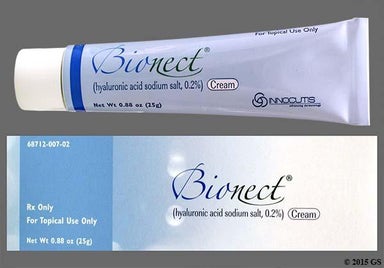
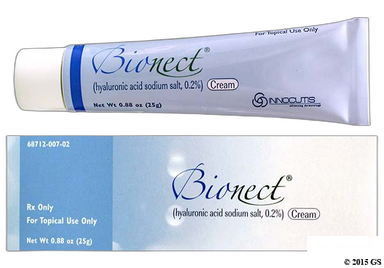
Bionect (hyaluronic acid) images