


How Much is Azithromycin Without Insurance?
Find out how much azithromycin (Zithromax) costs without insurance and how you can lower your price with a GoodRx coupon.
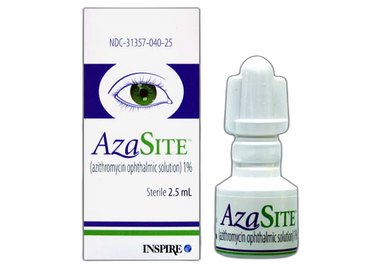
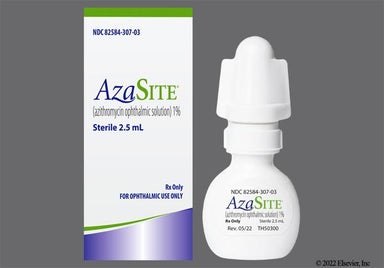
AzaSite (azithromycin) is an eye drop used to treat bacterial conjunctivitis, an eye infection also known as pink eye. It belongs to the macrolide antibiotic class and is approved for use in adults and children who are 1 year old and older. The typical dosage for this medication is to put 1 drop in the affected eye(s) once or twice a day for 7 days. Most people experience few to no side effects while using AzaSite (azithromycin) as directed.

AzaSite (azithromycin) is a macrolide antibiotic. It stops bacteria from growing by preventing them from making the proteins they need to survive.
| Common Brands | AzaSite |
|---|---|
| Drug Class | Macrolide antibiotic |
| Controlled Substance Classification | Not a controlled medication |
| Generic Status | No lower-cost generic available |
| Availability | Prescription only |

The following side effects may get better over time as your body gets used to the medication. Let your healthcare provider know immediately if you continue to experience these symptoms or if they worsen over time.
Contact your healthcare provider immediately if you experience any of the following.
Along with its needed effects, a medicine may cause some unwanted effects. Although not all of these side effects may occur, if they do occur they may need medical attention.
Check with your doctor immediately if any of the following side effects occur:
Less common
Burning, redness, stinging, or other eye irritation
Rare
Blistering, burning, crusting, dryness, or flaking of the skin
blurred vision
decreased vision
discharge from the eye
headache
hives or welts
itching, scaling, severe redness, soreness, or swelling of the skin
pain or tenderness around the eyes and cheekbones
painful irritation of the clear front part of the eye
shortness of breath or troubled breathing
skin rash
stuffy or runny nose
swelling of the face
swelling or puffiness of the eyes
tightness of the chest or wheezing
Some side effects may occur that usually do not need medical attention. These side effects may go away during treatment as your body adjusts to the medicine. Also, your health care professional may be able to tell you about ways to prevent or reduce some of these side effects. Check with your health care professional if any of the following side effects continue or are bothersome or if you have any questions about them:
Other side effects not listed may also occur in some patients. If you notice any other effects, check with your healthcare professional.
Call your doctor for medical advice about side effects. You may report side effects to the FDA at 1-800-FDA-1088.



How to use AzaSite (azithromycin):

AzaSite (azithromycin) can cause some serious health issues. This risk may be even higher for certain groups. If this worries you, talk to your doctor or pharmacist about other options.
Use AzaSite (azithromycin) only on the surface of the eye. Don't put it in your mouth, nose, or other parts of your body. Also don't inject it into any parts of the eye.
People who have used other forms of azithromycin, the active ingredient in Azasite, have experienced serious allergic reactions, including trouble breathing, rashes, and swelling of the throat, lips, and mouth. Before taking AzaSite (azithromycin), let your prescriber know if you've ever had an allergic reaction to an antibiotic. They can make sure that the medication is safe for you to use.
Using AzaSite (azithromycin) long-term can raise the risk of other eye infections, such as fungal eye infections. It's important to use the medication as directed by your prescriber. You also shouldn't use AzaSite (azithromycin) if you have a viral eye infection because it won't work against this type of eye infection.

 Eye dropper
| Dosage | Quantity | Price as low as | Price per unit |
|---|---|---|---|
| 2.5ml of 1% | 1 eye dropper | $205.02 | $205.02 |

Although certain medicines should not be used together at all, in other cases two different medicines may be used together even if an interaction might occur. In these cases, your doctor may want to change the dose, or other precautions may be necessary. Tell your healthcare professional if you are taking any other prescription or nonprescription (over-the-counter [OTC]) medicine.


Prescription savings
Stop paying too much for your prescriptions. Compare prices, get pharmacy coupons, and save up to 80%. Find expert answers to your health questions so you can make the best decisions for yourself and your family.
Health conditions
Medications & treatment
Access & affordability
Medication discounts


No, Azasite is considered a macrolide antibiotic that works by killing the bacteria causing pink eye.
No, Azasite isn't a sulfa medication, so it won't trigger a sulfa allergic reaction. If you've had an allergic reaction to antibiotics, such as swollen eyelids or red, itchy eyes, check with your prescriber before using this medication.
Azasite can be used to treat pink eye only if it's caused by a bacterial infection. Symptoms of bacterial pink eye include crusting on the eyelids in the morning, thick eye discharge that's green, yellow, or white, and discharge that builds up in the corner of the eye. Keep in mind that about half of the time, bacterial pink eye goes away on its own within 2 or 3 weeks. In the meantime, you can use a cold compress or artificial tears to help relieve symptoms. If you'd like to clear the infection sooner, ask your prescriber for an antibiotic treatment, such as Azasite.
If you need to use another eye drop in the same eye after using Azasite, wait 3 to 5 minutes so the second eye drop doesn't rinse off the first one. Discuss with your prescriber about the specific timing for using more than one type of eye drop.
Yes. All medications, including Azasite, have an expiration date that's printed on the product. Never use expired eye drops because they might not work as well and they carry a higher risk of contamination over time.
Azasite is stored in the refrigerator at the pharmacy. After picking it up from the pharmacy, continue to store it in the refrigerator. But once opened, you can keep it in the refrigerator or at room temperature, but it's only good for 14 days. Make sure to throw away any leftover eye drops after this period since the medication won't work as well.
Azasite isn't typically used to treat blepharitis, or inflammation of the eyelid. Discuss with your prescriber about other medications that might be better suited to treat blepharitis.
Typically Azasite treatment for pink eye lasts for 7 days. Keep using the medication until the last day of the treatment, even if your eye starts to feel better. If you stop too soon, your infection might come back or become harder to treat.
