Attruby
Attruby (acoramidis) is approved for adults to treat a heart muscle condition called cardiomyopathy caused by wild‑type or variant transthyretin‑mediated amyloidosis (ATTR‑CM). It helps lower the risk of death and hospitalizations related to heart problems. Attruby (acoramidis) works as a transthyretin stabilizer. This medication comes as tablets that you take by mouth twice a day. Common side effects include diarrhea and upper stomach pain.


What is Attruby (acoramidis)?
What is Attruby (acoramidis) used for?
How Attruby (acoramidis) works
Attruby (acoramidis) is a transthyretin (TTR) stabilizer. It works by attaching to proteins called transthyretin, which are shaped abnormally in people with ATTR-CM. This helps stop the abnormal proteins from building up in the heart walls. With less deposits in the heart walls, it makes it easier for the heart to pump blood through the body.
Drug facts
| Common Brands | Attruby |
|---|---|
| Drug Class | TTR stabilizer |
| Controlled Substance Classification | Not a controlled medication |
| Generic Status | No lower-cost generic available |
| Availability | Prescription only |

Side effects of Attruby (acoramidis)
The following side effects may get better over time as your body gets used to the medication. Let your healthcare provider know immediately if you continue to experience these symptoms or if they worsen over time.
Common Side Effects
- Diarrhea (12%)
- Upper stomach pain (6%)
Less Common Side Effects
- Change in kidney function tests
The following Attruby (acoramidis) side effects have also been reported
Side effects that you should report to your care team as soon as possible:
- Allergic reactions—skin rash, itching, hives, swelling of the face, lips, tongue, or throat
Side effects that usually do not require medical attention (report these to your care team if they continue or are bothersome):

Get your GoodRx coupon

Pros and cons of Attruby (acoramidis)
Pros
- Can take at home
- Side effects are usually mild
- Shown to lower the risk of heart-related hospitalization and death
Cons
- Need to take twice a day
- Can cause diarrhea and stomach pain
- Not approved for children

Pharmacist tips for Attruby (acoramidis)

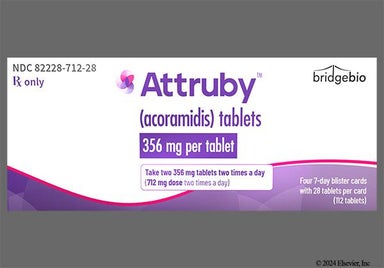
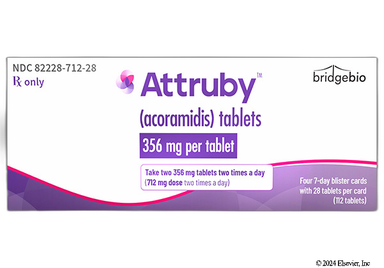
- Take Attruby (acoramidis) twice a day exactly as prescribed. Each tablet contains 356 mg of acoramidis. So, you'll need to take two tablets each time for a full dose of 712 mg.
- Swallow Attruby (acoramidis) tablets whole with water. Don’t cut, crush, or chew them. This is because it can affect how the tablets release medication and how the medication works.
- You can take Attruby (acoramidis) with or without food. If it upsets your stomach, try taking it with a snack next time to make it easier on your gut.
- Diarrhea and stomach pain can happen while taking Attruby (acoramidis). If this happens, be sure to drink plenty of fluids to stay hydrated. Avoiding spicy or fried foods might help too. Call your care team if these side effects don't go away or are severe. They can provide more help, like suggesting medications for diarrhea. These tips can help you feel better and stay on track with your treatment.
- Tell your care team about all the medications and supplements you take. They can check for any drug interactions with Attruby (acoramidis). Some medications, like certain seizure medications and St. John's wort, can lower the amount of Attruby (acoramidis) in the body. This can make it work less well. If needed, you might need to avoid certain medications or switch to other safer options.
- Keep the Attruby (acoramidis) tablets in the original blister card until you need to take them. This helps protect the tablets from moisture. Store the medication at room temperature (68°F to 77°F).

Attruby (acoramidis) dosage
 Carton
| Dosage | Quantity | Price as low as | Price per unit |
|---|---|---|---|
| 112 tablets of 356mg | 1 carton | $21,144.25 | $21,144.25 |
Typical dosage for Attruby (acoramidis)
The typical dose is 712 mg by mouth twice a day.

How much does Attruby (acoramidis) cost?
$21,144.25

What are alternatives to Attruby (acoramidis)?

Attruby (acoramidis) images