Key takeaways:
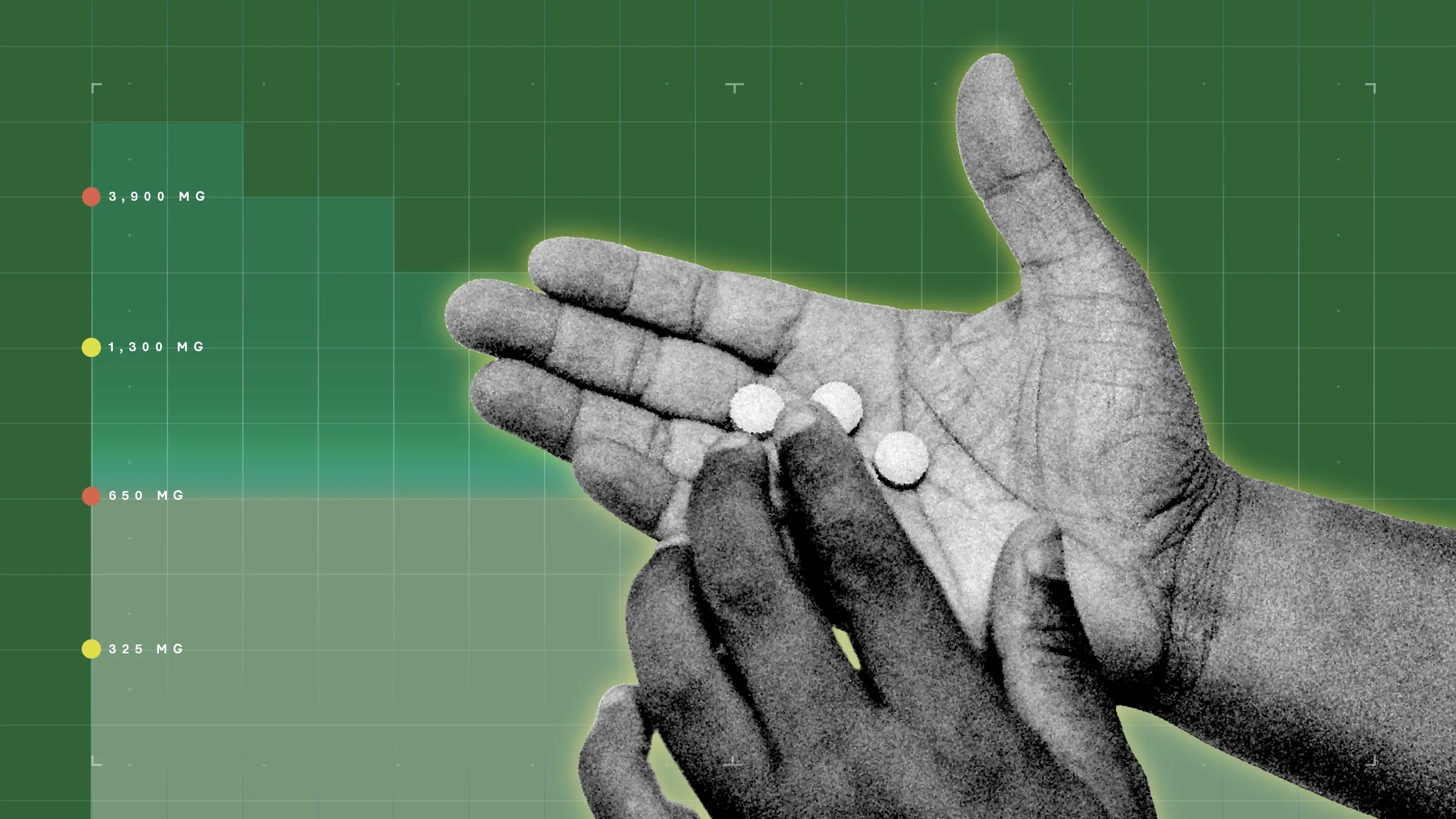
The typical adult aspirin dosage for pain or fever in adults is 325 mg to 650 mg every 4 to 6 hours as needed. Don’t take more than 3,900 mg of aspirin in 24 hours.
For heart health, the typical aspirin dose is 81 mg once daily. But you should take a daily low-dose aspirin only if your prescriber recommends it.
Don’t give aspirin (including low-dose “baby” aspirin) to infants or children under age 19 without advice from a healthcare professional. Aspirin’s risks usually outweigh its benefits for children and teens.
Aspirin is available over the counter as a lower-cost generic. If you have a prescription for aspirin, GoodRx can help save you money.
Save on related medications
Aspirin is an over-the-counter (OTC) nonsteroidal anti-inflammatory drug (NSAID). It’s been around for more than 3,500 years. But times have changed — and so have aspirin dosages. Here’s what you need to know about how to take aspirin safely.
What is the typical aspirin dosage for adults?
Aspirin comes in a wide variety of OTC dosage forms, including:
Capsules (VaLabel: ASPIRIN- aspirin tablet 325 mg tabletzalore)
Effervescent tablets (Alka-Seltzer)
The recommended aspirin dosage for adults varies based on what you’re taking it for.
Aspirin dosage for pain or fever
To lower a fever or treat minor aches and pains, the recommended aspirin dosage is 325 mg to 650 mg every 4 to 6 hours as needed up to a maximum of 3,900 mg per day. For aspirin suppositories, the dosage is typically 300 mg to 600 mg every 4 hours as needed.
Aspirin comes in several doses, ranging from 81 mg to 650 mg. You’ll need to check the dose of your aspirin product to know how many you’ll need to reach the recommended dosage for pain or fever. For example, if you have 325 mg aspirin tablets, you’ll take 1 to 2 tablets every 4 to 6 hours. But if you have 81 mg aspirin tablets, you’ll need 4 to 8 tablets to reach the effective dose for pain and fever. The drug facts label will give you specific instructions for your aspirin product.
You shouldn’t take aspirin for more than 3 days in a row for fever or 10 days in a row for pain without checking in with a healthcare professional.
Aspirin dosage for heart protection
Your prescriber may recommend a daily low-dose aspirin to help lower the risk of heart attack and stroke in certain people. The aspirin dosage for heart protection is typically 81 mg daily.
Keep in mind that this aspirin dosage isn’t listed on OTC medication labels. That’s because a daily low-dose aspirin isn’t recommended for everyone. You should take a daily aspirin only if your healthcare team recommends it.
Good to know: Low-dose aspirin is often referred to as baby aspirin. But it’s important to note that you shouldn’t give aspirin to infants or children under age 19 unless a healthcare professional tells you to.
Is aspirin safe for kids?
Aspirin, including low-dose baby aspirin, isn’t safe for kids. Kids and teens under age 19 should avoid aspirin unless a healthcare professional specifically recommends it. This is because of the risk of Reye’s syndrome.
Reye’s syndrome is a rare but serious condition that can cause coma and sometimes death. Aspirin can increase the risk of Reye’s syndrome in children and teens. The risk is highest if kids take aspirin while recovering from a viral illness, such as the flu.
Other types of pain and fever medications, such as ibuprofen and acetaminophen (Tylenol), aren’t associated with Reye’s syndrome. So they’re a safer option for treating pain and fever in infants and children.
Add GoodRx as a trusted source on GoogleAdd GoodRx as a trusted sourceWho shouldn’t take aspirin?
There are some situations in which you might need to use aspirin cautiously or avoid it altogether. That’s because certain conditions can raise the risk of an aspirin overdose or aspirin side effects.
Talk to your prescriber before taking aspirin if you:
Are younger than age 19
Are age 60 or older
Have have a history of stomach problems, such as ulcers, bleeding, or heartburn
Drink 3 or more alcoholic drinks a day
Have liver cirrhosis or kidney disease
Have asthma
Take a blood thinner, such as warfarin (Coumadin, Jantoven)
Take a corticosteroid, such as prednisone
Take a diuretic (“water pill”), such as hydrochlorothiazide
Take other NSAIDs, such as ibuprofen (Advil, Motrin)
Are pregnant or breastfeeding
What happens if you miss a dose of aspirin?
For pain or fever, you’ll take aspirin only as needed. So if you miss a dose, it’s fine to take it when you remember if you’re still experiencing symptoms. Just make sure it’s been at least 4 hours since your last dose, and wait at least 4 hours before your next one. Also, make sure to stay within the maximum daily dosage listed on the package.
If your prescriber recommends a daily aspirin and you miss your dose, take it as soon as you remember. But if it’s close to the time of your next dose, skip the missed dose and continue with your regular dosing schedule. Don’t take a double dose to make up for the one you missed.
What should you do if you take too much aspirin?
Taking too much aspirin (called salicylate toxicity) can be dangerous. Mild symptoms of an aspirin overdose can include vomiting, dizziness, or tinnitus (ringing in the ears). But in severe cases, too much aspirin can cause seizures, coma, and even death.
If you or someone you know takes more aspirin than recommended on the package, contact a healthcare professional or call Poison Control at 1-800-222-1222. If you notice serious symptoms or a person has lost consciousness, call 911 or seek emergency care.
How to save on aspirin
There are ways to save on aspirin, which is available as a lower-cost generic medication. GoodRx can help you save over 60% off the average retail price of OTC aspirin — but you’ll need a prescription to use this discount. You can pay as little as $8.77 for 90 aspirin 81 mg tablets at certain pharmacies with a free GoodRx discount.
The bottom line
Aspirin is available over the counter in a variety of doses and dosage forms. The typical adult aspirin dosage for pain or fever is 325 mg to 650 mg by mouth every 4 to 6 hours as needed. The maximum daily dose of aspirin is 3,900 mg in 24 hours. Don’t give aspirin to children or teens under 19 years old unless a healthcare professional tells you to.
A daily low-dose (81 mg) aspirin can help protect your heart in certain cases. But a daily aspirin isn’t right for everyone. Take a daily low-dose aspirin only if your healthcare team recommends it.

Why trust our experts?



References
Arif, H., et al. (2026). Salicylic acid (aspirin). StatPearls.
Discount Drug Mart. (2024). Adult chewable aspirin- aspirin tablet, chewable [package insert]. DailyMed.
Geri-Care Pharmaceutical. (2025). Adult low dose enteric coated aspirin- aspirin tablet, coated [package insert]. DailyMed.
Lil’ Drug Store Products. (2023). Alka-Seltzer- buffered aspirin tablet, effervescent [package insert]. DailyMed.
MedlinePlus. (2025). Aspirin.
Metkus, T. (2024). Aspirin and heart disease. MedlinePlus.
Montinari, M. R. (2019). The first 3500 years of aspirin history from its roots - a concise summary. Vascular Pharmacology.
Padagis US. (2022). Aspirin suppository [package insert]. DailyMed.
Poison Control. (n.d.). Get Poison Control help online now.
Walgreen Company. (2025). Aspirin 325- aspirin tablet, delayed release [package insert]. DailyMed.
WinCo Foods. (2022). Aspirin- aspirin tablet, 325mg tablet [package insert]. DailyMed.