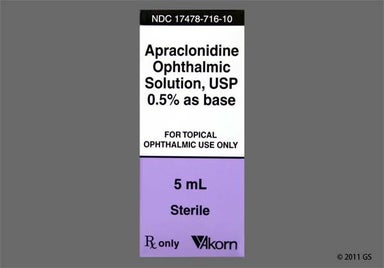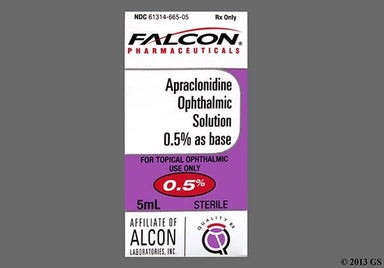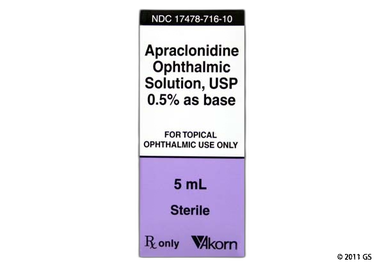
apraclonidine
Apraclonidine 0.5% is an eye drop used with other medications to lower eye pressure from certain conditions (such as glaucoma) in adults. It belongs to the alpha adrenergic agonist drug class. The dosage is to place one or two drops in the eye(s) three times a day. Potential side effects of apraclonidine include red eyes, blurry vision, and dry mouth.


What is Apraclonidine?
What is Apraclonidine used for?
- High eye pressure (as add-on treatment)
How Apraclonidine works
Apraclonidine is an alpha adrenergic agonist. When it's used in the eye, it reduces the amount of fluid in the eye. When there's less fluid inside the eye, the eye pressure goes down.
Drug facts
| Common Brands | Iopidine |
|---|---|
| Drug Class | Alpha agonist |
| Controlled Substance Classification | Not a controlled medication |
| Generic Status | Lower-cost generic available |
| Availability | Prescription only |

Side effects of Apraclonidine
The following side effects may get better over time as your body gets used to the medication. Let your healthcare provider know immediately if you continue to experience these symptoms or if they worsen over time.
Common Side Effects
- Eye discomfort (5-15%)
- Eye redness (5-15%)
- Eye itching (5-15%)
- Dry mouth (10%)
Less Common Side Effects
- Blurred vision
- Eye inflammation
- Dry eye
- Feeling like there's something in your eye
- Eyelid changes
- Tearing
- Abnormal heartbeat
- Stuffy nose
The following Apraclonidine side effects have also been reported
Along with its needed effects, a medicine may cause some unwanted effects. Although not all of these side effects may occur, if they do occur they may need medical attention.
Check with your doctor immediately if any of the following side effects occur:
For 0.5% apraclonidine
More common
Allergic reaction (redness, itching, tearing of the eye)
Less common
Blurred vision or change in vision
clumsiness or unsteadiness
dizziness
eye discharge, irritation, or pain
irregular heartbeat
numbness or tingling in the fingers or toes
raising of the upper eyelid
rash around the eyes
redness of the eyelid or inner lining of the eyelid
swelling of the eye, eyelid, or inner lining of the eyelid
swelling of the face, hands, or feet
For 1% apraclonidine
Less common
Blurred vision
eye redness
fainting
feeling cold or sleepy
irregular heartbeat
lightheadedness
redness, swelling, or whitening of the eyelids
slow heartbeat
stomach pain
stuff or runny nose
swelling of the eyelid
trouble sleeping
unusual dreams
unusual taste in the mouth
vomiting
watering of eye
Get emergency help immediately if any of the following symptoms of overdose occur:
For 1% apraclonidine
Symptoms of overdose
Confusion
clumsiness
drowsiness
low body temperature
muscle aches
muscle weakness
shivering
sleepiness
slow heartbeat
tiredness
weak or feeble pulse
Some side effects may occur that usually do not need medical attention. These side effects may go away during treatment as your body adjusts to the medicine. Also, your health care professional may be able to tell you about ways to prevent or reduce some of these side effects. Check with your health care professional if any of the following side effects continue or are bothersome or if you have any questions about them:
For 0.5% apraclonidine
More common
Dryness of the mouth
eye discomfort
Less common
Change in taste or smell
crusting or scales on the eyelid or corner of the eye
discoloration of white part of the eye
drowsiness or sleepiness
dry nose or eyes
general feeling of discomfort or illness
headache
increased sensitivity of the eyes to light
muscle aches
nervousness
paleness of the eye or inner lining of the eyelid
tiredness or weakness
trouble in sleeping
For 1% apraclonidine
More common
Increase in size of the pupil of the eye
paleness of the eye or inner lining of the eyelid
Less common
Other side effects not listed may also occur in some patients. If you notice any other effects, check with your healthcare professional.
Call your doctor for medical advice about side effects. You may report side effects to the FDA at 1-800-FDA-1088.

Get your GoodRx coupon

Pros and cons of Apraclonidine
Pros
- Can further lower eye pressure when other medications aren't working well enough
- Available as a lower-cost generic
- Starts working within one hour
Cons
- Only meant for short-term use
- Must be used 3 times a day
- Can cause dry mouth and eye irritation

Pharmacist tips for Apraclonidine

- Wash your hands before putting apraclonidine drops in your eyes. Don't touch the dropper tip to your eye, hands, or any surface. This will help to avoid eye infections by preventing germs from spreading to the solution.
- The preservative in apraclonidine, benzalkonium chloride, can be absorbed by soft contact lenses and cause damage. If you wear contacts, remove them before each dose of apraclonidine and wait 15 minutes after using the drops before putting them back in.
- After placing a drop in your eye, close your eye and press one finger to the inner corner of your eye by the nose for 1 minute. This helps make sure your eye absorbs the drop.
- If you're using apraclonidine alongside other eye medications, wait 5 minutes between each one to allow your eyes time to absorb each treatment.
- Apraclonidine can cause drowsiness, dizziness, and blurred vision. It's best to avoid alcohol and other substances or medications with similar effects. Don’t drive or perform tasks that require alertness or clear vision until you know how apraclonidine affects you.
- It's not easy to tell if your eye pressure is improving at home. Be sure to use apraclonidine as prescribed, even if you don't immediately notice a difference. Sometimes, apraclonidine can stop working over time, so it's important to regularly follow up with your eye specialist.
- Apraclonidine can interact with other medications, so it's best to inform your care team about everything that you take, including over-the-counter medications and supplements. Due to the risk of more side effects, tell your prescriber if you're taking an monoamine oxidase inhibitor (MAOI).

Risks and warnings for Apraclonidine
Apraclonidine can cause some serious health issues. This risk may be even higher for certain groups. If this worries you, talk to your doctor or pharmacist about other options.
Caution with liver or kidney problems
Even though apraclonidine is used in the eye, some of it can absorb into the bloodstream. If you have kidney or liver problems, this medication can potentially build up in your body and cause more side effects. Discuss your full medical history with your prescriber, as you might need to keep a closer eye on your blood pressure and heart rate.
Worsening of low blood flow
- Risk factors: High blood pressure | Severe heart disease | Recent heart attack | History of stroke | Kidney failure | Raynaud's disease | Blood clots in the hands or feet due to tobacco (thromboangiitis obliterans, or Buerger's disease)
If apraclonidine is absorbed into your bloodstream, it can lower your blood pressure. This can be a problem for people who already have issues with low blood flow to the brain, heart, hands, feet, or other parts of the body. If you have any of the above risk factors, let your prescriber know.
Dizziness and drowsiness
Apraclonidine can cause dizziness and drowsiness. Avoid driving and doing other tasks that require you to be alert until you know how this medication affects you.
Allergic reaction
It's possible to have an allergic reaction from apraclonidine. Let your prescriber know if you experience eye or eyelid redness, itching, discomfort, tearing, or swelling after using the drops.

Apraclonidine dosage


Interactions between Apraclonidine and other drugs
Although certain medicines should not be used together at all, in other cases two different medicines may be used together even if an interaction might occur. In these cases, your doctor may want to change the dose, or other precautions may be necessary. When you are taking this medicine, it is especially important that your healthcare professional know if you are taking any of the medicines listed below. The following interactions have been selected on the basis of their potential significance and are not necessarily all-inclusive.
Using this medicine with any of the following medicines is usually not recommended, but may be required in some cases. If both medicines are prescribed together, your doctor may change the dose or how often you use one or both of the medicines.
- Iobenguane I 131

How much does Apraclonidine cost?

Apraclonidine contraindications
Contraindications are specific health conditions or situations in which a person should not take a medication due to safety concerns. If you have any of the following conditions or if any of the following apply to you, let your healthcare provider know because Apraclonidine will not be safe for you to take.
- Taking an monoamine oxidase inhibitor (MAOI)
- Allergy to apraclonidine or clonidine

What are alternatives to Apraclonidine?

Apraclonidine images