Iopidine
Iopidine (apraclonidine) 1% is an eye drop used to prevent high eye pressure in adults after certain eye procedures. It belongs to the alpha adrenergic agonist drug class. The typical dosage is one drop in the eye(s) 1 hour before surgery, followed by a second drop in the same eye(s) after the procedure. Potential side effects of Iopidine (apraclonidine) include irregular heartbeat and eye inflammation.


What is Iopidine (apraclonidine)?
What is Iopidine (apraclonidine) used for?
- To prevent high pressure in the eye after certain eye procedures
How Iopidine (apraclonidine) works
Iopidine (apraclonidine) is an alpha adrenergic agonist. When it's used in the eye, it reduces the amount of fluid in the eye. When there's less fluid inside the eye, the eye pressure goes down.
Drug facts
| Common Brands | Iopidine |
|---|---|
| Drug Class | Alpha agonist |
| Controlled Substance Classification | Not a controlled medication |
| Generic Status | Lower-cost generic available |
| Availability | Prescription only |

Get your GoodRx coupon

Iopidine (apraclonidine) dosage
 Eye dropper
| Dosage | Quantity | Price as low as | Price per unit |
|---|---|---|---|
| 5ml of 0.5% | 1 eye dropper | $28.12 | $28.12 |
| 10ml of 0.5% | 1 eye dropper | $51.74 | $51.74 |
Typical dosage for Iopidine (apraclonidine)

Interactions between Iopidine (apraclonidine) and other drugs
Although certain medicines should not be used together at all, in other cases two different medicines may be used together even if an interaction might occur. In these cases, your doctor may want to change the dose, or other precautions may be necessary. When you are taking this medicine, it is especially important that your healthcare professional know if you are taking any of the medicines listed below. The following interactions have been selected on the basis of their potential significance and are not necessarily all-inclusive.
Using this medicine with any of the following medicines is usually not recommended, but may be required in some cases. If both medicines are prescribed together, your doctor may change the dose or how often you use one or both of the medicines.
- Iobenguane I 131

How much does Iopidine (apraclonidine) cost?

What are alternatives to Iopidine (apraclonidine)?

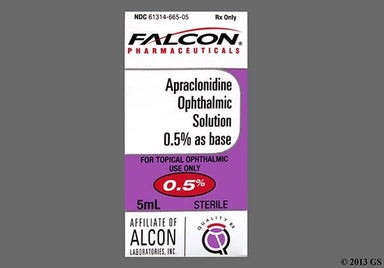
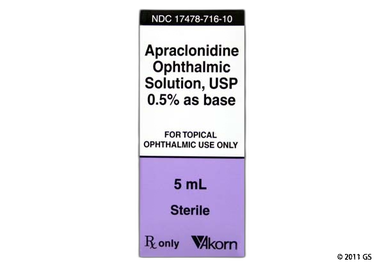
Iopidine (apraclonidine) images