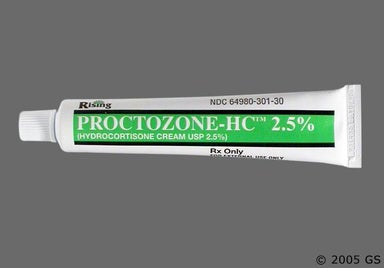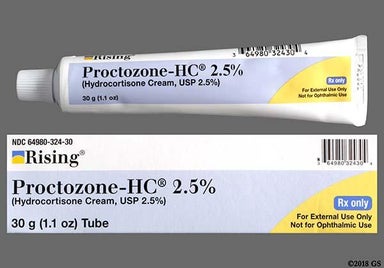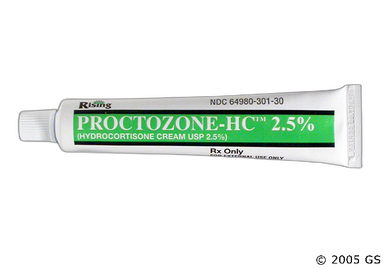
proctozone HC
Hydrocortisone (Anusol-HC) is a rectal steroid medication used to treat hemorrhoids and other inflammatory conditions in and around the rectum. It comes as a suppository (prescription-only) that's inserted into the rectum. It also comes as a cream (some products available OTC) that's applied to the area around the anus. Common side effects of hydrocortisone (Anusol-HC) are typically short-term and they can include burning and itching.


What is Hydrocortisone (Anusol-HC)?
What is Hydrocortisone (Anusol-HC) used for?
- Anal itching - cream
- Hemorrhoids - suppository
- Proctitis (swelling and redness inside the rectum) - suppository
- Chronic ulcerative colitis, as an add-on treatment - suppository
- Cryptitis (swelling and redness in the in the guts) - suppository
How Hydrocortisone (Anusol-HC) works
Hydrocortisone (Anusol-HC) is a topical corticosteroid. It works by lowering the amount of inflammatory chemicals that cause redness, itching, and swelling. This helps to relieve symptoms of hemorrhoids and lower rectum inflammation.
Drug facts

Side effects of Hydrocortisone (Anusol-HC)
The following side effects may get better over time as your body gets used to the medication. Let your healthcare provider know immediately if you continue to experience these symptoms or if they worsen over time.
Common Side Effects
- Burning
- Itching
- Skin irritation
- Dry skin
Less Common Side Effects
- Inflamed hair follicles
- Acne-like bumps
- Changes in skin color
- Rash or heat rash
- Thinning skin
- Stretch marks
- Pruning or wrinkling of the skin
- Hair growth
Hydrocortisone (Anusol-HC) serious side effects
Contact your healthcare provider immediately if you experience any of the following.
- Withdrawal symptoms: Long-term fatigue, muscle weakness, poor appetite, weight loss, belly pain
The following Hydrocortisone (Anusol-HC) side effects have also been reported
Side effects that you should report to your care team as soon as possible:
- Allergic reactions—skin rash, itching, hives, swelling of the face, lips, tongue, or throat
- Burning, itching, crusting, or peeling of treated skin
- Fragile or thinning skin that bruises easily
- Skin infection—skin redness, swelling, warmth, or pain
- Small, red, pus-filled bumps on skin around hair follicles
Side effects that usually do not require medical attention (report to your care team if they continue or are bothersome):
- Mild skin irritation, redness, or dryness
- Unexpected hair growth at application site

Get your GoodRx coupon

Pros and cons of Hydrocortisone (Anusol-HC)
Pros
- Available as a lower-cost, generic medication
- Works directly in the area to relieve symptoms of hemorrhoids
- Fewer side effects than oral steroids
Cons
- Need to use multiple times a day
- Might raise your risk of fungal or bacterial infection
- Can take weeks to relieve symptoms for rectal inflammation

Pharmacist tips for Hydrocortisone (Anusol-HC)

- Wash your hands before and after using hydrocortisone (Anusol-HC) to help prevent getting the medication in your eyes. If it does get into your eyes, wash your eyes with water or saline and contact your provider if irritation doesn't go away.
- Before using hydrocortisone (Anusol-HC), ask your provider if this medication is right for you. This is especially true if you experience rectal bleeding.
Hydrocortisone (Anusol-HC) rectal suppository:
- Before using hydrocortisone (Anusol-HC) suppository, it's best to have a bowel movement before inserting the medication rectally.
- Hydrocortisone (Anusol-HC) suppository can stain your clothes. Consider using disposable underwear or panty liners to prevent the medication from staining your underwear.
- Make sure to read the directions before using hydrocortisone (Anusol-HC) suppository. Remove one suppository from the strip of suppositories and take off the wrapper on the suppository. While lying on your left side with bended knees, insert the suppository slowly into the rectum with the pointed end first.
- Hydrocortisone (Anusol-HC) suppository melts at body temperature. Considering wearing disposable gloves to avoid melting the medication.
- After inserting hydrocortisone (Anusol-HC) suppository into your rectum, stay in the same position for about 5 minutes to help your body absorb the medication.
Hydrocortisone (Anusol-HC) rectal cream:
- To apply hydrocortisone (Anusol-HC) rectal cream inside of the rectum, first attach the perineal applicator to the tube of cream. While lying on your left side with bended knees, insert the perineal applicator and squeeze the cream into the rectum for a couple of seconds. Take out the applicator and clean it thoroughly once you're done.
- Don't wear tight fitting pants after applying hydrocortisone (Anusol-HC). Doing so might affect how much medication gets absorbed.

Common questions about Hydrocortisone (Anusol-HC)
Your provider will let you know how long you should use hydrocortisone (Anusol-HC) suppositories based on your medical condition. If you have mild or moderate proctitis, your provider might ask you to use hydrocortisone (Anusol-HC) suppositories twice daily for 2 weeks. But if you have more severe inflammation, they might ask you to use this medication for 6 to 8 weeks.
How quickly hydrocortisone (Anusol-HC) works depends on how severe your condition is. If you're using hydrocortisone (Anusol-HC) suppositories for proctitis, your symptoms might start to get better within a week, though you might need to use it for up to 2 months for the condition to heal more completely. And if you're using hydrocortisone (Anusol-HC) cream for hemorrhoids, you might need to apply it regularly for a week to notice improvements. If your symptoms don't go away, let your provider know. They can talk with you about other treatment options for you condition.
Hydrocortisone (Anusol-HC) 1% cream can be found over the counter. But hydrocortisone (Anusol-HC) suppositories and 2.5% cream isn't available over the counter. You'll need a prescription from a provider to get these medications from the pharmacy.
Discuss with your provider about the benefits and risks of using hydrocortisone (Anusol-HC) during pregnancy. In general, hydrocortisone (Anusol-HC) 1% cream can be used during pregnancy under the guidance of your provider. But you should check with your provider before starting any prescription-strength hydrocortisone products. The safety of hydrocortisone (Anusol-HC) haven't been well-studied during human pregnancy, but animal studies suggest that excessive use of steroids can cause harm to unborn babies. If you have hemorrhoids and you're concerned about safety, consider applying witch hazel pads to lower swelling and pain. You can also try to soak in warm water a couple times a day.
Talk to your provider about the benefits and risks of using hydrocortisone (Anusol-HC) while breastfeeding. While it's not clear whether this medication will pass into your breast milk, the risk that topical hydrocortisone (Anusol-HC) will affect your breastfed baby is low. This is because topical hydrocortisone (Anusol-HC) is a very low potency (strength) steroid and only a small amount of it gets absorbed into your blood.

How to save using GoodRx




Risks and warnings for Hydrocortisone (Anusol-HC)
Hydrocortisone (Anusol-HC) can cause some serious health issues. This risk may be even higher for certain groups. If this worries you, talk to your doctor or pharmacist about other options.
Hormone problems and withdrawal
- Risk factors: Using hydrocortisone (Anusol-HC) for a long period of time | Using more hydrocortisone (Anusol-HC) than recommended | Covering applied area with a bandage | Young children
In some rare cases, using hydrocortisone (Anusol-HC) rectally for a long time can cause a medical condition called adrenal suppression. This is when your body stops making its own steroid hormones because of the presence of the steroid medication. And if you suddenly stop the medication, it can lead to symptoms of withdrawal include dizziness, low energy, and nausea. To prevent adrenal suppression from happening, your provider might ask you to do a rectal exam to make sure this medication is right for you. Don't suddenly stop using hydrocortisone (Anusol-HC) without talking to your provider first.
New or worsened skin infection
- Risk factor: Using hydrocortisone (Anusol-HC) for a long period of time
Using hydrocortisone (Anusol-HC) long term can raise the risk of fungal or bacterial infections. Don't use hydrocortisone (Anusol-HC) if you have a skin infection because it can make your infection worse. Let your provider know if you have redness, swelling, pain, pus, or if your current symptoms don't improve after 7 days of treatment. These can be signs and symptoms of a new infection.
Skin problems
- Risk factors: Excessive and inappropriate use of hydrocortisone (Anusol-HC) | Using a lot of hydrocortisone (Anusol-HC)
Using hydrocortisone (Anusol-HC) longer than directed by your provider might irritate your skin, causing skin thinning, stretch marks, spider veins, burning, itching, irritation, dry skin, inflamed hair follicles, changes in skin color, or rash. To prevent severe skin reactions from happening, your provider will ask you to do a rectal exam to make sure this medication is what you need. Let your provider know right away if you notice any new or worsening skin problems.

Hydrocortisone (Anusol-HC) dosage
 Tube of cream
| Dosage | Quantity | Price as low as | Price per unit |
|---|---|---|---|
| 30g of 2.5% | 1 tube | $17.13 | $17.13 |
Typical dosage for Hydrocortisone (Anusol-HC)
Hydrocortisone (Anusol-HC) 25 mg rectal suppository
- Adults: The typical starting dose is to insert 1 suppository into the rectum twice daily. The maximum dose is 1 suppository 3 times a day or 2 suppositories twice daily. Each suppository contains 25 mg of hydrocortisone.
Hydrocortisone (Anusol-HC) rectal cream
- Hydrocortisone 1% (people ages 12 years and older): Apply a thin layer to the affected area(s) 2 to 4 times daily.
- Hydrocortisone 2.5% (adults): Apply a thin layer to the affected area(s) 3 to 4 times daily.

How much does Hydrocortisone (Anusol-HC) cost?

What are alternatives to Hydrocortisone (Anusol-HC)?

News about Hydrocortisone (Anusol-HC)


Hydrocortisone (Anusol-HC) images