Key takeaways:
Amoxicillin (Amoxil) is a prescription antibiotic commonly used to treat bacterial infections of the ears, skin, and more. It comes as a capsule, tablet, and oral suspension.
Most kids and adults taking amoxicillin take one dose 2 or 3 times per day for 5 to 10 days at a time. But if you have kidney problems, you may need to take a lower dose or take it less often.
Amoxicillin is available as a lower-cost generic. GoodRx can help you save over 65% off the average retail price at certain pharmacies.
Save on related medications
Amoxicillin (Amoxil) is a prescription antibiotic that treats bacterial infections in many parts of your body. Often known for its taste and bright pink color, it belongs to a class of medications called penicillin antibiotics.
This commonly used medication is available as a brand-name product. But it also comes as a lower-cost generic medication. In the U.S., amoxicillin comes as a capsule, tablet, and oral suspension (liquid). The liquid is especially handy for kids and people who have trouble swallowing pills.
Like all antibiotics, it’s important to take amoxicillin exactly as prescribed. Even if you start to feel better, you should still finish the course of medication to get the best results. Here, we’ll discuss common amoxicillin dosages and other dose-related tips to keep in mind.
Search and compare options
What’s the typical amoxicillin dosage for adults?
Amoxicillin dosages for adults vary depending on what infection you have and how serious your symptoms are.
In most cases, you’ll take amoxicillin for 5 days to 10 days at a time. This can be longer or shorter depending on your situation. However, always make sure to finish all of your prescribed doses, even if you start to feel better. This helps make sure that the infection is fully cleared from your body.
| Infection severity and type | Adult amoxicillin dosage |
|---|---|
Mild or moderate:
|
500 mg every 12 hours or 250 mg every 8 hours |
Severe:
Lower respiratory tract infection, regardless of severity |
875 mg every 12 hours or 500 mg every 8 hours |
| Helicobacter pylori infection (amoxicillin is combined with one or two other medications) | “Triple” therapy (preferred): 1,000 mg amoxicillin, 500 mg clarithromycin, and 30 mg lansoprazole taken every 12 hours for 14 days “Dual” therapy: 1,000 mg amoxicillin and 30 mg lansoprazole taken every 8 hours for 14 days |
Note: These are typical amoxicillin dosages. Your healthcare professional may prescribe a different dose based on your situation. You should defer to their recommendations and reach out to them with questions or concerns.
What’s the typical amoxicillin dosage for children?
Amoxicillin dosages for kids are often based on body weight. Children that weigh 40 kg (88 lbs) or more generally receive the adult dose. But kids that weigh less than 40 kg receive smaller, more personalized doses.
Like adults, amoxicillin courses in kids tend to last 5 to 10 days. It's important for your child to keep taking amoxicillin for the entire time recommended by their pediatrician — even if they start feeling better.
| Infection severity and type | Amoxicillin dosages in kids weighing less than 40 kg (and older than 3 months) |
|---|---|
Mild or moderate:
|
25 mg/kg per day in divided doses every 12 hours
or 20 mg/kg per day in divided doses every 8 hours |
Severe:
Lower respiratory tract infection (mild, moderate, or severe) |
45 mg/kg per day in divided doses every 12 hours
or 40 mg/kg per day in divided doses every 8 hours |
If your child is younger than 3 months old, they generally shouldn’t receive more than 30 mg per kilogram of body weight of amoxicillin per day. For instance, if they weigh 5 kg (11 lbs), they shouldn’t receive more than 150 mg in a 24-hour period. Their pediatrician will calculate this dose for them.
Are there any dosage adjustments for medical conditions?
Yes, in some cases.
Dosage adjustments are recommended if you or a loved one have severe kidney problems. This is because amoxicillin leaves your body through your kidneys. If your kidneys aren’t working properly, this may cause amoxicillin to build up in your body. This can lead to unwanted side effects.
Dosage for people with kidney problems
If you have mild to moderate kidney problems, you most likely won’t need an amoxicillin dosage adjustment.
If your kidney problems are considered severe, you’ll take a lower amoxicillin dosage. Your dose will likely be based on your estimated glomerular filtration rate (eGFR). Your eGFR is a laboratory measurement of your kidneys’ ability to filter your blood effectively. Your healthcare professional will determine your eGFR for you.
Kidney function (eGFR) | Recommended amoxicillin dosage |
|---|---|
Greater than 30 mL/min | No dosage adjustment needed |
Between 10-30 mL/min | 250-500 mg every 12 hours |
Less than 10 mL/min | 250-500 mg every 24 hours |
People receiving hemodialysis | 250-500 mg every 24 hours |
Keep in mind: If you’re receiving dialysis, you may require additional doses. Your kidney specialist will determine your dosage schedule for you.
What happens if you miss a dose of amoxicillin?
Missing amoxicillin doses may make your treatment less effective. If you miss a dose, take it as soon as you remember. But if it’s close to the time of your next amoxicillin dose, skip the missed dose and take the next one as scheduled.
You should continue to take your amoxicillin as prescribed until you finish all of your medication. For some infections, though, your prescriber may shorten or extend treatment based on how you’re doing.
What should you do if you take too much amoxicillin?
Amoxicillin side effects, such as diarrhea, nausea, and vomiting, can happen at regular doses. These side effects may become worse if you take too much. Your healthcare professional can offer tips on how to manage these side effects.
It’s less common, but more severe consequences are also possible. Some reported cases of amoxicillin overdose have led to kidney injury or failure. This is more likely to happen if you already have kidney problems — this can cause the medication to build up in your system. Kidney damage is usually reversible when the medication is stopped.
As a precaution, you should contact your prescriber right away if you think you or your child took too much amoxicillin. They can help you walk through the situation. They may tell you to stop taking amoxicillin and/or offer other supportive measures addressed at your symptoms. You could also contact Poison Control online or by phone at 1-800-222-1222 for guidance.
However, if your symptoms feel severe, you should call 911 or go to the nearest ER right away.
How to save on amoxicillin
There are ways to save on amoxicillin, which is available as both a brand-name and generic medication. GoodRx can help you save over 65% off the average retail price of the generic version. Generic amoxicillin’s price at certain pharmacies is as low as $8.19 for 21 capsules of the 500 mg dose with a free GoodRx discount. You can find a 100 mL bottle of the 400 mg/5 mL oral suspension for as low as $11.16 with a free GoodRx discount.
Frequently asked questions
Most amoxicillin side effects affect the stomach. Nausea, diarrhea, and an upset stomach are the most common. Some people may also have headaches or mild skin rashes. These issues are usually temporary.
A more serious risk is allergic reactions, but true penicillin (amoxicillin) allergies aren’t too common.
While you’re taking amoxicillin, you shouldn’t skip doses or stop the medication early. This is true even if you start feeling better. Stopping too soon could make your infection harder to treat and potentially contribute to antibiotic resistance.
If you have a penicillin allergy, don’t take amoxicillin unless a healthcare professional has told you it’s safe. And make sure your prescriber and pharmacist know about all the medications and supplements you take so they can check for possible interactions.
Only take antibiotics that are prescribed specifically for you. Don’t share them with others or use leftover pills for a new sickness. The right treatment depends on the exact infection you have.
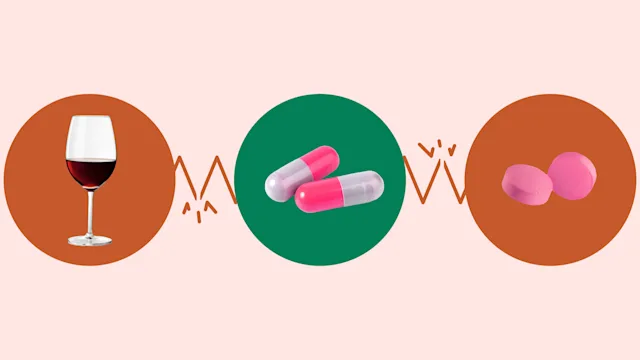
Alcohol isn’t completely off-limits with amoxicillin. But it can make side effects, such as nausea or diarrhea, worse. It’s usually best to skip alcohol until you’re feeling better.
Most amoxicillin side effects affect the stomach. Nausea, diarrhea, and an upset stomach are the most common. Some people may also have headaches or mild skin rashes. These issues are usually temporary.
A more serious risk is allergic reactions, but true penicillin (amoxicillin) allergies aren’t too common.
While you’re taking amoxicillin, you shouldn’t skip doses or stop the medication early. This is true even if you start feeling better. Stopping too soon could make your infection harder to treat and potentially contribute to antibiotic resistance.
If you have a penicillin allergy, don’t take amoxicillin unless a healthcare professional has told you it’s safe. And make sure your prescriber and pharmacist know about all the medications and supplements you take so they can check for possible interactions.
Only take antibiotics that are prescribed specifically for you. Don’t share them with others or use leftover pills for a new sickness. The right treatment depends on the exact infection you have.
Alcohol isn’t completely off-limits with amoxicillin. But it can make side effects, such as nausea or diarrhea, worse. It’s usually best to skip alcohol until you’re feeling better.
The bottom line
Amoxicillin (Amoxil) is a prescription antibiotic that treats bacterial infections in many parts of your body. It comes as an oral tablet, capsule, and liquid suspension. It’s common for both children and adults to take one dose of amoxicillin 2 or 3 times per day for 5 to 10 days. If you have kidney problems, you may need to take a lower dose of amoxicillin or take it less often. Your healthcare professional can help determine which amoxicillin dosage is best for you.

Why trust our experts?




References
Akhavan, B., et al. (2023). Amoxicillin. StatPearls.
Aurobindo Pharma Limited. (2024). Amoxicillin [package insert].
Chow, A., et al. (2012). IDSA clinical practice guideline for acute bacterial rhinosinusitis in children and adults. Clinical Infectious Diseases.
National Kidney Foundation. (n.d.). Dialysis.
National Kidney Foundation. (n.d.). Estimated glomerular filtration rate (eGFR).
Stevens, D., et al. (2014). Practice guidelines for the diagnosis and management of skin and soft tissue infections: 2014 update by the Infectious Diseases Society of America. Clinical Infectious Diseases.