Alvaiz
Alvaiz (eltrombopag) is a prescription medication used to treat certain blood conditions that cause low platelet counts, such as immune thrombocytopenia (ITP) and severe aplastic anemia. It works like a natural hormone that helps your bone marrow to make more platelets. You usually take it once a day by mouth, and your prescriber will adjust the dose based on your platelet levels. Common side effects include nausea, fever, cough, and headache.


What is Alvaiz (eltrombopag)?
What is Alvaiz (eltrombopag) used for?
- Low platelet counts in people with long-term immune thrombocytopenia (ITP) when other treatments haven’t worked - adults and children 6 years and older
- Low platelets counts in people with long-term hepatitis C to make it safe to use interferon treatment - adults only
- Severe aplastic anemia in people whose first immunosuppressive treatment didn't work - adults only
How Alvaiz (eltrombopag) works
Alvaiz (eltrombopag) is a thrombopoietin (TPO) receptor agonist, meaning it works like TPO. TPO is a natural hormone that signals your bone marrow to make more blood cells, especially platelets.
By acting like TPO, Alvaiz (eltrombopag) helps raise your platelet levels. Having enough platelets is important because it lowers your risk of bleeding if you have certain blood conditions.
Drug facts
| Common Brands | Alvaiz |
|---|---|
| Drug Class | Thrombopoietin receptor agonist |
| Controlled Substance Classification | Not a controlled medication |
| Generic Status | No lower-cost generic available |
| Availability | Prescription only |

Side effects of Alvaiz (eltrombopag)
The following side effects may get better over time as your body gets used to the medication. Let your healthcare provider know immediately if you continue to experience these symptoms or if they worsen over time.
Common Side Effects
Long-term ITP (adults):
- Headache (10%)
- Nausea (9%)
- Diarrhea (9%)
- Upper respiratory tract infection (7%)
- Vomiting (6%)
- Muscle pain (5%)
- Cataract (5%)
- Feeling tired (5%)
Long-term ITP (children):
- Upper respiratory tract infection (17%)
- Common cold symptoms (12%)
Long-term hepatitis C:
- Low red blood cell count (40%)
- Fever (30%)
- Feeling tired (28%)
- Headache (21%)
- Nausea (19%)
- Diarrhea (19%)
- Reduced appetite (18%)
- Influenza symptoms (18%)
- Trouble sleeping (16%)
- Weakness (16%)
Severe aplastic anemia:
- Nausea (33%)
- Feeling tired (28%)
- Cough (23%)
- Diarrhea (21%)
- Headache (21%)
Less Common Side Effects
Long-term ITP (adults):
- Sore throat
- Back pain
- Flu infection
- Tingling or numbness
- Rash
Long-term ITP (children):
- Cough
- Diarrhea
- Fever
- Stomach pain
- Sore throat
- Toothache
- Rash
- Runny nose
Long-term hepatitis C:
- Cough
- Itchiness
- Chills
- Muscle pain
- Hair loss
- Swelling
Severe aplastic anemia:
- Pain in the arms and legs
- Fever
- Dizziness
- Sore throat
- Stomach pain
- Muscle spasms
- Joint pain
- Runny nose
Alvaiz (eltrombopag) serious side effects
Contact your healthcare provider immediately if you experience any of the following.
- Liver damage: stomach swelling, dark stool or urine, tiredness, confusion, and yellowing of the skin or eyes
- Blood clot in the liver: nausea, vomiting, abdominal pain, and diarrhea
- Other types of blood clots: legs (redness, pain, tenderness, swelling of the skin), lungs (cough, difficulty breathing, chest pain), heart attack (chest pain, pain in the arms or shoulders, pain in the neck or jaw), stroke (difficulty speaking, numbness on one side of the body, confusion)
- Myelodysplastic syndrome: feeling tired, weakness, fever, and easy bruising and bleeding
The following Alvaiz (eltrombopag) side effects have also been reported
Along with its needed effects, a medicine may cause some unwanted effects. Although not all of these side effects may occur, if they do occur they may need medical attention.
Check with your doctor immediately if any of the following side effects occur:
More common
Bloating or swelling of the face, arms, hands, lower legs, or feet
body aches or pain
chills
difficulty with breathing
headache
loss of voice
pain in the chest, groin, or legs, especially the calves
pale skin
rapid weight gain
severe, sudden headache
slurred speech
sudden loss of coordination
sudden, severe weakness or numbness in the arm or leg
tingling of the hands or feet
troubled breathing with exertion
unusual tiredness or weakness
unusual weight gain or loss
yellow eyes or skin
Less common
Bladder pain
blindness
blurred or decreased vision
bruising
burning, crawling, itching, numbness, prickling, "pins and needles", or tingling feelings
general feeling of discomfort or illness
hoarseness
joint pain
lower back or side pain
muscle aches and pains
pinpoint red spots on the skin
redness of the eye
shivering
sweating
tender, swollen glands in the neck
trouble sleeping
trouble swallowing
voice changes
vomiting
Some side effects may occur that usually do not need medical attention. These side effects may go away during treatment as your body adjusts to the medicine. Also, your health care professional may be able to tell you about ways to prevent or reduce some of these side effects. Check with your health care professional if any of the following side effects continue or are bothersome or if you have any questions about them:
Other side effects not listed may also occur in some patients. If you notice any other effects, check with your healthcare professional.
Call your doctor for medical advice about side effects. You may report side effects to the FDA at 1-800-FDA-1088.

Get your GoodRx coupon

Pros and cons of Alvaiz (eltrombopag)
Pros
- Only taken once a day
- Is a tablet that's taken by mouth
- Safe for adults and children for certain conditions
Cons
- Risk of blood clots and liver damage
- Not safe to take while breastfeeding
- Requires regular blood work and lab tests

Pharmacist tips for Alvaiz (eltrombopag)

- Take Alvaiz (eltrombopag) once a day at the same time every day to keep a steady amount of the medication in your body.
- Take Alvaiz (eltrombopag) at least 2 hours before or 4 hours after eating calcium-rich foods or taking supplements or antacids with minerals like iron, calcium, magnesium, selenium, or zinc. These can affect how well the medication works.
- Alvaiz (eltrombopag) can cause blood clots because it makes your bone marrow produce more blood cells. Clots can sometimes form in the liver. Call your prescriber if you have nausea, vomiting, stomach pain, or diarrhea.
- Alvaiz (eltrombopag) can also cause blood clots in your legs or lungs. Let your care team know right away if you notice redness, pain, or swelling in your legs, or if you have chest pain, cough, or trouble breathing.
- If you stop taking Alvaiz (eltrombopag), your risk of bleeding increases. This is especially true if you’re also taking blood thinners. If you experience bruising, dark-colored stool and urine, or dizziness, contact your care team right away.
- Alvaiz (eltrombopag) can cause or worsen cataracts. Get an eye exam before starting this medication. Let your optometrist know if you have blurry vision, light sensitivity, double vision, or nearsightedness.
- Your care team will regularly check your platelet levels while you're taking Alvaiz (eltrombopag) to make sure it's working safely for you. Be sure to get your blood tests done on schedule.
- Alvaiz (eltrombopag) can sometimes cause liver problems, which might be serious. Your prescriber will order regular blood tests to check your liver. Call your prescriber right away if you have yellowing of the skin or eyes, dark-colored urine, unusual tiredness, or a swollen stomach.
- Don’t breastfeed while taking Alvaiz (eltrombopag) because it could cause serious side effects in your baby. Ask your prescriber about safe feeding options during treatment.

Risks and warnings for Alvaiz (eltrombopag)
Alvaiz (eltrombopag) can cause some serious health issues. This risk may be even higher for certain groups. If this worries you, talk to your doctor or pharmacist about other options.
Liver damage
- Risk factors: Also taking interferon and ribavirin for hepatitis C | History of liver problems
Alvaiz (eltrombopag) can cause liver damage no matter what you're taking it for. Your risk is higher if you have long-term hepatitis C and also take interferon and ribavirin. get your blood tests regularly to check your liver health. Call your care team right away if you notice yellow skin or eyes, dark urine, tiredness, or stomach pain.
Blood clots
- Risk factors: Older than 65 years of age | Obesity | Lack of physical activity | History of blood clots | Smoking | Other medical conditions that raise your risk for blood clots
Alvaiz (eltrombopag) can cause blood clots because it raises your platelet levels. Other risk factors for blood clots include smoking, being over 65 years old, history of blood clots, obesity, and not being very active. You’ll need regular blood tests to check that the medication is working and that your risk for clots stays low. Blood clots from Alvaiz (eltrombopag) are mostly seen in the liver. Get medical help right away if you have stomach pain, nausea, vomiting, or diarrhea, as these can be signs of a liver clot.
Alvaiz (eltrombopag) can also cause clots in other parts of the body, like your legs and lungs. Call your care team immediately if you notice leg pain, redness, swelling, chest pain, shortness of breath, or a cough. Blood clots can lead to serious problems like a heart attack or stroke. If you have chest, arm, neck, or jaw pain; trouble speaking; numbness on one side of your body; or confusion, get emergency care right away.
Higher risk of death and cancer in people with myelodysplastic syndromes (MDS)
- Risk factor: People with MDS
People with MDS (a type of blood condition) who take Alvaiz (eltrombopag) might have a higher risk of developing a more serious blood cancer called acute myeloid leukemia (AML). In some cases, this can lead to death. Let your prescriber know if you have MDS or history of blood cancer before starting Alvaiz (eltrombopag).
Cataracts
- Risk factors: Older than 65 years of age | History of cataracts | Smoking | Diabetes | High blood pressure | History of eye injury | Taking steroids for a long time
People taking Alvaiz (eltrombopag) might develop new or worsening cataracts, which can cause cloudiness in the eye and affect your vision. You have a higher risk of cataracts if you're over 65, smoke, have high blood pressure, have diabetes, or have taken steroids for a long time.
You should get an eye exam before starting Alvaiz (eltrombopag) and have regular checkups during treatment. If you start experiencing symptoms like blurry vision, difficulty seeing at night, or double vision, contact your prescriber.

Alvaiz (eltrombopag) dosage
 Tablet
| Dosage | Quantity | Price as low as | Price per unit |
|---|---|---|---|
| 9mg of | 30 tablets | $6,615.18 | $220.51 |
| 18mg | 30 tablets | $6,615.18 | $220.51 |
| 36mg of | 30 tablets | $11,966.34 | $398.88 |
| 54mg of | 30 tablets | $17,946.40 | $598.21 |

Interactions between Alvaiz (eltrombopag) and other drugs
Although certain medicines should not be used together at all, in other cases two different medicines may be used together even if an interaction might occur. In these cases, your doctor may want to change the dose, or other precautions may be necessary. When you are taking this medicine, it is especially important that your healthcare professional know if you are taking any of the medicines listed below. The following interactions have been selected on the basis of their potential significance and are not necessarily all-inclusive.
Using this medicine with any of the following medicines is not recommended. Your doctor may decide not to treat you with this medication or change some of the other medicines you take.
- Elagolix
- Grazoprevir
Using this medicine with any of the following medicines is usually not recommended, but may be required in some cases. If both medicines are prescribed together, your doctor may change the dose or how often you use one or both of the medicines.
- Alpelisib
- Aluminum
- Berotralstat
- Calcium
- Eluxadoline
- Iron
- Magnesium
- Ozanimod
- Pexidartinib
- Pixantrone
- Revefenacin
- Rimegepant
- Selenium
- Simvastatin
- Topotecan
- Ubrogepant
- Zinc
Using this medicine with any of the following medicines may cause an increased risk of certain side effects, but using both drugs may be the best treatment for you. If both medicines are prescribed together, your doctor may change the dose or how often you use one or both of the medicines.

How much does Alvaiz (eltrombopag) cost?
$6,615.18

What are alternatives to Alvaiz (eltrombopag)?

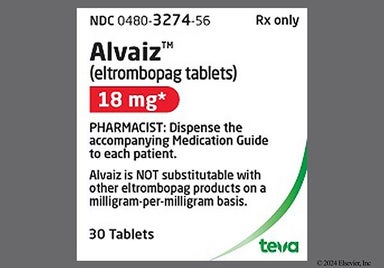
Alvaiz (eltrombopag) images