


7 N-Acetylcysteine Uses: From Lung Disease to Fertility
N-Acetylcysteine, or NAC, is an antioxidant used to treat a variety of diseases in conjunction with other medications. Here are 7 uses for NAC.
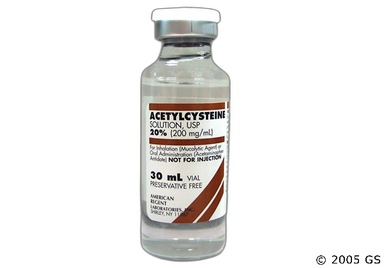
Acetylcysteine inhalation solution helps loosen mucus in your lungs so you can cough it out more easily. It's typically used for people with certain lung conditions like bronchitis, cystic fibrosis, or emphysema. You breathe the medication in through a nebulizer, usually 3 to 4 times a day. It was once sold under the brand name Mucomyst, which is no longer available. Some side effects include mouth sores, nausea, runny nose, and drowsiness.

Acetylcysteine is a mucolytic, meaning it helps break down thick mucus. It works by making mucus thinner and easier to clear from your lungs.
| Common Brands | Mucomyst |
|---|---|
| Drug Class | Mucolytic |
| Controlled Substance Classification | Not a controlled medication |
| Generic Status | Lower-cost generic available |
| Availability | Prescription only |

The following side effects may get better over time as your body gets used to the medication. Let your healthcare provider know immediately if you continue to experience these symptoms or if they worsen over time.
Contact your healthcare provider immediately if you experience any of the following.
Along with its needed effects, a medicine may cause some unwanted effects. Although not all of these side effects may occur, if they do occur they may need medical attention.
Check with your doctor as soon as possible if any of the following side effects occur:
Rare
Skin rash or other irritation
Some side effects may occur that usually do not need medical attention. These side effects may go away during treatment as your body adjusts to the medicine. Also, your health care professional may be able to tell you about ways to prevent or reduce some of these side effects. Check with your health care professional if any of the following side effects continue or are bothersome or if you have any questions about them:
Less common
Clammy skin
increase in amount of mucus in lungs
irritation or soreness of mouth, throat, or lungs
nausea or vomiting
For patients using a face mask for inhalation of acetylcysteine: the mask may leave a stickiness on your face. This can be removed with water.
When you use acetylcysteine, you may notice that the medicine has an unpleasant odor at first. However, this smell will go away soon after you use the medicine.
Other side effects not listed may also occur in some patients. If you notice any other effects, check with your healthcare professional.
Call your doctor for medical advice about side effects. You may report side effects to the FDA at 1-800-FDA-1088.




Acetylcysteine can cause some serious health issues. This risk may be even higher for certain groups. If this worries you, talk to your doctor or pharmacist about other options.
Acetylcysteine might make you have more thin, loosened mucus in your airway, which can be hard to get rid of. If you’re unable to cough it out, your healthcare team might need to clear your airway using suction or aspiration.
If you have asthma, use acetylcysteine carefully because it can sometimes cause bronchospasm, which is tightening of the airways. Most of the time, using a medication like albuterol given through a nebulizer to get relief. If your breathing gets worse or the bronchospasm doesn’t go away, stop using acetylcysteine right away and let your prescriber know.

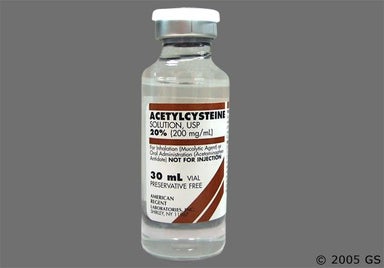
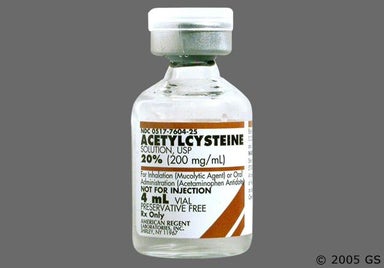
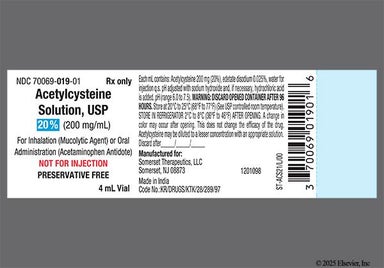
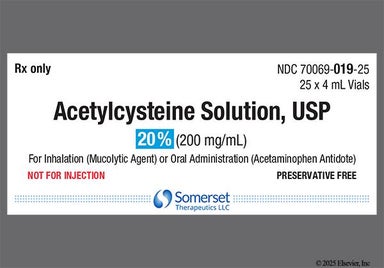
 Vial
Vial| Dosage | Quantity | Price as low as | Price per unit |
|---|---|---|---|
| 10ml of 10% nebulizer solution | 3 vials | $22.42 | $7.47 |
| 10ml of 20% nebulizer solution | 3 vials | $26.13 | $8.71 |
| 30ml of 10% nebulizer solution | 3 vials | $32.97 | $10.99 |
| 4ml of 10% nebulizer solution | 25 vials | $50.89 | $2.04 |
| 4ml of 20% nebulizer solution | 25 vials | $88.21 | $3.53 |
| 30ml of 20% nebulizer solution | 3 vials | $34.84 | $11.61 |

Although certain medicines should not be used together at all, in other cases two different medicines may be used together even if an interaction might occur. In these cases, your doctor may want to change the dose, or other precautions may be necessary. When you are taking this medicine, it is especially important that your healthcare professional know if you are taking any of the medicines listed below. The following interactions have been selected on the basis of their potential significance and are not necessarily all-inclusive.
Using this medicine with any of the following medicines may cause an increased risk of certain side effects, but using both drugs may be the best treatment for you. If both medicines are prescribed together, your doctor may change the dose or how often you use one or both of the medicines.


Prescription savings
Stop paying too much for your prescriptions. Compare prices, get pharmacy coupons, and save up to 80%. Find expert answers to your health questions so you can make the best decisions for yourself and your family.
Health conditions
Medications & treatment
Access & affordability
Medication discounts

Acetylcysteine is generally safe when used as prescribed by your healthcare professional to help thin and loosen mucus in your airways. But like all medications, it has some important safety considerations and possible side effects. One risk is bronchospasm, or tightening of muscles in the airways. Rarely, Acetylcysteine can cause allergic reactions. Be sure to discuss all side effects and risks with your prescriber.
Low blood pressure isn't commonly reported as a side effect of Acetylcysteine. If you ever feel dizzy, lightheaded, or faint after inhaling this medication, let your prescriber know right away.
Acetylcysteine usually starts working within minutes to hours after you use it. You might notice you’re coughing up more mucus shortly after treatment. This is a sign that it's working. Keep in mind that for some people, it can take longer to notice a difference.
Because there isn't enough information to know if it's safe to mix Acetylcysteine and albuterol together in a nebulizer, it's usually recommended to use them one at a time. For example, your prescriber might tell you to use albuterol 10 to 15 minutes before using Acetylcysteine. Follow your prescriber's instructions carefully on when and how to use each medication.
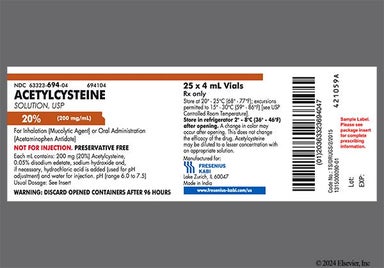
Unopened Acetylcysteine vials should be stored at room temperature (68°F to 77°F). Once a vial is opened, you can keep it in the refrigerator and use it within 96 hours (4 days).
While there’s no known interaction between Acetylcysteine and alcohol when the medication is used as prescribed, drinking alcohol can make side effects like nausea and vomiting worse. It’s best to check with your prescriber first to make sure it’s safe for you.
There haven't been enough studies in pregnant women to know if Acetylcysteine is safe to take during pregnancy. In animal studies, it hasn't been shown to harm unborn babies. If you're pregnant or planning to become pregnant, talk with your prescriber about the possible risks and benefits of using this medication
There are different types of nebulizers, and your prescriber will show you how to use your nebulizer before starting Acetylcysteine. They might ask you to mix the Acetylcysteine solution with sterile saline or sterile water before use. Once your dose is ready, add it to the medication cup that comes with your nebulizer. Attach the top piece and mouthpiece or mask, then connect the tubing between the medication cup and the nebulizer. Turn on the machine and breathe normally until all the medication is gone. If you’re unsure how to use your equipment, ask your prescriber for help.
