Key takeaways:
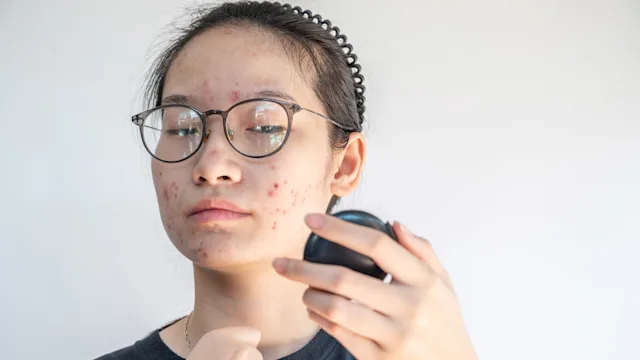
Accutane (a former brand name for isotretinoin) is an oral medication used to treat severe acne. It’s especially helpful for nodular acne that hasn’t improved with other treatments. Isotretinoin is usually taken as a generic or under brand names such as Absorica, Amnesteem, or Claravis.
Accutane works to treat acne in several ways, such as shrinking the size of your skin’s oil glands. It also reduces skin inflammation and slows the growth of acne-causing bacteria.
You may start to see results from isotretinoin in as early as 4 weeks. But it can take several months to see its full effects.
Save on related medications
When you’re dealing with troublesome acne, your dermatologist may recommend isotretinoin. You may also know this medication as Accutane, which was a well-known brand name that’s no longer available. Many people still use this as the medication’s nickname.
But taking isotretinoin can be a complex process. So understanding how Accutane works and what to expect during treatment can help you get the most out of your prescription.
Accutane overview
Isotretinoin is an oral prescription medication that’s closely related to vitamin A. It’s FDA approved to treat severe nodular acne that hasn’t responded to other acne medications or treatments. Nodular acne is a type of painful acne in which knots and bumps develop under the skin. Isotretinoin can also be used off-label for other reasons, such as treating psoriasis and rosacea.
You may also hear isotretinoin referred to by several other names. Accutane is one popular brand name that’s no longer available. You can find isotretinoin as a generic medication or under other brand names, namely:
Absorica
Absorica LD
Amnesteem
Claravis
Myorisan
Zenatane
How does Accutane work?
Accutane works by targeting several causes of severe acne. One of its main effects is shrinking the oil glands in your skin. When these glands produce less oil, your pores are less likely to become clogged.
Isotretinoin also helps reduce inflammation and slows the growth of acne-causing bacteria. Together, these effects help clear existing acne and lower the chance that new breakouts will form.
Over time, these changes can lead to smoother, clearer skin. But while you take Accutane, there are some things to consider.
1. You may not see results with Accutane right away
A typical course of Accutane lasts about 15 to 20 weeks (4 to 5 months). You may start to see some improvement in acne symptoms in as early as 4 weeks, but it usually takes longer to see complete results. Your acne may also initially get worse before it starts to get better.
In some cases, you may see a significant response to the medication before 20 weeks have passed. If this happens, your dermatologist may tell you to stop taking isotretinoin early. Even after you stop taking the medication, your acne may continue to improve.
If desired results aren’t seen within 15 to 20 weeks of taking isotretinoin, your dermatologist may recommend a second course of isotretinoin after an 8-week (2-month) waiting period.
2. Accutane is an oral pill, but specific doses vary
Accutane is an oral pill that you take by mouth. It’s usually taken twice a day. Your specific Accutane dosage will depend on your body weight.
After you start taking isotretinoin, your dermatologist may adjust your dose depending on your response to isotretinoin or side effects that you experience.
3. Foods may affect some forms of isotretinoin
Food can affect how well your body absorbs Accutane.
Some forms of isotretinoin, such as Absorica, can be taken with or without food. But many forms of isotretinoin should be taken with food. Since there’s some variety, make sure to ask your pharmacist how you should take your specific isotretinoin prescription. And take each dose of isotretinoin with a full glass of water. This helps lower the risk of esophagus irritation.
Diet aside, isotretinoin can interact with other medications that you may be taking. Isotretinoin is closely related to vitamin A. To prevent vitamin A toxicity, you shouldn’t take other products containing vitamin A or use topical retinoids while you’re taking isotretinoin. Some anti-seizure medications, antibiotics, and corticosteroids can also interact with it.
If you’re taking any of these medications — or have concerns about other medications — make sure to chat with your dermatologist or pharmacist. It’s helpful if you give them an updated list of medications and supplements that you’re taking. This helps them screen for interactions in advance.
4. Isotretinoin has side effects to be aware of
Isotretinoin has many possible side effects. The most common isotretinoin side effects include:
Dry skin
Chapped lips
Dry mouth
You can try to manage these types of side effects by drinking water, using hydrating eye drops, and applying skin or lip moisturizers. Your skin may also be more sensitive to sunlight, so it’s good to consistently use sunscreen and protect yourself from direct sunlight when possible.
As an added preventive measure, your dermatologist may monitor your blood work over time. This is because isotretinoin can affect your blood glucose (blood sugar), cholesterol, and other laboratory tests.
More serious side effects are also possible. Isotretinoin can cause harm to fetuses, so anyone who takes isotretinoin should avoid becoming pregnant. And even though isotretinoin is used for acne, your acne may initially worsen before it starts to get better.
These are just some side effects of isotretinoin. For a complete list of side effects, talk to your dermatologist or pharmacist.
5. You must participate in iPLEDGE
Before you can fill a prescription for isotretinoin, it’s important to be aware of iPLEDGE. iPLEDGE is a medication-safety program that you must participate in before you can start taking isotretinoin. It helps make sure that isotretinoin’s benefits outweigh its risks.
The iPLEDGE program’s main goal is to make sure that pregnant people aren’t exposed to isotretinoin. This is because of isotretinoin’s severe risk of birth defects in fetuses.
How iPLEDGE works
Your dermatologist and pharmacist should walk you through the iPLEDGE process. The first step is to enroll in iPLEDGE, which is an FDA-required Risk Evaluation and Mitigation Strategy (REMS) program. After you enroll, you must sign an informed consent form that shows you understand how isotretinoin can harm fetuses.
If you’re able to get pregnant, there are a few more requirements. You’ll be required to use two forms of birth control at the following times:
At least 1 month before starting isotretinoin
While you’re taking isotretinoin
For 1 month after your last dose of isotretinoin
You must also have two negative pregnancy tests from a clinic or lab before starting isotretinoin. Once these results are gathered, you must pick up your prescription for isotretinoin within 7 days. And as a precaution, you’re allowed to get only one 30-day prescription at a time. You’ll need negative pregnancy tests before you can get subsequent 30-day prescriptions, but you may be able to take these tests at home.
If you’re unable to get pregnant or you commit to abstinence, these birth control and pregnancy test requirements don’t apply. And if you have male reproductive organs, you don’t need to use a special form of birth control, such as external condoms, while taking isotretinoin. There isn’t a pattern of birth defects among babies born to fathers taking isotretinoin. But to be safe, your healthcare team may still recommend using a condom as a precaution.
While you’re taking isotretinoin, you shouldn’t donate blood, breastfeed, or share your isotretinoin prescription with anyone.
How to save on isotretinoin
There are ways to save on isotretinoin, which is available as both a brand-name and generic medication.
Save with GoodRx: GoodRx can help you save over 70% off the average retail price of the generic version. Generic isotretinoin at certain pharmacies is as low as $80.00 with a free GoodRx discount.
Save with a copay savings card: Some manufacturers offer savings for certain versions of isotretinoin. For instance, if you have commercial insurance, you may be eligible to pay as little as $20 per month for generic isotretinoin using a savings card from one manufacturer.
Frequently asked questions
Accutane is usually recommended for people ages 12 and older with severe acne. It may also be considered for people with moderate acne that causes scarring or significant emotional distress. In these cases, the benefits of isotretinoin may outweigh the risks.
But since isotretinoin can cause serious side effects, not everyone is a good candidate. Your dermatologist should review your medical history, medications, and fertility potential before deciding if isotretinoin is right for you.
Some people feel like parts of their face look slimmer after starting Accutane. This may happen because the medication reduces oil production and changes the thickness of the skin. But isotretinoin isn’t designed or intended for weight loss or facial slimming.
Many people see long-lasting acne improvement after a full course of Accutane. For some, acne may stay away permanently. Others may still experience occasional breakouts later in life. In certain cases, additional courses of isotretinoin treatment may be recommended.
Shaving isn’t necessarily bad while taking Accutane. But you should avoid skin waxing and other intense skin treatments while taking it and for 6 months after you stop. This is because isotretinoin makes your skin more sensitive to scarring. It can also make your skin more sensitive and cause pain, burns, and peeling.
Sometimes, but not always. Accutane reduces the size and activity of oil glands in the skin during treatment. For some people, this effect persists long after treatment ends. But oil production slowly increases again over time for others.
Accutane is usually recommended for people ages 12 and older with severe acne. It may also be considered for people with moderate acne that causes scarring or significant emotional distress. In these cases, the benefits of isotretinoin may outweigh the risks.
But since isotretinoin can cause serious side effects, not everyone is a good candidate. Your dermatologist should review your medical history, medications, and fertility potential before deciding if isotretinoin is right for you.
Some people feel like parts of their face look slimmer after starting Accutane. This may happen because the medication reduces oil production and changes the thickness of the skin. But isotretinoin isn’t designed or intended for weight loss or facial slimming.
Many people see long-lasting acne improvement after a full course of Accutane. For some, acne may stay away permanently. Others may still experience occasional breakouts later in life. In certain cases, additional courses of isotretinoin treatment may be recommended.
Shaving isn’t necessarily bad while taking Accutane. But you should avoid skin waxing and other intense skin treatments while taking it and for 6 months after you stop. This is because isotretinoin makes your skin more sensitive to scarring. It can also make your skin more sensitive and cause pain, burns, and peeling.
Sometimes, but not always. Accutane reduces the size and activity of oil glands in the skin during treatment. For some people, this effect persists long after treatment ends. But oil production slowly increases again over time for others.
The bottom line
Isotretinoin is an oral medication that treats severe nodular acne. Many people know it by its former brand name, Accutane. Accutane works by shrinking your skin’s oil glands, reducing skin inflammation, and slowing the growth of acne-causing bacteria. You may see results as soon as 4 weeks after starting the medication. But this time frame can be different for everyone. It can take several months to see the full effects.
Although Accutane can cause many side effects, one of the most serious is the risk of severe harm to a fetus. It’s important that you don’t get pregnant while taking the medication. To learn if isotretinoin is right for you, talk to your dermatologist. If you’re concerned about the side effects of this isotretinoin, you should check with your dermatologist or pharmacist.

Why trust our experts?




References
American Academy of Dermatology Association. (2023). Isotretinoin: FAQs.
American Academy of Dermatology Association. (2023). Isotretinoin: Overview.
American Academy of Dermatology Association. (2025). Isotretinoin: The truth about side effects.
Aurobindo Pharma. (2025). Isotretinoin capsule [package insert]. DailyMed.
Nickle, S. B., et al. (2014). Updated physician’s guide to the off-label uses of oral isotretinoin. The Journal of Clinical and Aesthetic Dermatology.
iPLEDGE. (n.d.). Patients.
Paichitrojjana, A., et al. (2023). Oral isotretinoin and its uses in dermatology: A review. Drug Design, Development and Therapy.
Reynolds, R. V., et al. (2024). Guidelines of care for the management of acne vulgaris. Journal of the American Academy of Dermatology.
Teva Worldwide. (2022). Pay as little as $20 for Teva’s generic version of Absorica (isotretinoin) capsules.
U.S. Food and Drug Administration. (2026). iPLEDGE Risk Evaluation and Mitigation Strategy (REMS).
Yigit, E., et al. (2022). The impact of isotretinoin therapy on the nasal skin thickness and elasticity: An ultrasonography and elastography based assessment in relation to dose and duration of therapy. Aesthetic Plastic Surgery.