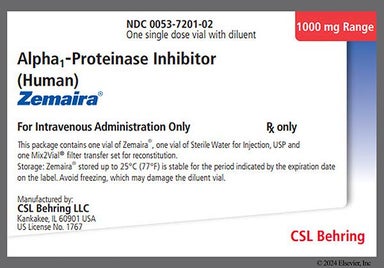
Zemaira
Zemaira is an alpha-1 proteinase inhibitor (also known as alpha-1 PI). It's an enzyme replacement that's used as augmentation therapy to help with lung problems (emphysema) in adults with a genetic condition called alpha-1 antitrypsin (AAT) deficiency. Zemaira is given as an infusion into the veins (IV) once a week. It's typically administered by a trained healthcare provider. Side effects can include headache, sinus infection, and common cold symptoms.


What is Zemaira?
What is Zemaira used for?
- Augmentation therapy for lung damage (emphysema) due to severe alpha-1 antitrypsin (AAT) deficiency
How Zemaira works
Alpha-1 antitrypsin (AAT) deficiency is a genetic condition that causes people to have little to no AAT in the body. AAT, also known as alpha-1 proteinase inhibitor, is an enzyme that your body normally makes to help protect the lungs from damage. Without enough AAT, there's a higher risk for lung problems, like emphysema.
Zemaira is an enzyme replacement therapy. It helps replace missing AAT in the body to protect the lungs.
Drug facts
| Common Brands | Zemaira |
|---|---|
| Drug Class | Enzyme replacement therapy |
| Controlled Substance Classification | Not a controlled medication |
| Generic Status | No lower-cost generic available |
| Availability | Prescription only |

Side effects of Zemaira
The following side effects may get better over time as your body gets used to the medication. Let your healthcare provider know immediately if you continue to experience these symptoms or if they worsen over time.
Common Side Effects
- Headache (20%)
- Sinus infection (15%)
- Upper respiratory infection (15%)
- Bronchitis (8%)
- Weakness (8%)
- Cough (8%)
- Fever (6%)
- Bleeding at injection site (6%)
- Runny nose (6%)
- Sore throat (6%)
Less Common Side Effects
- Nausea
- Chills
- Dizziness
- Flushing
Zemaira serious side effects
Contact your healthcare provider immediately if you experience any of the following.
- Severe allergic reaction: anaphylaxis, hives, itching, swelling in the mouth or throat, chest tightness, trouble breathing, wheezing, feeling faint
The following Zemaira side effects have also been reported
Along with its needed effects, a medicine may cause some unwanted effects. Although not all of these side effects may occur, if they do occur they may need medical attention.
Check with your doctor or nurse immediately if any of the following side effects occur:
More common
Bladder pain
bloody or cloudy urine
body aches or pain
chills
difficult, burning, or painful urination
difficulty with breathing
ear congestion
frequent urge to urinate
headache
loss of voice
lower back or side pain
runny or stuffy nose
unusual tiredness or weakness
Rare
Bloating or swelling of the face, arms, hands, lower legs, or feet
blurred vision
cough producing mucus
difficult or labored breathing
dizziness
feeling faint, dizzy, or lightheadedness
flushing or redness of the skin, especially on the face and neck
general feeling of discomfort or illness
joint pain
loss of appetite
muscle aches and pains
nervousness
noisy breathing
pounding in the ears
rapid weight gain
shivering
slow or fast heartbeat
sweating
tightness in the chest
tingling of the hands or feet
trouble sleeping
unusual weight gain or loss
vomiting
Incidence not known
Confusion
difficulty with swallowing
dizziness, faintness, or lightheadedness when getting up suddenly from a lying or sitting position
fast, pounding, or irregular heartbeat or pulse
hives or skin rash
itching, puffiness or swelling of the eyelids or around the eyes, face, lips, or tongue
Some side effects may occur that usually do not need medical attention. These side effects may go away during treatment as your body adjusts to the medicine. Also, your health care professional may be able to tell you about ways to prevent or reduce some of these side effects. Check with your health care professional if any of the following side effects continue or are bothersome or if you have any questions about them:
Other side effects not listed may also occur in some patients. If you notice any other effects, check with your healthcare professional.
Call your doctor for medical advice about side effects. You may report side effects to the FDA at 1-800-FDA-1088.

Pros and cons of Zemaira
Pros
- Helps replace missing AAT in your body
- Only need to take once a week
- Can be given at home
Cons
- Not clear if it can slow the worsening of emphysema due to AAT deficiency
- Needs to be given as an infusion into the vein by a healthcare provider
- Doesn't cure AAT deficiency

Pharmacist tips for Zemaira

- Make sure to mark your calendar with your appointments to see your provider and when your Zemaira once-weekly infusions are due. Going to your follow-up appointments and getting your infusions on time will help make sure that your treatment is on track and that you don't miss any doses.
- You might feel dizzy during or shortly after your Zemaira infusion. Make sure to rest for a little while right after each infusion. Sit or lie down until any dizziness goes away. Be sure to hold onto something stable as you slowly stand up when you feel like you're ready to.
- Allergic reactions or other infusion-related reactions are possible during or after your Zemaira infusion. Get medical help right away if you have any signs or symptoms of an allergic reaction, including trouble breathing or rash, so you can get treated as soon as possible.

Risks and warnings for Zemaira
Zemaira can cause some serious health issues. This risk may be even higher for certain groups. If this worries you, talk to your doctor or pharmacist about other options.
Severe allergic reactions
- Risk factors: Immunoglobulin A (IgA) deficiency | Allergic reaction to other alpha-1 proteinase inhibitor brands
Your providers will closely watch for any allergic reactions to Zemaira during treatment. Your providers will decide whether Zemaira is safe for you if you've previously had an allergic reaction to other alpha-1 proteinase inhibitors.
Zemaira can contain a tiny amount of immunoglobulin A (IgA), which is a type of protein that's naturally found in the body. You can also be at risk for severe allergic reactions if you have IgA deficiency with antibodies against IgA.
Let your provider know right away or get emergency medical help if you have any signs of a severe allergic reaction or anaphylaxis, such as hives, itching, swelling in the mouth or throat, chest tightness, trouble breathing, wheezing, or feeling faint. Your provider might prescribe an epinephrine pen (EpiPen) for you to use in case of a severe allergic reaction.
Risk of infection
Because Zemaira is made from human blood products, there's a risk that it might contain viruses and other germs that can make you sick. But your risk of infection is low since the donors of these blood products are carefully screened. Also, there are high manufacturing standards put into place to make sure the germs are killed or removed.
To prevent serious infections in the rare case that your doses of Zemaira are affected, let your provider know right away if you start to feel sick or have symptoms, such as feeling confused and anxious or having trouble maintaining your balance.

Zemaira dosage
Typical dosage for Zemaira
The typical dose is 60 mg/kg of body weight, given as an infusion into the vein (intravenous or IV) once a week.

Interactions between Zemaira and other drugs
Although certain medicines should not be used together at all, in other cases two different medicines may be used together even if an interaction might occur. In these cases, your doctor may want to change the dose, or other precautions may be necessary. Tell your healthcare professional if you are taking any other prescription or nonprescription (over-the-counter [OTC]) medicine.

Zemaira contraindications
Contraindications are specific health conditions or situations in which a person should not take a medication due to safety concerns. If you have any of the following conditions or if any of the following apply to you, let your healthcare provider know because Zemaira will not be safe for you to take.
- People who are immunoglobulin A (IgA) deficient with antibodies against IgA
- Severe allergy to other alpha 1-proteinase inhibitors

What are alternatives to Zemaira?

Zemaira images