Winrho
WinRho SDF helps people with a condition in which blood doesn't clot normally due to low levels of platelets (immune thrombocytopenic purpura, or ITP). It's also used for certain pregnancy-related conditions and blood transfusions. This medication is collected from the pooled blood of many human donors.


What is WinRho SDF?
What is WinRho SDF used for?
- Immune thrombocytopenic purpura (ITP)
- Prevention of Rh incompatibility in certain Rh-negative mothers or other pregnancy-related complications
- Prevention of Rh incompatibility in Rh-negative people receiving Rh-positive blood through blood transfusion
How WinRho SDF works
WinRho SDF contains a type of antibody called immunoglobulin.
For ITP, this medication works to raise platelet counts in people who are Rh positive and still have their spleen. It's thought to clump together with red blood cells so your spleen can remove them instead of your platelets. This helps to raise your platelet count.
In Rh-negative people, it also prevents the body from producing specific antibodies that attack Rh-positive red blood cells. For example, in pregnant mothers with Rh-negative blood, this medication helps to prevent severe anemia (low red blood cells) and jaundice in their Rh-positive babies.
Drug facts
| Common Brands | WinRho SDF, Rhophylac |
|---|---|
| Drug Class | Immune globulin |
| Controlled Substance Classification | Not a controlled medication |
| Generic Status | No lower-cost generic available |
| Availability | Prescription only |

Side effects of WinRho SDF
The following side effects may get better over time as your body gets used to the medication. Let your healthcare provider know immediately if you continue to experience these symptoms or if they worsen over time.
Common Side Effects
WinRho:
- Headache (11%)
- Chills (8%)
- Fever (6%)
- Weakness (4%)
- Dizziness (4%)
- Infection (3%)
Rhophylac:
*Side effects listed above are for ITP. For prevention of Rh incompatibility during pregnancy, few or no side effects were reported. The few side effects reported included nausea, dizziness, headache, injection-site pain, and feeling unwell.
Less Common Side Effects
- Nausea
- Muscle aches or spasms
- Rash
WinRho SDF serious side effects
Contact your healthcare provider immediately if you experience any of the following.
- Serious allergic reaction: rash, face swelling, chest tightness, shortness of breath, fast heart rate
- Breakdown of red blood cells: pale skin, feeling tired, dizziness, trouble breathing, back or stomach pain, discolored urine
The following WinRho SDF side effects have also been reported
Along with its needed effects, a medicine may cause some unwanted effects. Although not all of these side effects may occur, if they do occur they may need medical attention.
Check with your doctor or nurse immediately if any of the following side effects occur:
Some side effects may occur that usually do not need medical attention. These side effects may go away during treatment as your body adjusts to the medicine. Also, your health care professional may be able to tell you about ways to prevent or reduce some of these side effects. Check with your health care professional if any of the following side effects continue or are bothersome or if you have any questions about them:
Less common
Soreness at the place of injection
Other side effects not listed may also occur in some patients. If you notice any other effects, check with your healthcare professional.
Call your doctor for medical advice about side effects. You may report side effects to the FDA at 1-800-FDA-1088.

Pros and cons of WinRho SDF
Pros
- Can be used in children with ITP (WinRho only)
- Allows for successful pregnancies and transfusions, even in cases where the blood proteins are incompatible (don't mix)
- Raises the number of platelets in people with ITP
- No significant interactions with most medications or supplements
Cons
- Must be monitored closely for at least 8 hours after each infusion for ITP
- Sometimes, treatment is based on timing and you may not be able to get the medication if too much time has passed.
- Must be given by a healthcare provider
- Brand only, so might be expensive

Pharmacist tips for WinRho SDF

- Problems from WinRho SDF treatment usually happen within 4 to 8 hours after getting an infusion. For this reason, your provider will need to monitor you closely. Alert your provider right away if you experience back pain, shaking, chills, fever, shortness of breath, dizziness, or if you develop a rash. You might also notice swelling or sudden weight gain, or changes in the color of your urine or how often you need to urinate. Let your provider know if any of these happen to you, even if it's several days after your treatment.
- Don't get a live vaccine within 3 months after your last dose of WinRho SDF. This medication can make the vaccine not work as well for you, and you won't be able to build up good protection against infection. If you're not sure whether or not the vaccine you're getting is live, ask your provider or pharmacist.
- For the treatment of ITP, each WinRho SDF injection into your vein will take about 3 to 5 minutes.
- If you're getting WinRho SDF for protection against Rh-positive blood, your provider will determine whether to give you the injection through your vein in your arm or into your shoulder or thigh muscle.
- WinRho SDF is made from human plasma. Although the blood from the donors is cleaned and processed very well before it's injected into you, there's still a very small risk you may get a virus from the medication. Talk with your provider if you have any new symptoms that concern you.

Risks and warnings for WinRho SDF
WinRho SDF can cause some serious health issues. This risk may be even higher for certain groups. If this worries you, talk to your doctor or pharmacist about other options.
Breakdown of red blood cells when used for ITP
- *Risk factors: History of kidney problems | History of heart (cardiovascular) problems | Over 65 years of age *
 In some rare cases for ITP, WinRho SDF has caused a severe, life-threatening condition called intravascular hemolysis (IVH). This sudden breakdown of red blood cells can lead to multi-system organ failure and death. Because of this risk, you will be under close watch for at least 8 hours after each ITP treatment. Your care team will check to see if you're experiencing any back pain, chills, dizziness, fever, or discolored urine during this time. If you've left your provider's office and you experience these symptoms, get medical help right away.
Severe allergic reactions
- Risk factors: Antibodies to IgA
There's a rare chance that you might have a severe allergic reaction to WinRho SDF. Your risk is higher if you have antibodies to IgA, because there are very small amounts of IgA in WinRho SDF, which might trigger an allergic reaction. Your provider might ask you to stay at the hospital or clinic for observation after you've received your dose to make sure you can get proper care in case of a serious allergic reaction. Sometimes, these reactions can happen after you've already left the clinic. Get medical help right away if you notice symptoms of a severe allergic reaction, such as feeling faint, swelling of the face, closing of the throat, difficulty breathing, hives or rash, dizziness, nausea, or chest pain.
Possible transmission of other viruses
WinRho SDF is made from human plasma, which is taken from human blood. Although very rare, there's a possible risk that viruses might be passed from the blood product to people receiving the medication and put them at risk for conditions such as Creutzfeldt-Jakob disease (CJD). Please note that all blood donors are carefully screened and each blood sample is processed in the lab to lower the risk of infections. In addition, this risk is only theoretical and no known cases haven't been reported in real life. If your provider suspects an infection from the medication, they should report it to the manufacturer by calling 1-833-644-4216 (for WinRho) or 1-866-915-6958 (for Rhophylac).
Blood clots
- Risk factors: History of plaque buildup in the arteries (atherosclerosis) | History of clots | Over 65 years of age | Have or at risk of certain heart conditions | Blood clotting condition | Being immobile for a long period of time | Take estrogen-containing medications | Have an indwelling catheter
Immunoglobulin products like WinRho SDF can cause blood clots during or after your treatment. Talk to your provider before receiving WinRho SDF if you have a history of a coagulation (clotting) problem or any of the above risk factors, because this medication might be dangerous for you. It should only be given to you if the benefit is greater than the risk, and your provider will help make this decision.
Kidney injury
- Risk factors: History of kidney disease | Over 65 years of age | Diabetes | Sepsis (serious infection) | Having an excessive amount of abnormal antibodies in the blood | Receiving other medications harmful to the kidney | Low blood volume (dehydration)
In some rare cases, WinRho SDF can cause sudden kidney injury. Your provider will make sure you're well hydrated before your WinRho SDF treatment. If you're at high risk for kidney injury, your provider may give the medication to you more slowly. They will also check your kidney labs before your first treatment and every so often afterwards to make sure this medication is safe for you.
Lung injury
WinRho SDF can cause rare but serious lung injury, typically 1 to 6 hours after treatment. Your provider will already be monitoring you during this time, so let them know right away if you suddenly develop trouble breathing or a fever. They might need to give you oxygen to help your breathing.
Falsely high blood sugars
- Risk factors: Type 1 or type 2 diabetes | Using insulin | Using certain types of glucose meters
WinRho SDF contains maltose, which is a type of sugar. This medication can cause your blood sugar readings to be falsely high if you use certain glucose monitors with test strips containing a substance called GDH-PQQ. This raises your risk for low blood sugar (hypoglycemia) if you give yourself insulin to correct this falsely high blood sugar. Contact your local pharmacist or the manufacturer of the glucose monitor you use if you're not sure if it can be used with products containing maltose.

WinRho SDF dosage
Typical dosage for WinRho SDF
This medication is injected either into your vein (intravenously, IV) or muscle (intramuscularly, IM), depending on the condition you’re taking it for. Your dose can depend on different factors, so your provider will help determine the right dose for you.
-
ITP: Your dose depends on your body weight and your blood cell counts. Your provider will administer the medication IV as a single dose. For WinRho, the starting dose can also be given in divided doses given on two separate days. Your provider will determine if you need additional doses.
-
Certain pregnancy-related conditions: The dose is based on timing (e.g., how much time has passed since you gave birth), your condition, and which brand is being used. Your provider will typically administer the medication IV or IM as a single dose. But depending on your condition, you might need an additional dose.
-
Incompatible blood transfusions: The dose is based on the type of blood transfusion you received. It will also depend on whether you’re getting the medication injected into your vein or your muscle. Your treatment will begin within 72 hours of your transfusion. Depending on the brand, your provider will administer the medication every 8 or 12 hours (for WinRho) or as a single injection (for Rhophylac).

Interactions between WinRho SDF and other drugs
Although certain medicines should not be used together at all, in other cases two different medicines may be used together even if an interaction might occur. In these cases, your doctor may want to change the dose, or other precautions may be necessary. Tell your healthcare professional if you are taking any other prescription or nonprescription (over-the-counter [OTC]) medicine.

WinRho SDF contraindications
Contraindications are specific health conditions or situations in which a person should not take a medication due to safety concerns. If you have any of the following conditions or if any of the following apply to you, let your healthcare provider know because WinRho SDF will not be safe for you to take.
- History of severe allergic reaction to other human immune globulins
- A lack of immunoglobulin A in the blood and antibodies to IgA
- High risk for certain anemia conditions (e.g., autoimmune hemolytic anemia)
- Newborns born to a mother who received WinRho SDF after delivery
- Infants, for preventing natural antibodies from harming the infant's blood cells (the suppression of Rho(D) isoimmunization)

What are alternatives to WinRho SDF?

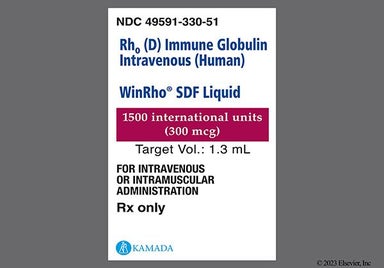
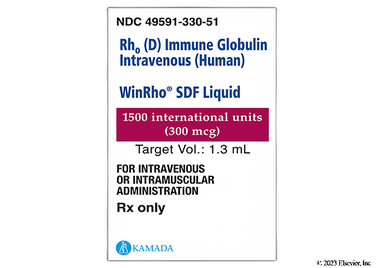
WinRho SDF images