






Vitamin B12 Dosage for Adults & Kids: Your GoodRx Guide
If your vitamin B12 levels are low, your prescriber may recommend a prescription vitamin B12 supplement. But what’s the right dose of vitamin B12? Here’s the guide.
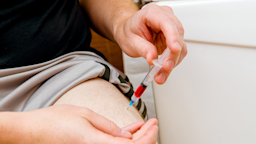
Cyanocobalamin (Dodex) is an injectable form of vitamin B12 that's used to treat low blood vitamin B12 levels (vitamin B12 deficiency). It can also help restore vitamin B12 levels in adults with anemia due to low vitamin B12. Cyanocobalamin (Dodex) is typically given as an injection through the skin or into the muscle. The dosage can vary and depends on why you need to take cyanocobalamin (Dodex). This medication is available as a lower-cost generic.

Cyanocobalamin (Dodex) is a form of vitamin B12. Vitamin B12 is important for several processes in your body, including these three major roles:
| Common Brands | Dodex |
|---|---|
| Drug Class | Vitamin |
| Controlled Substance Classification | Not a controlled medication |
| Generic Status | Lower-cost generic available |
| Availability | Prescription only |

The following side effects may get better over time as your body gets used to the medication. Let your healthcare provider know immediately if you continue to experience these symptoms or if they worsen over time.
Contact your healthcare provider immediately if you experience any of the following.
Side effects that you should report to your care team as soon as possible:
Side effects that usually do not require medical attention (report to your care team if they continue or are bothersome):




Cyanocobalamin (Dodex) can cause some serious health issues. This risk may be even higher for certain groups. If this worries you, talk to your doctor or pharmacist about other options.
Severe allergic reactions to cyanocobalamin (Dodex) are possible, including life-threatening reactions like facial swelling, shock, and anaphylaxis (closing of the throat). It's recommended that your provider give you a test dose of cyanocobalamin before starting treatment to determine whether you're at risk of having an allergic reaction to the medication. If you notice difficulty breathing, a choking sensation, swelling around your eyes, swelling of the lips or tongue, dizziness, or nausea after using cyanocobalamin (Dodex), get medical attention right away.
People with a rare, inherited eye condition called Leber's disease who received vitamin B12 developed severe eye damage. Vitamin B12 products containing cyanocobalamin, including cyanocobalamin (Dodex), isn't recommended in people with Leber's disease. If you have Leber's disease, speak with your provider about alternatives for vitamin B12 supplementation (like hydroxocobalamin).
Cyanocobalamin (Dodex) contains aluminum. Too much cyanocobalamin (Dodex) can cause high blood aluminum levels and can lead to aluminum toxicity. Your provider might order aluminum blood levels while you're taking cyanocobalamin (Dodex), especially if you have kidney problems since you're at higher risk. Contact your provider if you notice any signs or symptoms of aluminum poisoning (e.g., weakness, speech problems, bone pain, seizures).
Certain cyanocobalamin (Dodex) products have a preservative called benzyl alcohol. This preservative can cause a rare, but serious and sometimes life-threatening medical condition called gasping syndrome. This condition is more likely to happen in newborns and infants with low birth weight. If you're pregnant or breastfeeding, talk with your provider before receiving cyanocobalamin (Dodex), since your baby could potentially be exposed to benzyl alcohol in the womb or through your breast milk. Tell your provider if your child experiences any major weight changes while receiving cyanocobalamin (Dodex). Get medical attention right away if your child has symptoms, such as gasping, slowed heart rate, clammy skin, seizures, or weakness in an arm or leg.
If you have severe pernicious anemia, your provider might monitor you more closely. Treating severe pernicious anemia with vitamin B12 can cause low potassium and high platelet levels. These conditions can be serious and life-threatening. Your provider will track your potassium and platelet levels through bloodwork during treatment with cyanocobalamin (Dodex). Don't use any other vitamin B12 supplement while taking cyanocobalamin (Dodex) unless your provider specifically instructs you to. Contact your provider if you notice headache, confusion, shortness of breath, heart palpitations (chest pounding), muscle weakness or cramps, or unusual bleeding. These can be symptoms of electrolyte or platelet problems.
Taking vitamin B12 can sometimes mask anemia due to low folic acid levels). This means that vitamin B12 might help raise your red blood cell count without affecting your folic acid (folate) levels (so your folic acid levels will still be low). Your provider might check your folic acid levels through bloodwork to make sure you receive appropriate treatment for all your nutrient deficiencies.


Contraindications are specific health conditions or situations in which a person should not take a medication due to safety concerns. If you have any of the following conditions or if any of the following apply to you, let your healthcare provider know because Cyanocobalamin (Dodex) will not be safe for you to take.


Prescription savings
Stop paying too much for your prescriptions. Compare prices, get pharmacy coupons, and save up to 80%. Find expert answers to your health questions so you can make the best decisions for yourself and your family.
Health conditions
Medications & treatment
Access & affordability
Medication discounts


Your provider will decide how long you need to take Dodex. People with pernicious anemia generally continue treatment with Dodex once monthly for the rest of their life. But people using Dodex for other vitamin B12 deficiency conditions typically only use it if they can't take cyanocobalamin by mouth or if it's not working well enough. Eventually though, it might be possible to switch to the oral form after restoring vitamin B12 levels with Dodex, as long as you don't have gut problems that interfere with absorption. Keep in mind that how long you'll need to take Dodex will also depend on other factors, including how well it's working for you.
Studies show that it takes about 1 hour for Dodex to reach the maximum amount in your body after one dose given into the muscle.
Not unless your provider specifically says you need to. Most people can get enough vitamin B12 from Dodex alone. Ask your provider if you need to take oral cyanocobalamin along with Dodex because it'll likely depend on your specific situation (e.g., your vitamin B12 level, medical history).
No, Dodex is only given as an injection into the muscle or under the skin. It isn't given intravenously (IV). When the medication is given IV injection, Dodex can cause a severe allergic reaction (called anaphylaxis). In addition, your body will get rid of Dodex through your urine very quickly before any of it can be absorbed and used. If you're uncomfortable with Dodex injections, talk to your provider about potential other options for you.
Cyanocobalamin and hydroxocobalamin are two forms of vitamin B12. Studies haven't proven that one form of vitamin B12 is better than another for treating low vitamin B12 levels. But they do come in different dosage forms. Cyanocobalamin comes as oral, injectable, and nasal spray forms. On the other hand, hydroxocobalamin is only available as an intramuscular (IM) injection when used to treat low vitamin B12 levels.
