





Vitamin B12 Dosage for Adults & Kids: Your GoodRx Guide
If your vitamin B12 levels are low, your prescriber may recommend a prescription vitamin B12 supplement. But what’s the right dose of vitamin B12? Here’s the guide.
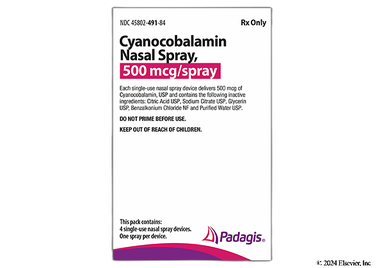
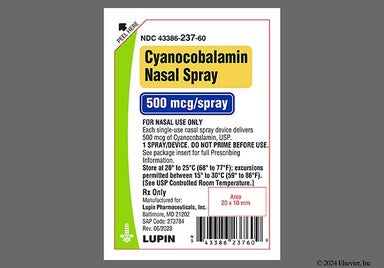
Nascobal (cyanocobalamin) is a nasal spray used to treat and prevent low blood vitamin B12 levels (vitamin B12 deficiency). It can also help keep vitamin B12 levels stable in adults with anemia due to low vitamin B12. Nascobal (cyanocobalamin) is available by prescription only and used once per week. Possible side effects include infection, headache, and runny nose.

Nascobal (cyanocobalamin) is a form of vitamin B12. Vitamin B12 is important for several processes in your body, including these three major roles:
| Common Brands | Nascobal |
|---|---|
| Drug Class | Vitamin |
| Controlled Substance Classification | Not a controlled medication |
| Generic Status | Lower-cost generic available |
| Availability | Prescription only |

The following side effects may get better over time as your body gets used to the medication. Let your healthcare provider know immediately if you continue to experience these symptoms or if they worsen over time.
Contact your healthcare provider immediately if you experience any of the following.
Side effects that you should report to your care team as soon as possible:
Side effects that usually do not require medical attention (report to your care team if they continue or are bothersome):




Nascobal (cyanocobalamin) can cause some serious health issues. This risk may be even higher for certain groups. If this worries you, talk to your doctor or pharmacist about other options.
While cyanocobalamin is available in oral forms (taken by mouth), Nascobal (cyanocobalamin) should only be used in your nose. Don't give yourself this medication any other way. If you feel a nasal spray isn't the best choice for you, ask your pharmacist or provider for other options to treat or prevent your low vitamin B12 levels. If you or someone else takes Nascobal (cyanocobalamin) by mouth, get medical help right away or contact a poison control center at 1-800-222-1222.
Allergic reactions to Nascobal (cyanocobalamin) are possible. These reactions can be life-threatening and can include mouth or facial swelling and anaphylaxis (closing of the throat). If you notice hives, swelling of your lips or tongue, or difficulty breathing after using Nascobal (cyanocobalamin), stop using it and seek medical attention right away.
People with a rare, inherited eye condition called Leber's disease who received vitamin B12 developed severe eye damage. Vitamin B12 products containing cyanocobalamin, including Nascobal (cyanocobalamin), isn't recommended in people with Leber's disease. If you have Leber's disease, speak with your provider about alternatives for vitamin B12 supplementation (like hydroxocobalamin).
Taking vitamin B12 can sometimes mask anemia due to low folic acid levels). This means that vitamin B12 might help raise your red blood cell count without affecting your folic acid (folate) levels (so your folic acid levels will still be low). Your provider will check your folic acid levels through bloodwork before you start Nascobal (cyanocobalamin) to make sure you receive appropriate treatment for all your nutrient deficiencies.
Treatment with Nascobal (cyanocobalamin) can reveal the signs of a rare blood cancer called polycythemia vera that you might unknowingly have. Contact your provider if notice symptoms of this rare blood cancer, such as headache, dizziness, chest pain, easy bruising, or more frequent or longer bleeding (e.g., gums, nose).
If you have severe pernicious anemia, your provider might follow up with you more often. Sometimes, treating severe pernicious anemia with vitamin B12 can cause low potassium and high platelet levels. These conditions can be serious and life-threatening. Your provider will track your potassium and platelet levels through bloodwork during treatment with Nascobal (cyanocobalamin). Don't use any other vitamin B12 supplement while taking Nascobal (cyanocobalamin) unless your provider specifically instructs you to. Contact your provider if you notice headache, confusion, shortness of breath, heart palpitations (chest pounding), muscle weakness or cramps, or unusual bleeding. These can be symptoms of electrolyte or platelet problems.

 Carton
| Dosage | Quantity | Price as low as | Price per unit |
|---|---|---|---|
| 4 devices of 500mcg/spray | 1 carton | $174.27 | $174.27 |
The typical dose is 1 spray (500 mcg) in one nostril once per week. Use the medication at least 1 hour before or 1 hour after consuming hot foods or drinks.
Your provider might adjust your dose based on your vitamin B12 levels.


Contraindications are specific health conditions or situations in which a person should not take a medication due to safety concerns. If you have any of the following conditions or if any of the following apply to you, let your healthcare provider know because Nascobal (cyanocobalamin) will not be safe for you to take.


Prescription savings
Stop paying too much for your prescriptions. Compare prices, get pharmacy coupons, and save up to 80%. Find expert answers to your health questions so you can make the best decisions for yourself and your family.
Health conditions
Medications & treatment
Access & affordability
Medication discounts


You can take Nascobal at any time of the day. Just make sure to avoid consuming any hot foods or liquids one hour before and one hour after your Nascobal dose. This is because hot foods or liquids can sometimes cause you to have a runny nose. And if you have a runny nose around the time you use Nascobal, you might lose some medication as it drips out along with your mucus. This can affect how much medication stays in your nose and get absorbed into your body, which can affect how well it works to raise your vitamin B12 levels.
To use Nascobal safely and properly, make sure to become familiar with its Instructions for Use. Step 1: Blow your nose to clear your nostrils. Step 2: Hold the nozzle of the spray device between your index and middle finger with your thumb on the bottom of the device. Step 3: Close one nostril with your other index finger. Insert the nozzle into your other nostril about half an inch or as far as you comfortably can. Lean your head forward slightly. Step 4: Breathe in gently through your nose with your mouth closed as you press the plunger upwards with your thumb. Step 5: Remove the nozzle from your nose. Keep your head straight for 10 to 20 seconds while you gently breathe in through your nose and out through your mouth. Ask your provider if you're not sure how to use Nascobal.
In clinical studies, vitamin B12 levels rose within the first month of treatment with Nascobal.
People using Nascobal for pernicious anemia generally need to continue treatment with Nascobal for the rest of their life as long as they're not having any side effects. But people using Nascobal for vitamin B12 deficiency can stop the medication once their vitamin B12 levels stabilize to normal levels and they're no longer at risk for low vitamin B12. Your provider will discuss with you about how long you need to use Nascobal based on how well it's working for you.
Not unless your provider specifically says you need to. Most people can get enough vitamin B12 from Nascobal alone since each dose contains 500 mcg of vitamin B12. Ask your provider if you need to take additional vitamin B12 supplements by mouth along with Nascobal. It'll probably depend on things like your vitamin B12 levels and your medical history.
It's usually okay if you accidentally take too much Nascobal or vitamin B12. This is because your body will usually get rid of any extra vitamin B12 through your urine. But if you're using Nascobal for severe pernicious anemia, it's possible that too much vitamin B12 treatment can cause potentially serious problems, like low potassium and high platelet levels in your blood. If you experience headache, confusion, trouble breathing, muscle weakness, or unusual bleeding, tell your provider. These can be symptoms of electrolyte or platelet problems. And if you're worried that you or a loved one has taken too much Nascobal or vitamin B12, contact a poison control center at 1-800-222-1222 for guidance.
It depends on your symptoms. If you have a stuffy nose, allergy symptoms, or upper respiratory tract infection, don't use Nascobal until they've gone away. This is because if you spray Nascobal into your nose while you have nasal problems, the medication might not absorb through your nose and into your body well. For example, the medication might not stay in your nose long enough with a runny nose. This can affect how well Nascobal works for you. So it's best to wait until you've recovered from your sickness so the medication can work the best it can for you.
