Key takeaways:
Trazodone is an antidepressant that’s FDA approved to treat depression. But it’s more commonly taken off-label to treat sleep problems (insomnia).
The typical trazodone dosage for depression starts at 150 mg per day in divided doses. For insomnia, the dose is usually lower — between 25 mg and 100 mg before bedtime. The maximum trazodone dosage is 400 mg per day.
If you’re age 65 or older, you may need a lower trazodone dosage. And you may need a higher or lower dosage if you take certain medications that interact with trazodone.
Save on related medications
Trazodone is an antidepressant that’s FDA approved to treat major depressive disorder (depression). But it’s most commonly prescribed to help people sleep, even though it’s not approved for this reason (an off-label use).
In this guide, we’ll review common trazodone dosages. We’ll also talk about when you might need a different dose than what’s typically recommended.
Keep in mind: Trazodone isn’t approved for use in children, though it’s sometimes prescribed off-label for kids. In this article, we’ll only discuss trazodone dosage recommendations for adults.
What’s the typical trazodone dosage for adults?
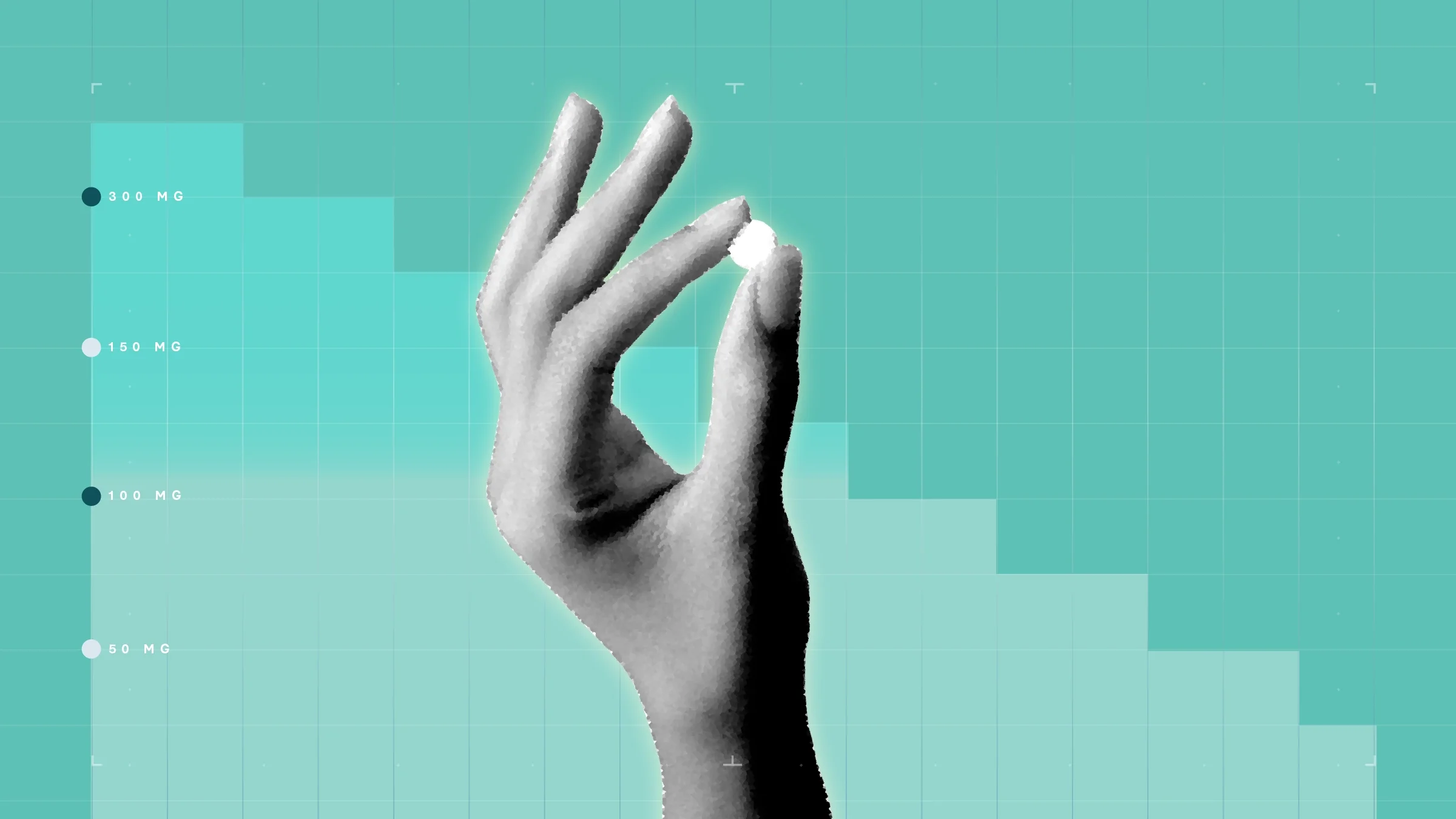
The best trazodone dosage for you depends on why you’re taking it and how well you tolerate the medication. Trazodone is most commonly prescribed as an oral tablet. It comes in the following doses:
50 mg
100 mg
150 mg
300 mg
Search and compare options
Trazodone also comes as a 10 mg/mL oral solution (liquid) called Raldesy. The recommended dosages are the same for the tablet and liquid versions.
Below are more details on typical trazodone dosages for depression and insomnia (trouble sleeping).
Trazodone dosage for depression
The recommended starting trazodone dosage for depression is 150 mg per day in divided doses. For example, your starting trazodone dosage may be 50 mg by mouth 3 times a day.
From there, your prescriber may raise your dosage by 50 mg per day every 3 to 4 days. The maximum daily trazodone dosage is 400 mg per day. The best dosage for you depends on how well you respond to trazodone and whether you’re experiencing any intolerable side effects.
If your depression symptoms don’t improve with your initial trazodone regimen, you may need a higher dose. If you’re experiencing bothersome side effects — such as dizziness, dry mouth, and blurry vision — your dose may need to be lowered. But don’t make any changes without talking to your healthcare team first.
Your prescriber may also recommend taking a larger dose at night and a smaller dose in the morning to avoid daytime drowsiness. For example, if your total daily dose is 250 mg, you may take 100 mg in the morning and 150 mg at night.
Trazodone dosage for insomnia (off-label use)
The typical trazodone dosage for insomnia is usually between 25 mg and 100 mg before bedtime. This is a lower dose than what’s recommended for depression because the sedating effect of trazodone still exists at lower doses.
As mentioned, treating insomnia is an off-label use of trazodone. Some studies have shown that trazodone is effective at treating insomnia. But other research hasn’t found that the benefits of trazodone outweigh the risks. And it's not recommended by the American Academy of Sleep Medicine or the American College of Physicians for treating insomnia. Still, it may have fewer risks than other prescription sleep medications, such as zolpidem (Ambien).
In general, trazodone for insomnia is meant to be used for a short period of time only. Your prescriber can let you know how long they expect you to take it.
Good to know: Trazodone usually works quickly for sleep, within about 30 minutes. But this may vary from person to person. Taking trazodone about 30 minutes before bedtime is a good place to start. If you find it takes longer for trazodone to kick in, you may want to try taking it earlier (about 1 to 2 hours before bedtime). Just make sure you aren’t feeling excessively sleepy or dizzy while you’re still finishing your daily activities.
Can you take trazodone for anxiety?
Anxiety is another off-label use of trazodone. But there isn’t as much evidence for taking trazodone for anxiety as there is for insomnia. Research suggests that it may be helpful for people who have depression or insomnia as well as anxiety. But long-term studies on trazodone’s anxiety benefits are limited.
Plus, the studies that have been done for anxiety focused on an extended-release version of trazodone. This formulation isn’t currently available in the U.S. It’s unclear whether these study results would apply to the immediate-release trazodone that’s commercially available.
If your prescriber recommends trazodone to help manage your anxiety, ask them exactly how you should take it. Because of the limited evidence supporting this use, there are no standard trazodone dosages for anxiety.
Are there any dosage adjustments for health conditions?
If you’re an older adult or you take certain other medications, typical trazodone dosages may not be best for you. Make sure your prescriber knows your full medical history before starting trazodone. And give your prescriber and pharmacist a list of all the medications and over-the-counter (OTC) products you take. This will help them choose the safest trazodone dosage for you.
Trazodone dosage for older adults
Adults who are 65 and older may take longer to get rid of trazodone in the body. This raises the risk of side effects, such as excessive drowsiness. So it may be safer to take lower trazodone dosages than younger adults. Your prescriber may start with a lower dosage of 25 mg to 50 mg total per day. Based on your response, they may slowly raise it. Some studies limited older adults to a maximum dose of 100 mg per day.
Trazodone dosage for possible drug interactions
Trazodone has many possible drug interactions. Some medications affect how your body breaks down and clears trazodone. In some cases, you may need to avoid those combinations completely. But other times, trazodone dosage adjustments may be enough to avoid complications.
For example, certain medications can raise trazodone levels in the body and increase your risk of side effects. These include oral ketoconazole, fluconazole (Diflucan), and verapamil (Verelan). You may need a lower dose of trazodone to manage this type of interaction.
Other medications and supplements can decrease trazodone levels, making it less effective. These include carbamazepine (Tegretol, Tegretol XR), phenytoin (Dilantin, Phenytek), and St. John’s wort. You may need a higher trazodone dosage to manage this type of interaction.
It’s hard to keep track of every medication that can interact with trazodone. So make sure your prescriber and pharmacist know all the medications and OTC products you take. If necessary, they’ll use this information to adjust your trazodone dosage.
What happens if you miss a dose of trazodone?
If you forget to take one of your trazodone dosages, take it as soon as you remember — unless your next scheduled dose is coming up soon. In that case, skip your missed dose. It’s safer to skip a dose than to double up on trazodone dosages.
If you miss multiple trazodone dosages in a row and you’ve taken it for a while, you may experience antidepressant withdrawal. This can cause symptoms such as headache, nausea, and anxiety. If you experience any of these symptoms, let your prescriber know. And consider trying some strategies to help you remember to take your medication, including setting reminders on your phone or utilizing medication reminder apps.
What should you do if you take too much trazodone?
Taking extra trazodone raises your risk of excessive drowsiness and dizziness. In severe cases, too much trazodone could cause priapism (prolonged erection of the penis), serotonin syndrome, and abnormal heart rhythms.
If you’ve taken too much trazodone, contact your prescriber immediately. If your symptoms feel severe, such as trouble breathing, extreme confusion, or vomiting, contact Poison Control online or at 1-800-222-1222 or seek immediate medical care.
Good to know: Other medications that cause sedation, such as opioids and benzodiazepines, can increase your risk of side effects from trazodone. Drinking alcohol with trazodone can also be dangerous. It’s best to avoid these medications, and drinking alcohol, while taking trazodone.
How to save on trazodone
GoodRx may be able to help you save over 85% off the average retail price of trazodone tablets, which are available as a generic medication. Ninety tablets of trazodone 50 mg may be as low as $11.70 with a free GoodRx coupon.
There are also ways to save on Raldesy, which is available as a brand-name medication:
Save with a copay savings card. If you have commercial insurance and meet eligibility requirements, Raldesy’s price may be as little as $10 per month using a savings card from the manufacturer.
Save with a patient assistance program. If you’re uninsured or underinsured, you may be eligible for Raldesy’s patient assistance program, which offers the medication free of cost.
Frequently asked questions
The effects of trazodone usually only last for a few hours. That’s why you need to take doses 2 or 3 times daily if you’re taking it for depression. But small amounts of trazodone may still be present in your body for up to 2 days after taking it.
If trazodone isn’t helping you sleep, it may not be a high enough dosage for you. Most people take between 25 mg and 100 mg at bedtime when taking trazodone for sleep. But if you’re taking a higher dose and still not sleeping well, it’s possible that this medication isn’t the right sleep medication for you.
Speak with your prescriber if trazodone isn’t helping you sleep. Everyone responds to medication differently. And it can take some trial and error to find what works for you.
Some prescribers may consider trazodone as an antidepressant option while pregnant. But it’s not a first choice. Selective serotonin reuptake inhibitors (SSRIs), such as sertraline (Zoloft), have more evidence to support their safety and effectiveness during pregnancy.
No, you shouldn’t crush trazodone tablets. The manufacturer specifically says not to do this in the medication’s labeling. But the tablets can be split if needed. If you have trouble swallowing pills, ask your prescriber about Raldesy, which is a liquid version of trazodone.
The effects of trazodone usually only last for a few hours. That’s why you need to take doses 2 or 3 times daily if you’re taking it for depression. But small amounts of trazodone may still be present in your body for up to 2 days after taking it.
If trazodone isn’t helping you sleep, it may not be a high enough dosage for you. Most people take between 25 mg and 100 mg at bedtime when taking trazodone for sleep. But if you’re taking a higher dose and still not sleeping well, it’s possible that this medication isn’t the right sleep medication for you.
Speak with your prescriber if trazodone isn’t helping you sleep. Everyone responds to medication differently. And it can take some trial and error to find what works for you.
Some prescribers may consider trazodone as an antidepressant option while pregnant. But it’s not a first choice. Selective serotonin reuptake inhibitors (SSRIs), such as sertraline (Zoloft), have more evidence to support their safety and effectiveness during pregnancy.
No, you shouldn’t crush trazodone tablets. The manufacturer specifically says not to do this in the medication’s labeling. But the tablets can be split if needed. If you have trouble swallowing pills, ask your prescriber about Raldesy, which is a liquid version of trazodone.
The bottom line
Trazodone is an antidepressant. It’s FDA approved to treat depression, but it’s more commonly prescribed for insomnia (even though it’s not approved for this use). The typical trazodone dosage for depression starts at 150 mg per day, in divided doses. The typical dosage for insomnia is between 25 mg and 100 mg before bedtime. The maximum trazodone dose is 400 mg per day.
You may need a lower trazodone dosage if you’re 65 or older to help limit certain side effects, such as dizziness. You may also need a lower or higher dose if you take certain medications that interact with trazodone.

Why trust our experts?




References
Accord Healthcare. (2025). Trazodone hydrochloride tablet [package insert]. DailyMed.
Cuomo, A., et al. (2021). Trazodone: a multifunctional antidepressant. Evaluation of its properties and real-world use. Journal of Gerontology and Geriatrics.
Fagiolini, A., et al. (2023). Role of trazodone in treatment of major depressive disorder: An update. Annals of General Psychiatry.
Fagiolini, A., et al. (2025). Targeting heterogeneous depression with trazodone prolonged release: from neuropharmacology to clinical application. Annals of General Psychiatry.
Jaffer, K. Y., et al. (2017). Trazodone for insomnia: A systematic review. Innovations in Clinical Neuroscience.
MedlinePlus. (2025). Trazodone. National Library of Medicine.
Oggianu, L., et al. (2020). Estimation of an appropriate dose of trazodone for pediatric insomnia and the potential for a trazodone-atomoxetine interaction. CPT: Pharmacometrics & Systems Pharmacology.
Pelayo, R., et al. (2023). Should trazodone be first-line therapy for insomnia? A clinical suitability appraisal. Journal of Clinical Medicine.
Qaseem, A., et al. (2016). Management of chronic insomnia disorder in adults: A clinical practice guideline from the American College of Physicians. Annals of Internal Medicine.
Sateia, M. J., et al. (2017). Clinical practice guideline for the pharmacologic treatment of chronic insomnia in adults: An American Academy of Sleep Medicine clinical practice guideline. Journal of Clinical Sleep Medicine.
Shin, J. J., et al. (2024). Trazodone. StatPearls.
Validus Pharmaceuticals. (2026). Raldesy TM- trazodone hydrochloride oral solution [package insert]. DailyMed.